Claimed
Vainqueur the DragonClaimed is the divinely marked status given to souls selected by the gods of Outremonde, especially humans who die on Earth and are brought into the other world. The condition is both a second chance and a form of recruitment: a Claimed person may receive unusual powers and a new destiny, but is also drawn into conflicts that ordinary mortals cannot escape. Victor Dalton’s mark and Kia Bekele’s initiation show two distinct versions of the same system, linking personal survival, reincarnation, divine patronage, and the threatened future of Outremonde.
Definition and Recognition
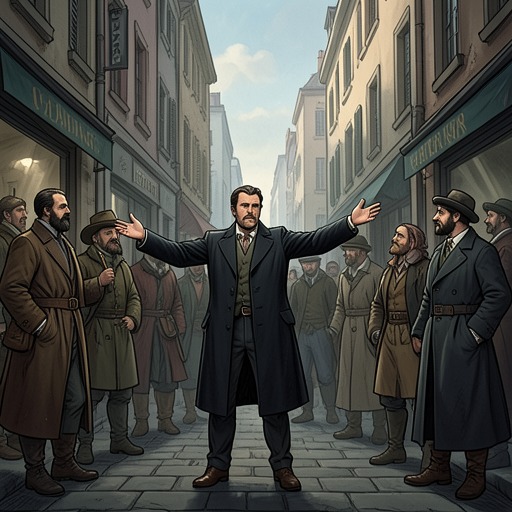
A Claimed person is identifiable through a divine mark. When Victor Dalton is questioned about his origins, he explains that he came from America on Earth rather than from Gardemagne or Prydain. The marquise immediately recognizes the implication: he is a Claimed. Victor then exposes the tattoo on his left arm, a crimson, shining image of a twenty-faced die. The mark belongs to Dice, the luck god, and the marquise treats it as proof that Victor’s unusual association with Vainqueur Knightsbane is not accidental. In her understanding, only a chosen servant of the luck god could befriend a dragon.
The mark therefore carries more than decorative or personal meaning. It publicly identifies Victor as someone who has crossed between worlds under divine selection. It also gives other people a framework for interpreting him. His foreign accent, his knowledge of Earth, and his improbable connection with a dragon become intelligible once his status is known. The mark turns an otherwise inexplicable outsider into a recognizable religious and metaphysical category.
Earth, Death, and Reincarnation
The Claimed phenomenon depends on the relationship between Earth and Outremonde. Mithras explains to Kia Bekele that Earth is only one world among many and has a twin, Outremonde, where dragons replace planes and magic replaces science. Outremonde is similar to Earth in shape but is threatened by a great blight and urgently requires heroes. In this cosmology, death on Earth does not necessarily end a person’s story; it can become the passage through which a soul is selected for another life.
Leone tells Kia that she died young on Earth before fulfilling her destiny, but presents death as a door rather than an absolute conclusion. The gods can return a person to Outremonde in the form they currently possess, carrying what they brought with them, or reincarnate that person into another body. The possible forms include a man, an elf, a dwarf, or even a cat. The restrictions are equally important: a soul cannot be incarnated as a fomor because fomors have no soul, and dragons are forbidden as vessels. The system thus treats reincarnation as a controlled divine allocation of bodies, not as an entirely free or mysterious rebirth.
Victor’s experience reveals the harsher side of this process. Before reaching Outremonde, he saved a girl he had a crush on from a mugging, was stabbed, and was left bleeding in an alley. His death did not lead to the heroic life he might have imagined. Instead, he found himself in a medieval world filled with brigands, man-eating monsters, and dragons, and was forced to join a band of outlaws merely to survive. His status as a Claimed gives him a supernatural explanation and possible advantages, but it does not spare him from pain, deprivation, or indignity. His immediate wishes are practical and self-interested: survival, sexual fulfillment, and a return home, rather than fame or sainthood.
Divine Recruitment and Obligation
The gods claim souls because they cannot simply solve Outremonde’s crisis themselves. Leone explains that, a millennium earlier, the gods agreed not to fight directly on Outremonde after their interventions caused more harm than good without producing a clear victor. Their nonintervention is also enforced by the presence of Sablar the World Eater, who supports the fomors in their attempt at universal destruction and prevents the gods from acting freely. The gods are powerful and immortal, but not all-powerful; their remaining method is to guide and empower mortals.
Claiming is therefore a strategic response to divine limitation. By taking souls from Earth and making them champions, the gods assemble agents capable of acting where deities cannot. Kia is told that many other humans from her world have already been reincarnated because they possessed the potential to become true heroes. These recruits are expected to form a great crusade and fight together against Balaur. The Claimed are consequently not isolated beneficiaries of miraculous intervention. They are part of an intended transworld force, gathered to compensate for the gods’ inability to wage the decisive battle themselves.
The arrangement carries an explicit price. Kia is promised a new life and amazing powers if she agrees to fight Balaur, but Mithras warns that the journey will be dangerous and that she may die again. If death occurs in the line of duty, however, she will be granted a place in the divine realm. This promise converts sacrifice into a guaranteed afterlife while preserving the danger of the mission. The gods offer both empowerment and insurance, yet the choice remains framed as an obligation: great power is accompanied by a duty to use it.
Powers, Marks, and Patronage
Kia’s claiming demonstrates how divine selection becomes mechanically and visibly attached to the body. Mithras and Leone raise their hands, and two symbols appear as tattoos on the backs of Kia’s palms: a shining golden sun and a shield bearing a stylized pen. The paired marks represent her connection to both deities and make patronage permanent enough to be read on her skin.
The result is immediately formalized through the Class System. Kia receives a level in the prestigious Paladin Class, along with one point each in Strength, Vitality, Charisma, and Luck. She also gains the Holy Champion Class Perk and the personal perks Claimed by Mithras and Claimed by Leone. The Holy Champion perk grants advanced proficiency with swords and spears and causes every weapon attack to inflict additional Holy Damage. Mithras’s personal perk gives Kia an additional ten percent chance of gaining a Charisma or Strength point whenever she levels up, while making her immune to all Fire and Holy effects except those caused by Mithras or his servants.
These rewards show that claiming operates through several overlapping systems. The divine mark establishes identity, the Class System records advancement, and personal perks encode the continuing relationship between mortal and patron. Divine selection is therefore not merely a theological label. It produces measurable changes in abilities, statistics, combat capacity, resistances, and future growth. Kia’s body becomes a record of the choice made by the gods, while her developing powers turn that choice into an ongoing process.
Cultural Meaning and Narrative Function
Because people from Earth who are branded by local gods and reincarnated in Outremonde are a known occurrence, the Claimed have become a social phenomenon rather than a handful of isolated exceptions. Most possess unique perks that help them establish lives in the new world. Their arrival has even contributed to the rise of the Esoteric Order of the New World, a religion built around the existence and significance of such transworld immigrants. The Claimed thus influence institutions and belief systems beyond their individual adventures.
At the same time, the status creates a tension between public meaning and private experience. Outsiders may see a Claimed person as a chosen hero, a sign of divine favor, or evidence of an impending religious transformation. Victor Dalton experiences the same status as an unwanted complication attached to an already miserable afterlife. He does not want to become a hero or a curiosity, and he would prefer to escape his connection with Vainqueur Knightsbane if escape were possible. Kia, by contrast, accepts the offer only after judging it better than her alternative, and her reluctance survives the promise of power.
The Claimed status consequently complicates the conventional hero’s journey. Death supplies the separation from the ordinary world, the gods provide the call and the supernatural equipment, and Outremonde offers the arena in which a new destiny may be forged. Yet the “chosen one” condition is neither purely glorious nor fully voluntary. It is a divine summons made through the vulnerability of death, shaped by institutional need, and enforced by the dangers of the world into which the soul is sent. The narrative uses claiming to make heroic destiny feel at once miraculous, bureaucratic, coercive, and deeply personal.