Class System
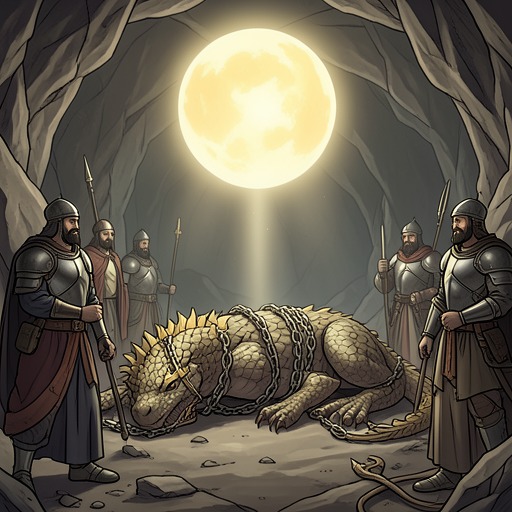
Vainqueur the DragonThe Class System is the supernatural rule structure that governs advancement in Outremonde. It translates behavior and status into measurable power: a character adopts or unlocks a class, gains levels through experience or qualifying deeds, receives statistical improvements and Perks, and may eventually transform into a higher class or even a deity. Its decisive peculiarity is that it does not merely reward conventional training. Ego, bloodline, service to a monster, leadership, and public recognition can all become mechanically meaningful, allowing the system to turn personality and social relationships into progression.
Origins and Basic Operation
The Class System is explained by Henry Bright as a powerful supernatural system unlocked by Dice during his first rolling spree, when Dice was still a sentient dice artifact. Classes represent powerful roles that grant abilities when their users draw upon them. Vainqueur Knightsbane initially doubts the explanation and suspects that dragons created the system, but the system’s notifications provide immediate proof: after Victor Dalton explains that levels are powers gained through a class, Vainqueur Knightsbane receives a message announcing that sheer ego and noble dragon bloodline have earned him a level in the Noble class.
The system therefore treats achievement as both action and interpretation. Victor Dalton expected to gain levels from the danger and difficulty of an anonymous guild assignment, believing that work, experience, or killing could produce advancement. Vainqueur Knightsbane, by contrast, gains Noble through the force of his self-image and lineage. The result is a comic but consequential collision between an objective-seeming game mechanic and a personality that continually declares itself exceptional. The system does not simply measure what a character has done; it recognizes certain identities as actionable conditions.
A level produces concrete rewards. Vainqueur Knightsbane’s first Noble level grants thirty Health Points, ten Special Points, and one point each in strength, agility, charisma, and luck, followed by the Old Money class Perk. The notification makes advancement visible and auditable, turning an otherwise boastful claim of nobility into a source of numerical power. This pattern establishes the system’s central grammar: a deed or condition is recognized, a class level appears, and the resulting benefits alter what the character can do.
Classes, Categories, and Progression
Henry Bright divides classes into five categories. Fighters specialize in direct combat and warfare; Spellcasters gain strong magical abilities; Rogues emphasize tricks and social Perks; Crafters create items or empower existing effects; and the rare Monster classes are ordinarily available only through deals with intelligent monsters or fiends. The categories establish different routes to power rather than a single ideal of heroism. A character may grow through battle, magic, manipulation, production, or a relationship with a nonhuman power.
The system allows a person to obtain as many classes as possible, but the combined total cannot exceed level 100. Reaching level 100 causes the character to advance into the God class, making the character a true deity while ending further growth. Progression also becomes more difficult as total level rises: even when a class has low entry conditions, gaining another level requires increasingly demanding challenges. Henry Bright estimates that Vainqueur Knightsbane, already possessing three Noble levels, could advance rapidly to level nine through disciplined training, but the system’s escalating difficulty prevents advancement from becoming effortless indefinitely.
Class growth is shaped by statistical ratings. Henry Bright uses letters to describe the chance that a class will increase a given attribute when it grants a level: D represents a one-in-four chance, C one-half, B three-quarters, A a guaranteed point, S two points rather than one, and E no increase at all. The Gambler is presented as a balanced unpromoted class with especially strong luck and intelligence: its growth includes C in Health Points, C in Special Points, D in strength, D in vitality, A in skill, C in agility, A in intelligence, B in charisma, and S in luck. It also provides Perks useful for farming gold, making it attractive to anyone seeking wealth even though Vainqueur Knightsbane rejects the idea that a dragon should operate a shop.
Promoted classes require sufficient levels in another class, so the system creates paths and dependencies rather than isolated upgrades. A character’s present role can open future possibilities, while the choice of an apparently modest class can shape later development. This makes progression partly strategic, although Vainqueur Knightsbane quickly appoints Victor Dalton as his official class manager after growing bored with Henry Bright’s technical explanation.
Monster Classes and Deed-Based Advancement
Monster classes are unusual because they are generally unlocked through agreements with intelligent monsters or fiends. Victor Dalton’s promotion to chief of staff and chief enforcer of Vainqueur Knightsbane fulfills the entry condition for Monster Squire, a class unknown even to Henry Bright. Its first identified Perk, Monster Kin, makes Victor Dalton more congenial with monsters. The system thus formalizes a political and personal bond: becoming a dragon’s subordinate is not only a social appointment but also a mechanical transformation.
The same class later rewards leadership on a much larger scale. After Victor Dalton fearlessly leads monsters to victory against superior opponents, he gains seven levels in Monster Squire at once. The reward includes 120 Health Points, seventy Special Points, five strength, four vitality, four skill, five agility, six intelligence, six charisma, and seven luck. He also receives the Monster Lifeforce (Red Dragon), Monster Rider, and Monster Insight Perks. The scale of the notification shows how the system converts collective military success into individual advancement, while the Perks bind Victor Dalton more closely to the monsters he commands and to the red-dragon power of Vainqueur Knightsbane.
The system’s reward logic can also redirect labor. Vainqueur Knightsbane assigns Victor Dalton responsibility for paperwork, class progression, and training the Kobold Rangers, while separately demanding that monster parts, junk, and corpses be turned into money rather than left for animals. The Class System makes such duties part of a broader economy of advancement: administration, recruitment, teaching, and battlefield leadership all become potential routes to power, even when the dragon treats them as ordinary obligations of a minion.
Limits, Breakthroughs, and Public Recognition
The system imposes limits as sharply as it grants abilities. At level 30, a warning announces that the class ceiling has been reached. No additional levels can be gained until the character uses a Crest; experience gains become zero, although special deeds can still provide Perks. The Crest therefore functions as a breakthrough mechanism, separating ordinary accumulation from exceptional advancement. Growth is not an endless reward loop but a gated structure in which progress must periodically be legitimized by a specific resource or achievement.
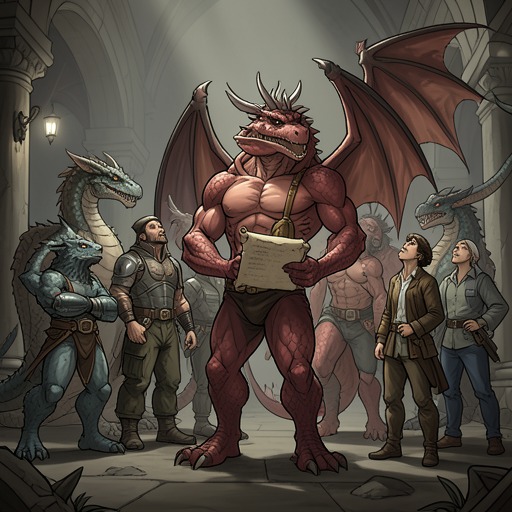
Vainqueur Knightsbane later describes the system as the ancient dragon system and claims that it gives him the power to protect the dragon way of life from those who would turn it to lead. At a gathering of dragons, Icefang challenges the system’s existence, prompting Vainqueur Knightsbane to insist that awareness of the system and the stat requirements for beginner classes are the only requirements for taking a first level. Icefang then sees a notification awarding him Noble through bitter resentment and dragon ego. The demonstration changes the system from a private advantage into a publicly reproducible phenomenon.
The demonstration spreads immediately. Genialissime declares an intention to become a wizard and receives a class-related message, after which a magical bolt strikes a house. A red dragon similarly declares himself a wizard and produces a weaker spell. Other dragons begin calling themselves sorcerers, knights, and nobles. The episode reveals the system’s unusually permissive relationship between declaration and capability: once the underlying requirements are met, naming a role can help make that role real. Yet the system also has limits that self-assertion cannot overcome. Blightswamp’s daughter can become a dragon princess, but Blightswamp cannot reproduce true princessness merely by invoking the title, because that quality lies beyond the system’s power.
Consequences and Significance
Public recognition can trigger advancement as decisively as combat. After a powerful head of state recognizes Vainqueur Knightsbane as Emperor, after he achieves full dominion over Ishfania’s monsters, and after he inspires new respect as a Monster Lord, the system grants one level in Emperor and two levels in Kaiser. It also awards Imperial Authority and Malefic Secrecy. Imperial Authority reduces an enemy’s evasion by twenty percent, while Malefic Secrecy causes divination spells and Perks that seek information about Vainqueur Knightsbane to fail unless they overcome him in an opposed Charisma check. These rewards convert political legitimacy and reputation into military and defensive advantages.
The system consequently fuses personal identity, social hierarchy, economics, warfare, and metaphysics. A chief of staff becomes a Monster Squire; a dragon’s ego becomes Noble; battlefield command produces a burst of levels; and imperial recognition activates Emperor and Kaiser. Its language resembles a game interface, but its effects are civilizational. It encourages characters to seek challenges, wealth, public status, monster alliances, and dramatic self-definitions because each may produce measurable returns.
At the same time, the Class System exposes the gap between moral judgment and mechanical reward. Vainqueur Knightsbane speaks of food chains, emergency consumption of minions, breeding according to hoard size, and the right of every creature to be eaten, while the system continues to reward his authority and accomplishments. It can recognize monstrous leadership without judging the ethics of that leadership. The framework is therefore neither a simple moral scale nor a neutral record of effort. It is a rule machine that makes certain forms of ambition legible, profitable, and powerful, even when the narrative surrounding them remains absurd, coercive, or ethically divided.