Class System Entry Requirements
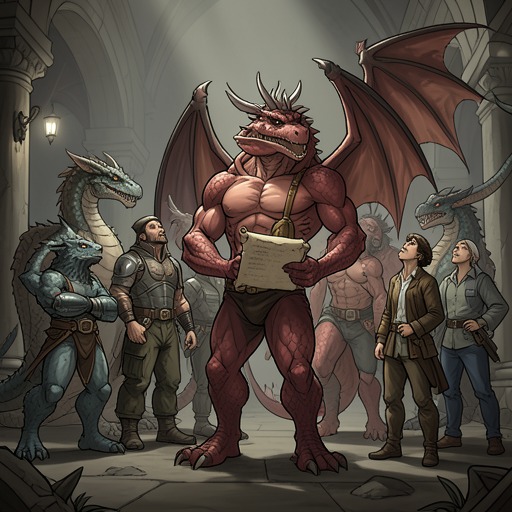
Vainqueur the DragonClass System Entry Requirements define the gateway into the Class System. According to Nostredame, the first class level has two prerequisites: awareness of the system and the stat criteria required by a beginner class. The rule therefore makes advancement neither wholly hereditary nor freely available; a candidate must recognize the system as real and possess the attributes that make an initial class possible.
Definition and Operation
The rule separates discovery from eligibility. Awareness is necessary because the system does not automatically grant a class to every capable being, while statistical qualification supplies the second, mechanical test. Nostredame explains that the only reason the dragons present have not accessed the system is that they apparently do not know about it, rather than because dragons are categorically excluded. Icefang’s challenge exposes the rule in action: after demanding that the system appear before him, he stops ranting and appears to read invisible text, leaving the gathering silent while Vainqueur takes the reaction as confirmation.
First Class Rewards
Vainqueur’s own entry demonstrates how the rule translates identity into advancement. After his ego and noble dragon bloodline satisfy the conditions for the Noble class, the system announces that he has gained a level. The reward presents class acquisition as a formal recognition of qualities he already embodies, especially pride, status, and lineage, rather than as training in a conventional skill. The notification changes his understanding of his abilities by making those qualities legible as system-recognized qualifications.
Victor enters the same structure through a different social and practical role. When Vainqueur promotes him to minion chief of staff and living signature, the system grants him a level in the Monster Squire class for becoming the chief enforcer of a mighty dragon. Victor has never heard of that class, which underscores that awareness of a particular class is not the same as prior familiarity with the system’s complete vocabulary. His advancement is tied to service, authority, and demonstrated usefulness, contrasting with Vainqueur’s class recognition through dragon bloodline and ego.
Advancement Through Deeds
Entry requirements are only the beginning of progression. Victor later earns seven Monster Squire levels for fearlessly leading monsters to victory against superior opponents. The system also awards the Monster Lifeforce (Red Dragon), Monster Rider, and Monster Insight Perks, showing that successful action can produce both levels and additional abilities. The rule consequently links advancement to a feedback loop: initial eligibility opens the system, while later conduct supplies evidence for further rewards.
This progression also gives the system an evaluative logic. Victor’s leadership is not merely described as brave by the surrounding narrative; it is quantified through seven levels and several Perks. The system converts courage, command, and allegiance into measurable gains, making social and moral behavior function as game-like performance. Advancement thus records what characters do while simultaneously encouraging them to pursue actions that the system can reward.
Limits and Consequences
The Class System does not promise unlimited growth. At level 30, a character reaches the class ceiling and can no longer gain additional levels until using a Crest. Experience gains are reduced to zero, although special deeds can still produce Perks. This limitation preserves the distinction between ordinary accumulation and exceptional advancement: routine experience stops working, but extraordinary conduct remains capable of changing the character’s power.
The ceiling also makes access a staged process rather than a single permanent liberation. Awareness and beginner-class statistics open the door; levels and deeds build power; the level-30 boundary then demands a Crest before advancement can resume. The system therefore combines immediate rewards with institutional scarcity, ensuring that recognition alone cannot remove every obstacle.
Narrative and Thematic Significance
The rule is presented as an in-world revelation and as a source of conflict between belief and disbelief. Icefang dismisses the system as something that grants power and money too easily, then visibly encounters the text he challenged. His reaction validates Vainqueur’s claim while turning an abstract explanation into a public demonstration. The scene also makes knowledge itself a form of power: once the system is known, previously inaccessible growth becomes imaginable and potentially attainable.
At the same time, the requirements expose the system’s comic and ideological bias. Vainqueur’s ego and noble bloodline become legitimate class qualifications, while Victor’s subordinate labor becomes the basis for a specialized class. The Class System Entry Requirements therefore do more than regulate mechanics. They assign institutional value to lineage, personality, service, leadership, and achievement, then express that value through levels, Perks, and numerical rewards. Its rules transform the characters’ social identities into a progression economy, even as the class ceiling reminds them that every economy of advancement imposes a limit.