Class ceiling
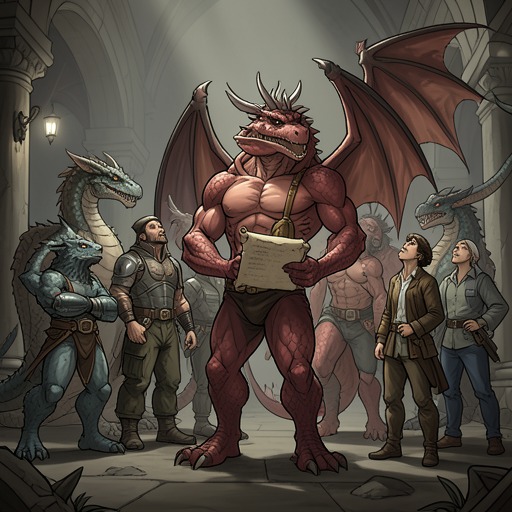
Vainqueur the DragonClass ceiling governs how advancement in the Class System stops, resumes, and changes in prestige. Its decisive rule is that a character who reaches level 30 can no longer gain additional levels until using a Crest; the system sets experience gains to zero, while still allowing perks to be earned through special deeds. Progress therefore depends not only on achievement but also on access to a rare gatekeeping item.
Definition and First Threshold
The rule first becomes explicit after Victor Dalton receives two levels in Monster Squire and two in Reaper for delivering the coup de grace against an ancient lich and cunningly trapping the lich’s soul in his Killer Scythe. The resulting growth is substantial, but the notification immediately warns that level 30 is the class ceiling. Additional experience will no longer produce levels until a Crest is used. The restriction distinguishes ordinary advancement from exceptional rewards: deeds can continue to generate perks, yet the numerical progression that makes a character stronger is suspended.
The system’s explanation defines Crests as powerful but rare items capable of breaking the level 30 ceiling. The scarcity matters as much as the function. A Crest is not merely another reward or piece of equipment; it is authorization to cross a boundary that experience alone cannot overcome. The rule thus imposes a material condition on advancement and makes the search for a Crest an unavoidable future objective.
Continued Rewards Under the Ceiling
The ceiling does not make action meaningless. Before and after reaching it, the system converts unusual accomplishments into class levels, statistics, and perks. Vainqueur Knightsbane gains a level in Noble through sheer ego and noble dragon bloodline, while Victor Dalton gains a level in Monster Squire after becoming the chief enforcer and living signature of a mighty dragon. Later, for fearlessly leading monsters to victory against superior opponents, Victor Dalton earns seven levels in Monster Squire together with the Monster Lifeforce (Red Dragon), Monster Rider, and Monster Insight Perks.
These examples clarify the rule’s two channels of progression. Experience and class levels can accumulate until the ceiling intervenes, but special deeds remain capable of producing qualitative changes. The system therefore preserves a cycle of recognition even when it blocks ordinary numerical growth. The ceiling is a stoppage of one kind of advancement, not a complete suspension of the reward economy.
The Second Ceiling and the Long-Term Route
The system identifies a later threshold as well. Heroic Crests are rarer and more powerful than ordinary Crests, and they are required to break the level 60 class ceiling. Once that barrier is overcome, advancement may continue to level 99. Reaching level 99 opens access to Valhalla and the attempt at Apotheosis, the final ascent beyond ordinary heroic status.
The progression ladder is therefore explicitly stratified: level 30 requires a Crest, level 60 requires a Heroic Crest, and level 99 leads toward Valhalla and Apotheosis. Valhalla is described as the final challenge, from which only twelve creatures have survived and emerged as deities of Outremonde. The rule consequently links a seemingly technical limitation to the highest stakes in the setting: the difference between gaining strength, becoming a legendary hero, and seeking divinity.
Confirmed Breach and Its Consequences
The rule receives its clearest practical demonstration after Vainqueur Knightsbane defeats Brandon Maure and ends the threat of the Iron Eagle. The system awards him a Crest for that victory. The item appears as a golden, shield-like object descending from the heavens, covered with colored gemstones and beautiful enough to seem worthy of his hoard. When the system asks whether he wishes to use the Crest to break the Class ceiling, Vainqueur Knightsbane answers affirmatively, and the item and surrounding light vanish.
The result is immediate and precisely defined: the Crest is consumed, Vainqueur Knightsbane can now progress up to level 60, and he gains the Crested Personal Perk. That perk marks a change in social and mechanical status, moving him from an ordinary adventurer to a folktale hero and allowing access to more prestigious classes. The Crest therefore does more than restore level gain. It reclassifies the user within the world’s hierarchy of recognition.
The same encounter also shows how a character can reach the limit again. When Vainqueur Knightsbane punches Brandon Maure into temporarily retreating, he gains levels in Gladiator and Kaiser, along with Victory Fist and Summon Herald (Victor Dalton). Immediately afterward, the system repeats the warning that he has reached the level 30 class ceiling and that further levels require a Crest. The recurrence makes the rule structural rather than situational: every fresh burst of class advancement eventually encounters the same locked threshold.
System Logic and Narrative Significance
The Class ceiling gives the Class System a deliberately game-like grammar of achievement, restriction, and paid passage. Vainqueur Knightsbane initially reacts to the idea of a level ceiling as if the system were demanding a bribe to enter the middle class, connecting fantastic progression with the economic frustrations of Earth. Advancement is presented as meritocratic because deeds trigger notifications, but it is also materially unequal because the decisive breakthrough depends on finding a rare Crest.
The rule also changes how victory is valued. Defeating Brandon Maure is not only a military success or the end of the Iron Eagle’s threat; it produces the exact item needed to reopen advancement. Earlier triumphs generate levels and perks, while the later victory supplies the key to a blocked tier. The system thereby turns narrative milestones into visible progression gates and makes power growth legible as a sequence of thresholds rather than an unlimited accumulation.
Finally, awareness is itself part of the system’s entry logic. When Icefang disputes the existence of the system, Nostredame explains that taking the first level requires awareness of the system and the statistical criteria for beginner classes. This requirement places knowledge before advancement, just as the Crest places a rare object before higher advancement. The rule set consequently governs not only what characters can become, but also who can perceive the machinery that determines their transformation.