Death-Service Principle
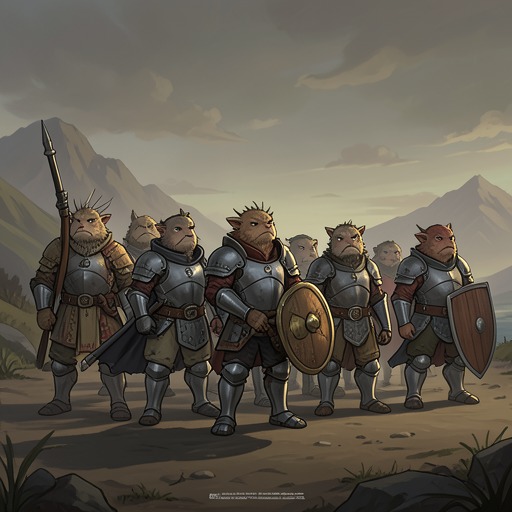
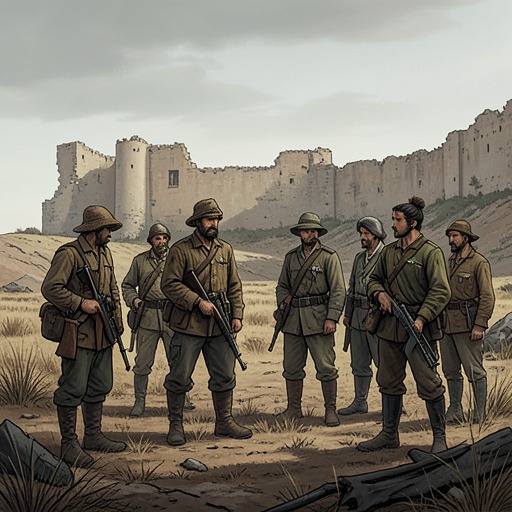
Vainqueur the DragonThe Death-Service Principle is the governing promise that a minion’s service to Vainqueur Knightsbane continues beyond death. It is both a political claim and a practical system of control: the empire presents permanent service as a benefit, while Vainqueur Knightsbane treats the dead as recoverable personnel whose labor and loyalty remain part of his hoard.## Definition and Imperial Setting The principle is stated as one of the foundations of Vainqueur Knightsbane’s empire. While displaying his lands, Vainqueur Knightsbane describes a country in which no minion ever leaves his service, even in death. The statement places the rule beside his other imperial principles: demons may trade souls without paying taxes to manlings, and greed is law. Death-service therefore belongs to the same institutional order as soul commerce, taxation, and imperial ownership; it is not merely a private promise made to favored followers. The principle also changes the meaning of a hoard. Vainqueur Knightsbane calls his lands his hoard, extending possession beyond coins and objects to an entire country and its inhabitants. Under this logic, a servant’s continued presence after death becomes evidence of the ruler’s wealth and authority. A minion is not simply someone who works for the emperor during life, but a resource whose service can be retained indefinitely.## Operation Through Undead Resurrection The clearest practical application comes after the devastation surrounding a Bragging Day. Once the celebration ends, Vainqueur Knightsbane finds the area in ruin, with houses overturned and sheep dead. He orders the Kobold Rangers, gnolls, mimics, and other servants to begin restoring the settlement, then assigns a separate task to Corpseling Jules: raise every minion who fell in the line of duty. Vainqueur Knightsbane explains the order through Victor Dalton’s earlier continued service after death. If death did not end Manling Victor’s service, he says, he will not deny the same pleasure to his other lackeys. The formulation is revealingly possessive. Resurrection is presented as fairness among servants, but also as the emperor’s pleasure and prerogative. The dead are returned not as independent survivors with a newly chosen existence, but as personnel restored to the same hierarchy that governed them while alive. The rule consequently makes undead labor a normal extension of imperial administration. Corpseling Jules is not asked to perform a rare miracle for one exceptional individual; he is instructed to process all fallen minions. The command turns battlefield death into a staffing problem and frames necromancy as a routine state service.## Relation to the Class System The Death-Service Principle operates within a wider world in which supernatural systems translate conduct into status and power. Vainqueur Knightsbane gains a level in the Noble class through his ego and dragon bloodline, while Victor Dalton gains a level in the Monster Squire class after becoming the chief enforcer of a mighty dragon. Victor Dalton later receives seven additional Monster Squire levels for leading monsters to victory against superior opponents, along with the Monster Lifeforce (Red Dragon), Monster Rider, and Monster Insight Perks. These rewards establish a pattern in which service is measurable, classifiable, and rewarded by an external system. The Death-Service Principle extends that pattern past the class ceiling of ordinary life. Even after experience gains stop at level thirty until a Crest is used, the empire’s own rule continues to assign value to a fallen minion by returning that minion to service. The contrast is important: the Class System can halt advancement, but Vainqueur Knightsbane’s administration refuses to accept an endpoint. The system’s visible notifications also make hierarchy feel mechanical. Awareness of the system allows a qualified character to take a first class level, and Icefang’s challenge confirms that its rules are accessible rather than merely imperial propaganda. Against that background, death-service resembles another executable rule: behavior, loyalty, and battlefield performance become resources that can be converted into rank, labor, and continued incorporation into the empire.## Service, Labor, and Economic Control The principle is inseparable from Vainqueur Knightsbane’s attempt to make every form of waste economically useful. When monster parts and corpses are left for animals, he orders Victor Dalton to find a way to make money from the waste of skin. Victor Dalton is expected to manage a shop selling junk, monster parts, and corpses, while also preparing class progression and training the Kobolds. The order shows how the empire absorbs material that would otherwise be discarded. Death-service applies the same logic to bodies. A corpse is not the end of a minion’s usefulness; it is another form in which service can continue. The resulting economy links military loyalty, necromantic labor, and imperial accumulation. Nethermart later embodies the commercial side of this expansion as the first fiendish magic-item shop in Outremonde, open to monsters and mortals and willing to extend credit against a soul. The shop’s thirty percent weapons sale is announced in preparation for war with Maure, demonstrating how commerce is folded directly into military mobilization. The principle also conflicts with ordinary ideas of emancipation. Vainqueur Knightsbane’s empire promises that no minion will be abandoned, but the same promise means that no minion is permitted to leave service through death. Protection and possession become indistinguishable. The dead are included in the imperial community precisely by remaining subject to its labor demands.## Narrative and Thematic Significance As a recurring rule of the setting, the Death-Service Principle turns a familiar boundary into an instrument of satire. Death usually marks the end of a contract, career, or political obligation; here it is treated as an administrative interruption that Corpseling Jules can correct. The principle therefore sharpens the book’s comic collision between heroic language and exploitative institutions. Vainqueur Knightsbane speaks of an enlightened empire, yet its enlightenment includes unpaid service after death, mass undead labor, and the continued ownership of souls and bodies. The rule also crystallizes the relationship between Vainqueur Knightsbane and Victor Dalton. Victor Dalton’s resurrection provides the precedent that justifies the broader policy, making the personal bond between dragon and minion into an imperial template. What begins as one servant’s extraordinary continuation becomes a general principle for every minion who dies in the line of duty. Finally, the Death-Service Principle supplies a darkly consistent answer to the book’s obsession with advancement, treasure, and institutional growth. Vainqueur Knightsbane recruits monsters, organizes applicants for war, monetizes corpses, expands Nethermart, and orders the dead restored to work. In this world, the strongest expression of loyalty is not remembrance but continued productivity. Death cannot empty the ranks of the empire because the empire defines service as something that survives the servant.