Outremonde
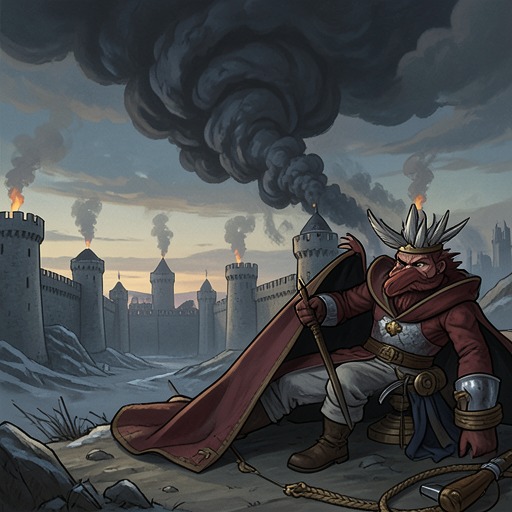
Vainqueur the DragonOutremonde is the twin world of Earth and the principal setting in which the book’s conflicts over survival, civilization, conquest, and belonging unfold. Similar to Earth in shape but fundamentally different in its conditions, it replaces airplanes with dragons and science with magic. Its lands contain human kingdoms, monster communities, ancient empires, ruined deserts, dragon lairs, and supernatural powers, making it less a simple fantasy counterpart than a world where displaced people and nonhuman societies are forced into unstable contact.
A Twin World and a Second Chance
Outremonde is introduced as one world among many rather than as an isolated universe. Mithras explains to Kia that Earth has a twin: a world comparable in general form but altered by its dominant forces, with dragons where Earth has planes and magic where Earth has science. The distinction is not merely technological. Outremonde is described as threatened by a great blight and in urgent need of heroes, giving the world an almost mythic role as a place awaiting intervention from people who have already died elsewhere.
Death provides the passage between the two worlds. Leone tells Kia that an early death on Earth need not end a person’s story, because death can open either an afterlife or a new chance in Outremonde. This makes reincarnation an organizing principle of the setting rather than a rare supernatural curiosity. People from Earth who arrive after being branded by local gods are known as the Claimed, and many possess distinctive perks that enable them to survive in their new environment. Their presence has become common enough to produce a religion, the Esoteric Order of the New World, turning private displacement into a recognized social and theological phenomenon.
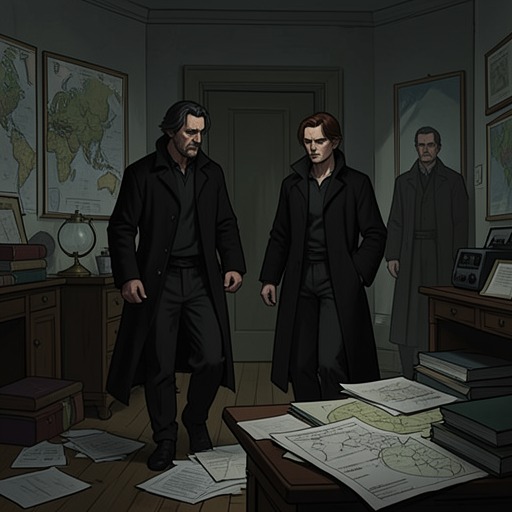
Victor Dalton embodies the uneasy reality behind that promise of a second chance. He came from America on Earth after dying from a stabbing that followed an attempt to save a girl from a mugging. In Outremonde, survival immediately placed him among outlaws, man-eating monsters, dragons, and the inconveniences of a medieval society. His crimson tattoo of a twenty-faced die identifies him as a chosen of Dice, and the mark helps explain why a dragon could accept him as a companion. Yet Victor Dalton does not initially regard Outremonde as a heroic calling. He wants to survive and return home, and his practical resentment contrasts sharply with the grand language of destiny used by the gods.
A Layered and Unequal Landscape
Outremonde’s geography records both natural harshness and the consequences of political catastrophe. Around the Castle of Murmurin, the volcano is large and borders the western sea, but the surrounding country is a landscape of badlands and arroyos. The soil is brown, vegetation is scarce, and a vast red sand desert begins beneath the southern horizon. A small human village stands at the foot of the mountain, while primitive encampments occupy the desert’s edge. The contrast between the impressive castle and its impoverished surroundings makes the territory appear as much a frontier claim as an established realm.
The region has not always been so barren. Vainqueur Knightsbane remembers flying over it two centuries earlier, when it was considerably greener. The change points toward a history in which landscapes are altered by imperial violence and magical disaster, not simply by climate. The red desert is later explained as the legacy of the Sablaris, a dark elf empire that once ruled much of the southern continent, Ishfania, and Barin. Cultists of Sablar the destroyer seized control and caused a magical cataclysm intended to hasten universal entropy, transforming their empire into a desert. Outremonde therefore carries its history visibly in the soil: political collapse becomes geography.
The ruins of Ishfania remain valuable despite their devastation. After the death of Brandon Maure and the destruction of his army, the territory is no longer a nation in the ordinary sense, but it still contains enough resources to attract the Eversun Empire, Barin, and Prydain. The prospect of those powers competing for the territory threatens to produce another Century War. Outremonde’s deserts are consequently not empty spaces. They are disputed resources whose apparent desolation invites annexation, settlement, and renewed conflict.
Humans, Monsters, and Shapeshifting Societies
The world’s social order is divided by more than nationality. Humans, monsters, undead, dragons, and other peoples occupy overlapping territories while treating one another as enemies, labor forces, prey, or potential citizens. Croissant explains that mimics and other shapeshifters disguise themselves as humans because inquisitors and adventurers frequently travel through the region and try to exterminate them. The community’s survival depends on concealment, while its members maintain a school where mimics and other shapeshifters learn to blend into human society in a safe environment.
That refuge is not pacifist. Chocolatine cheerfully states that the shapeshifters kill inquisitors and adventurers in their sleep before those outsiders can destroy them. Outremonde thus reverses the conventional division between civilized people and hidden monsters: the beings labeled monstrous have created their own institutions, protective customs, and educational structures, while the supposedly heroic intruders may function as agents of eradication. Victor Dalton’s discovery that he has become a dragon monster in disguise places him inside this tension. His altered identity gives him access to a community that understands concealment, but it also confirms that Outremonde’s categories of human and monster are unstable.
The region around Murmurin likewise reveals how conquest rearranges local populations. Gnoll tribes had lived south of the castle under the domination of Furibon, an undead ruler who permitted them to retain their gold and territory only while they obeyed him. Many fled when Vainqueur Knightsbane warred against him; those who remained eventually came to Murmurin seeking work. Vainqueur Knightsbane condemned their previous service to a cruel undead ruler but then forgave them and accepted them into his own service. Their incorporation was not peaceful or equal: they proved less disciplined than the kobolds, stopped working when unwatched, and fought with other minions, leading Vainqueur Knightsbane to eat twenty troublemakers before they submitted to his expectations. The episode shows how frontier states absorb displaced peoples through a mixture of employment, judgment, coercion, and violence.
A World Claimed by Rival Peoples
The deepest political conflict in Outremonde concerns competing claims to historical ownership. Mag Mell presents the Old Folk as the world’s original rulers and proposes a vast Wild Hunt against mortal civilization. The plan is to gather a horde of millions, kill the mortals of Outremonde, and then carry the war to Earth. In this vision, the two worlds are connected not by mutual exchange but by a cycle of reclamation: Outremonde is to be restored to an earlier order, and Earth is to become the next target.
Mag Mell’s language defines mortals as vermin and their magic as a disease. The proposed cleansing would reach into homes and families, while the promised reward combines fairy gold with mortal flesh. The Old Folk’s program therefore joins nostalgia for a lost dominion to exterminatory violence. It is not merely a military campaign against a rival kingdom; it is an attempt to purify an entire world by removing the peoples who now inhabit it.
Vainqueur Knightsbane rejects the offer for reasons that are both pragmatic and revealing. He refuses to exterminate the races because they provide the coins and princesses that he values, and he dismisses the promise that gold and slaves could simply be created by magic. His refusal does not arise from modern humanitarianism. It is grounded in appetite, ownership, and a dragon’s preferred economy. Nevertheless, his self-interest opposes the Old Folk’s total war, and he warns Mag Mell that Vainqueur Knightsbane belongs to no one. Mag Mell’s final threat predicts that the New Folk will eventually come for dragons and their kind as well, turning the encounter into a prophecy of reciprocal conflict.
State Formation and Narrative Significance
Outremonde’s political map is continually remade by violence and treaty. Vainqueur Knightsbane’s control of Ishfania is converted into legal sovereignty when the King of Gardemagne offers to recognize him as Emperor of Ishfania and as the ruler of an official adventurer state. The arrangement allows Vainqueur Knightsbane to retain the benefits of the Adventurer Guild and govern his territory as he wishes, while requiring a vow that Gardemagne and his state will never take arms against one another and will unite against outside threats. The treaty transforms a dragon’s conquest of a resource-rich frontier into a recognized political order.
This settlement also protects Vainqueur Knightsbane’s Emperor class, a personal advantage he immediately recognizes. The legal fiction of an adventurer state therefore serves several purposes at once: it prevents rival powers from seizing Ishfania, binds Gardemagne to the new regime, and preserves the dragon’s status within the Class System. Outremonde’s borders are consequently shaped by both military power and the bureaucratic language capable of making conquest legitimate.
The setting’s significance lies in this tension between second chance and inherited violence. For the Claimed, Outremonde can be a place of renewed life, but it is also a society that turns newcomers into curiosities, heroes, laborers, rulers, or targets. For monsters and shapeshifters, it can contain family-friendly schools and working communities, yet those institutions survive under threat from exterminatory adventurers. For the Old Folk, it is a stolen homeland to be reclaimed; for the New Folk, it is the world they inhabit and defend. Outremonde’s central question is therefore not whether one world is real and the other an imitation, but who has the authority to call a world home—and what violence follows when that authority is contested.