Pink Ranger
Vainqueur the DragonPink Ranger is the bard and imaginative historian of the Kobold Rangers, whose loyalty to Vainqueur Knightsbane combines public service, battlefield courage, and private storytelling. She helps turn the dragon’s victories into official legend, strengthens her comrades with song, and then quietly writes a romantic plot about Vainqueur Knightsbane, Victor Dalton, and the Hoard that unsettles the other rangers. Her defining significance lies in the contrast between those two forms of narrative: the sanctioned chronicle that glorifies the emperor and the unauthorized story that reimagines his closest partnership as love.
Identity and Position
Pink Ranger serves under Vainqueur Knightsbane as one of the Kobold Rangers, alongside Red Ranger, Blue Ranger, Black Ranger, and Yellow Ranger. Her position is not merely military. When Vainqueur orders the rangers to assume greater responsibility for his minions’ missions, he specifically assigns Pink Ranger to write a new chronicle of the War of the Hoard, describing the defeat of the Moth King Maure. The work is to be titled The Return of the Dragon and distributed to every home so that the population will learn of Vainqueur Knightsbane’s deeds. Pink Ranger responds with professional humility, insisting that no work of hers can do justice to the emperor’s accomplishments while promising to try.
That commission places Pink Ranger at the meeting point of administration, propaganda, and memory. Vainqueur Knightsbane does not regard his victories as complete until they have been converted into a public account. Pink Ranger is therefore entrusted with the task of making military achievement repeatable: the battle becomes a chronicle, the chronicle becomes a household text, and the household text becomes part of the Hoard’s collective identity. Her writing is treated as a tool of government even though her later private manuscript shows that she cannot confine narrative to official praise.
Duties and Public Storytelling
Pink Ranger’s public role is grounded in the practical organization of Vainqueur Knightsbane’s rule. After a day of rest, Vainqueur Knightsbane immediately resumes distributing orders: Red Ranger is sent to Charlene to obtain quests, while Pink Ranger is told to record the defeat of Maure. The juxtaposition is revealing. Red Ranger gathers new work from the Gardemagne Adventurer Guild; Pink Ranger supplies the retrospective story that explains why the work matters. The dragon’s administration thus depends both on missions and on the tales that dignify them.
Her chronicle is also expected to reach every home rather than remain an elite record. The instruction gives Pink Ranger’s writing a mass audience and makes her an intermediary between the emperor’s self-image and the local population. Vainqueur Knightsbane wants his deeds remembered in a particular form, and Pink Ranger is the ranger capable of giving that desire a durable narrative shape. Her assigned title, The Return of the Dragon, frames the defeat of Maure as a restoration of rightful power, not simply as one successful battle.
The Nethermart Manuscript
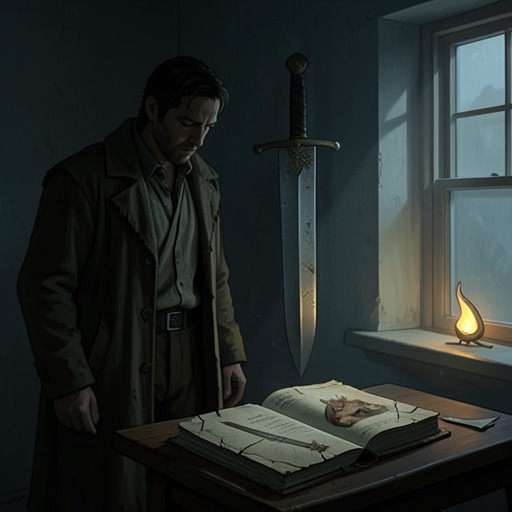
Pink Ranger’s private writing emerges in a very different setting. She is writing in a cozy drink shop in Nethermart when Pink Ranger is discovered by her comrades. The interruption catches her off guard: she jumps from her seat and accidentally drops her beer cup, provoking the annoyance of the imp barista. Her lateness for training already makes Red Ranger angry, and her suspicious behavior draws the attention of Black Ranger. The scene presents her as a dutiful soldier whose literary activity has begun to interfere with the timetable imposed by her commanders.
When Blue Ranger reads the document, the effect is unexpectedly severe. The more Blue Ranger reads, the more he shakes, until he drops the document in horror and declares that, despite being undead, he feels fear. The manuscript is not identified as an official chronicle. Pink Ranger sheepishly explains that she merely had a plot lizard that would not leave her alone, and she had never expected anyone else to read it. Her explanation treats the impulse as an intrusive creative obsession rather than a political act, but the reactions of the other rangers show that the writing has crossed a boundary within their community.
The central idea of the manuscript is explicit: Pink Ranger believes that Vainqueur Knightsbane, Victor Dalton, and the Hoard are obviously made to be together. In doing so, she transforms the emperor’s celebrated partnership with Victor Dalton into a romantic narrative and makes the Hoard itself part of the relationship. The story is therefore not only about two characters; it fuses personal attachment with the political and material center of Vainqueur Knightsbane’s world. Black Ranger asks how Pink Ranger could write about the emperor and Lord Victor in that way, while Pink Ranger defends the pairing as self-evident. Her imaginative certainty contrasts with the embarrassment and alarm of her readers.
Combat and Bardic Power
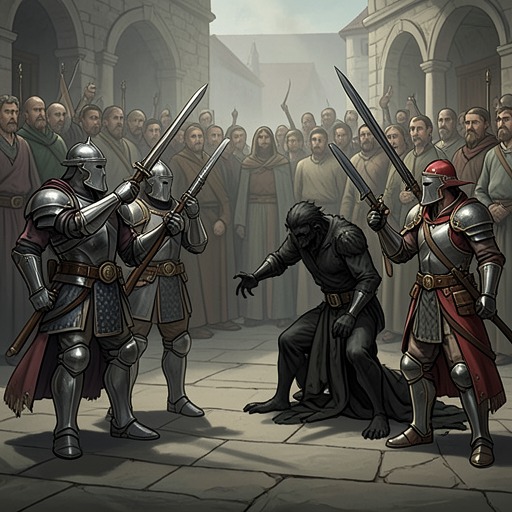
Pink Ranger’s literary talent has a direct mechanical counterpart in battle. During the attack of the Black Rabbit and its summoned army of white rabbits, Red Ranger orders the team to defend the fence and then commands Pink Ranger to sing. She answers by singing the praise of the good Emperor Vainqueur Knightsbane during the War of the Hoard. Her song invokes Furibon, calls the minions to take up their swords and fight for the Hoard, and promises that the wicked will perish in the king’s flames.
The performance is not decorative. Bardic Song raises the strength of every teammate, allowing the Kobold Rangers to hold the line against wave after wave of hungry beasts. Red Ranger and Yellow Ranger initially fire muskets and arrows, while Blue Ranger and Black Ranger prepare to kill rabbits that break through; once their projectiles are exhausted, they join the melee. Pink Ranger’s contribution gives the group a collective surge at the moment when its ranged defense fails. Her voice converts loyalty to Vainqueur Knightsbane into immediate combat power, linking propaganda, morale, and survival.
After the battle, Pink Ranger gains two levels in Bard for defeating a Black Rabbit and earns the Extended Song Personal Perk. The reward specifies that her songs’ enhancements last twice as long. The system therefore formalizes what the scene has already demonstrated: Pink Ranger’s influence persists beyond the instant of performance. Her songs do not merely accompany the rangers’ actions; they extend the duration of the abilities that keep them fighting.
Narrative Significance
Pink Ranger embodies the instability of official history inside Vainqueur Knightsbane’s empire. Vainqueur Knightsbane asks her to write a controlled public chronicle that distributes his greatness to every household, yet Pink Ranger also produces a private story that rearranges the meaning of his closest relationships. Both texts arise from devotion, but they serve different audiences and expose different kinds of truth. The official account preserves the emperor’s legend; the private account reveals how that legend is being emotionally interpreted by one of his followers.
Her characterization also joins the book’s game-like systems to its social comedy. Pink Ranger receives formal bardic advancement and a measurable extension of her musical buffs, but her most revealing act is not a system notification. It is the unauthorized manuscript that makes Blue Ranger feel fear, embarrasses its author, and provokes an argument about what Vainqueur Knightsbane and Victor Dalton mean to one another. Pink Ranger is consequently both a functionary of the Hoard and a reader of the Hoard’s relationships, turning the regime’s self-mythology into a flexible, improvised story.