The Dragon Way of Life
Vainqueur the DragonThe Dragon Way of Life is the governing worldview associated with Vainqueur Knightsbane: wealth is not merely possession, but identity, security, political authority, and the foundation of dragon civilization. Its principles combine an obsessive reverence for gold with a rigid food chain, pragmatic use of minions, constant advancement through the Class System, and an increasingly expansive duty to protect hoards from threats such as Furibon. What begins as the personal creed of a greedy dragon gradually becomes an institutional program for an empire, complete with recruitment, trade, territorial legitimacy, public rituals, and a promise to defend other hoards.
Definition and Core Values
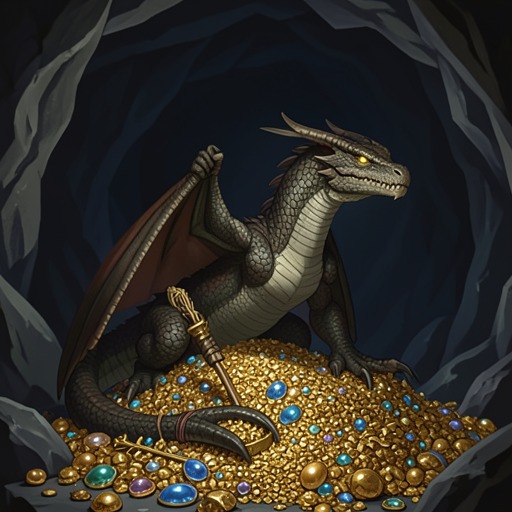
The worldview treats treasure as the central measure of life. Vainqueur Knightsbane’s ambitions repeatedly return to enlarging, organizing, and defending his hoard, and he interprets nearly every useful activity through that priority. Even the adventurer guild is explained in terms of rewards: people, nobles, merchants, and peasant groups post requests with promised payment, while the recent end of the Century War has made monster and brigand hunts especially common. The guild therefore appears to Vainqueur not primarily as a heroic institution, but as a mechanism for converting danger into wealth.
This materialism is paired with an explicit hierarchy of preciousness. Vainqueur tells Victor Dalton that Victor stands immediately beneath the dragon in that hierarchy and even above princesses. Victor is described as almost an honorary part of the hoard, valuable enough to be preserved but still subject to the logic of emergency consumption. Vainqueur explains that preciousness also determines position in the food chain: those higher in the chain may eat those below them when hungry. In the most unsettling expression of the doctrine, he says that if food disappears, he and Victor can consume minions as emergency rations. The statement is comic in delivery but systematic in implication: affection, rank, utility, and edibility coexist rather than cancel one another.
The dragon worldview therefore does not recognize a sharp boundary between economics and biology. Gold is nourishment for status, minions are labor and potential food, princesses are precious objects, and political protection is an extension of hoard defense. Its moral vocabulary is similarly self-interested. Vainqueur can call all creatures equally inferior while still claiming that everyone should have the right to become his emergency food, turning apparent universalism into another declaration of dragon supremacy.
Labor, Classes, and Resource Conversion
The Dragon Way of Life converts waste into value. When meat, monster parts, and corpses are left for animals, Vainqueur rejects Victor’s habit of giving them away and orders him to find a way to make money from what would otherwise be discarded. Victor understands that the command means opening a shop selling junk, monster parts, and corpses. The scene establishes a foundational practice: nothing connected to survival, monsters, or death is outside the hoard economy if it can be exchanged for wealth.
This system also depends on disciplined service. As chief of staff, Victor is expected to prepare Vainqueur’s class progression while training the Kobold Rangers and taking on additional administrative work. Victor’s promotion grants him the Monster Squire class, whose Monster Kin perk makes him friendly toward monsters. The class is unusual because monster classes are generally gained through deals with intelligent monsters or fiends; Victor’s advancement fulfills the entry condition through his relationship with Vainqueur. The episode shows how the dragon worldview makes personal loyalty mechanically productive: service becomes a route to advancement, and advancement strengthens the organization that serves the hoard.
Recruitment follows the same logic. When Vainqueur announces that the struggle against Furibon is a war, Victor gathers one hundred kobold applicants and seeks other creatures with class levels above twenty, including a troll, a dryad, and a golem. Vainqueur’s declaration that he does not discriminate because all creatures are equally inferior to him is both absurd and revealing. The empire can absorb many kinds of beings, but inclusion does not mean equality. Difference is tolerated when it enlarges military capacity, labor power, or the protection of treasure.
From Personal Hoard to Civilization
The worldview becomes territorial when Vainqueur settles in the Castle of Murmurin. The castle possesses lava, food reserves, and towers, making it an ideal lair for storing a hoard. Its surroundings are much harsher: a large volcano borders the western sea, the countryside consists of brown badlands and arroyos with sparse vegetation, and a red sand desert begins on the southern horizon. A small village lies at the mountain’s foot, with primitive encampments near the desert. Vainqueur would prefer more villages to supply cattle, but the fortress compensates for the poor neighborhood. His memory that the region was greener two centuries earlier also places dragon possession within a damaged historical landscape, even though he treats the ecological decline as secondary to the usefulness of the castle.
After the War of the Hoard, the castle and its surrounding society are rebuilt around the dragon’s priorities. Gnolls carry the black stones used in reconstruction, while kobolds provide more zealous service. The gnoll tribes had lived under Furibon’s rule, allowed to keep their gold only so long as they obeyed him. Many fled during Vainqueur’s war against the lich, but those who remained sought work in Murmurin. Vainqueur condemns their earlier service, then forgives and employs them. Their integration is conditional and coercive: when they stop working or fight other minions, he eats twenty troublemakers before they begin behaving. The result is not a liberal community but a functioning hierarchy in which protection, employment, punishment, and consumption are all linked.
Commerce becomes another arm of the same civilization. Nethermart is opened as the first fiendish magic-item shop in all of Outremonde, offering goods to monsters and mortals and accepting souls as collateral from customers unable to pay with coins. Its grand opening even advertises a thirty-percent discount on weapons in anticipation of war with Maure. The shop transforms infernal finance into public infrastructure, while its accessibility to both monsters and mortals demonstrates the empire’s characteristic combination of broad markets and predatory terms.
Furibon and the Defense of the Hoard
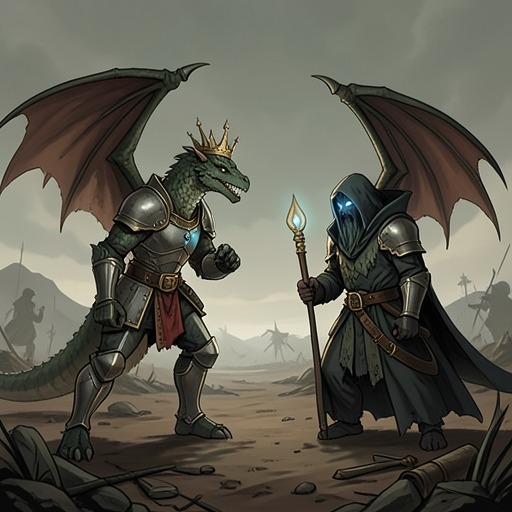
The Dragon Way of Life reaches its clearest ideological form in Vainqueur’s conflict with Furibon. At first, Vainqueur’s adventuring motive is simply to increase his hoard. Furibon forces him to recognize a larger danger: the lich’s spell turns gold into lead, and the threat therefore attacks the material basis of every dragon’s existence. Vainqueur explains that he must become a wizard to break the magical barrier around Furibon’s phylactery and cure his hoard. He then reframes the campaign as a struggle for all dragons, all present and future hoards, and the dragon way of life itself.
The language of this transformation is deliberately paradoxical. Vainqueur remains greedy, but greed becomes the basis of collective responsibility. Furibon is dangerous because he does not merely steal wealth; he destroys worth by turning gold into lead. The imagined catastrophe is a world without gold, a condition Vainqueur treats as almost impossible to conceive and therefore as proof of Furibon’s monstrous evil. The dragon’s former assumption that adventuring exists to enlarge his personal treasure is replaced by the conviction that hidden threats to every hoard must be destroyed.
The War of the Hoard gives this doctrine a narrative title and a public enemy. Its final formulation, “Furibon must die,” condenses the worldview into a slogan of mobilization. Yet Furibon is ultimately destroyed by the same obsession that drove his evil: hatred of gold. The victory is therefore not a rejection of greed but its triumph over an opposing, destructive relationship to value. Vainqueur’s hoard is restored through Spell Purge, Victor survives, and Furibon is sealed under Victor’s responsibility. A feast follows, with sheep eaten and demons summoned from their entrails before being eaten as well. Peace returns to Murmurin, but peace remains visibly organized around appetite, hoarding, and domination.
Leadership, Legitimacy, and Expansion
The worldview changes most significantly when Vainqueur begins to understand protection as a leader’s obligation. After enduring Furibon’s torture and witnessing Victor’s labor, Vainqueur agrees to make a sacrifice for Bragging Day. He announces that no hoard in his empire should remain defenseless: minions and hoarders may send him their treasures when they fear for their safety, and he will protect them from the Furibons of the world. This decision earns him a level in Kaiser, with gains to health, strength, skill, vitality, intelligence, charisma, and spirit points. The Class System thus marks a moral development mechanically, rewarding the moment when hoard defense expands beyond private ownership into public stewardship.
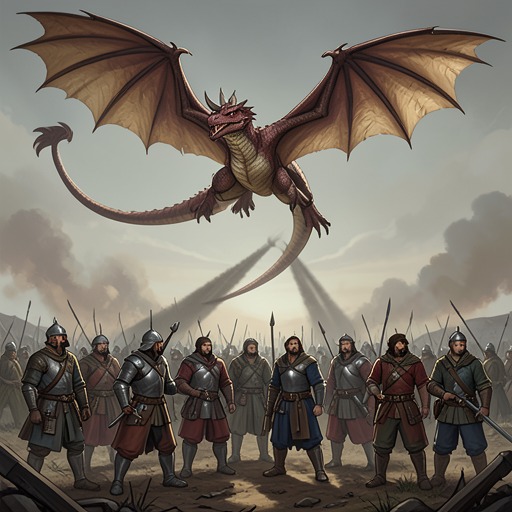
The same principle supports political legitimacy. After Maure’s death and the destruction of his army, Ishfania ceases to exist as a nation, leaving a resource-rich vacuum that could provoke another Century War. Gardemagne proposes a treaty recognizing Vainqueur’s claim as Emperor of Ishfania and granting him the status of an official adventurer state. In return, Vainqueur must promise that the two countries will never wage war against one another and will unite against external threats. He accepts partly because the arrangement preserves his Emperor class, but the treaty also formalizes the dragon’s transformation from isolated lair-owner into sovereign protector.
His public rituals retain the older violence. After every Bragging Day, the area resembles the aftermath of a volcanic disaster: houses have been turned over and no sheep remain alive. Vainqueur then declares the party over and summons the Kobold Rangers, gnolls, mimics, and other servants to resume order. The contrast is central to the concept’s design. Celebration produces destruction, destruction requires administration, and administration restores the conditions for the next accumulation of wealth.
Cultural Contradictions and Narrative Significance
The Dragon Way of Life is not a stable ethical code so much as a self-expanding contradiction. It praises hierarchy while recruiting diverse species, calls all creatures equally inferior while promising to defend their hoards, treats Victor as both trusted companion and possible food, and converts private greed into a claim of public nobility. Its institutions are therefore simultaneously protective and exploitative. The castle offers security, Nethermart offers access, and the treaty offers legal recognition, but each arrangement remains grounded in Vainqueur’s authority and the unequal value assigned to every being.
The concept also sits within a wider history of ruined empires and contested frontiers. The Sablaris Empire once ruled much of the southern continent, Ishfania, and Barin before its cultists caused a magical cataclysm that transformed the empire into a red desert; Brandon Maure later occupied the ruins of Ishfania with summoned monsters. Against that background, Vainqueur’s empire appears as another attempt to impose order on a devastated region. His method is distinctive not because it escapes conquest, but because it redefines conquest as hoard protection, employment, commerce, and class advancement.
The final image is therefore less a conversion than an enlargement. Vainqueur still eats, hoards, boasts, and destroys, but he now understands the survival of his own treasure as inseparable from the preservation of a dragon-centered world. The Dragon Way of Life turns appetite into law, wealth into identity, and a lair into an empire. Its comic excess exposes the danger in that transformation, while its political success shows why the worldview can endure: it offers protection, advancement, and material order, even when the price is obedience to a dragon who never stops believing that everything ultimately belongs in his hoard.