The Wild Hunt
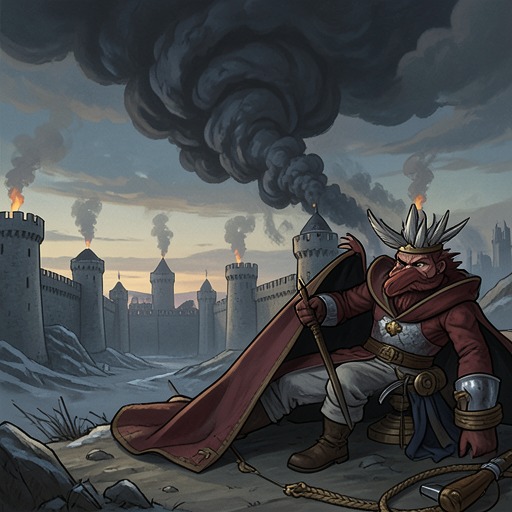
Vainqueur the DragonThe Wild Hunt is the planned mass war announced by Mag Mell on behalf of the Old Folk, a campaign intended to reclaim Outremonde through the extermination of mortals and eventually extend the invasion to Earth. Although it has not yet begun in the narrated encounter, its proposed scale, ideology, and promised rewards make it one of the book’s largest looming threats—and Vainqueur Knightsbane’s rejection of the offer makes his refusal, rather than participation, the event’s decisive immediate outcome.
Origins and Political Aim
Mag Mell presents the Wild Hunt as the next stage of an ancient struggle between the Old Folk and the New Folk. Speaking to Vainqueur Knightsbane, the fomor says that a great war will soon be waged and that a horde numbering millions is being gathered. The stated objective is not a limited raid or punitive expedition: the Wild Hunt is designed to kill the last of the mortal peoples, seize Outremonde, and restore it to the condition in which the Old Folk ruled it.
The proposed campaign also has an interworld dimension. After the mortals of Outremonde have been destroyed, Mag Mell says the war will be carried to Earth, the world mortals call by that name. Outremonde is therefore treated as the first theater of a broader reconquest, while Earth becomes the enemy’s nest and the final extension of the campaign. The plan transforms a local conflict between monsters, mortals, and old powers into a project of transworld conquest.
The Offer to Vainqueur Knightsbane
Mag Mell approaches Vainqueur Knightsbane with a direct invitation to fight beside the fomor king and to help paint the green land red. The offer is framed as an alliance with a ruler whose forces are already assembling, not as a request for a subordinate mercenary. Its appeal is reinforced by the promise of substantial spoils: fairy gold and mortal flesh are offered as tribute to those who join the carnage.
The invitation carries particular weight because Vainqueur Knightsbane is treated as the greatest of dragonkind and as the calamity of the current age. Mag Mell acknowledges his power even while challenging his self-image, suggesting that the dragon’s strength could decide the coming war. Vainqueur Knightsbane rejects that premise of shared purpose. He insists that he has always ruled and mocks the Old Folk for having grown weak enough to be defeated by mortals; the proposed alliance consequently becomes a contest over which ancient power has the right to dominate.
Ideology of Extermination
The Wild Hunt is justified through a doctrine of purification. Mag Mell describes mortals as vermin and their magic as a disease, then presents killing both the users of that magic and the peoples who carry it as a form of cure. The rhetoric moves from military victory to biological eradication: the mortal population is to be hunted into its houses, and even its children are to be destroyed. The campaign’s objective is a world made pure by removing the New Folk altogether.
Mag Mell also claims that the Old Folk possess the means to replace what they destroy. The fomors can raise gold from the air and shape slaves from dirt, creating life with one hand and taking it with the other. This promise answers the practical consequences of extermination only through supernatural production and enslavement. The Wild Hunt thus combines apocalyptic violence with a fantasy of total control over resources, labor, population, and territory.
Vainqueur’s Refusal and Its Logic
Vainqueur Knightsbane refuses not because he defends mortal equality or rejects violence. His objection is openly self-interested and rooted in the dragon’s established hoarding economy. He asks why he would exterminate his favorite food when the destruction of the lesser races would also eliminate the sources of coins and princesses that sustain his desires. For him, total conquest is strategically foolish because it destroys the population that supplies treasure and prey.
That response creates a sharp contrast between two forms of monstrous rule. The fomors seek purification through annihilation and imagine that magic can manufacture replacements; Vainqueur Knightsbane prefers a living hierarchy in which mortals remain subordinate, exploitable, and available. His refusal preserves no liberal peace. It instead defends a system of domination against a rival system whose violence would leave the dragon without a functioning hoard, food chain, or supply of princesses.
Vainqueur Knightsbane ends the negotiation by threatening to devour Mag Mell and declaring that he is no one’s pet. The gesture converts political refusal into a defense of sovereignty. He will not become an instrument of the fomor king, even when the proposed reward includes wealth and flesh. Mag Mell consequently departs with a warning rather than an alliance: on the solstice, the fomor predicts that the New Folk will eventually come for Vainqueur Knightsbane and his kind.
Wider War Context and Narrative Significance
The threat of the Wild Hunt is placed against a history of increasingly organized monster warfare. In the final battle against Furibon, Vainqueur Knightsbane’s armies use mobile wooden bridges to reach a castle, while kobolds, werewolves, and undead fight together under the leadership of the Kobold Rangers. At Murmurin, the V&V Adventurer Company and the villagers defend barricades and magical thorn barriers against an Ishfanian army, while Victor Dalton organizes a delaying defense designed to hold until Vainqueur Knightsbane defeats the Iron Eagle and routs the attackers. These earlier conflicts establish that monster forces can mobilize, coordinate, and defend territory, but the Wild Hunt imagines their organization multiplied into a horde of millions.
The contrast is also visible in the political aftermath of the Ishfanian conflict. With the army destroyed and Brandon Maure dead, Ishfania ceases to exist as a nation, and Gardemagne proposes recognizing Vainqueur Knightsbane’s claim as Emperor of Ishfania while binding the new adventurer state to a mutual protection pact. That settlement turns conquest into territorial administration and treaty-making. The Wild Hunt offers the opposite model: no durable political incorporation, only extermination followed by the restoration of Old Folk supremacy.
The book’s Class System further frames the difference between individual power and collective historical danger. Vainqueur Knightsbane gains a level in the Noble class through his ego and dragon bloodline; Victor Dalton becomes a Monster Squire through service as the chief enforcer of a mighty dragon and later gains additional levels and perks for leading monsters against superior opponents. Vainqueur Knightsbane eventually reaches the level thirty class ceiling until a Crest is used, yet the planned Wild Hunt exceeds the scale of any single character’s progression. It is a threat defined by mass mobilization, ideology, and the remaking of worlds rather than by one more personal advancement.
The Wild Hunt therefore functions as a looming alternative to the order Vainqueur Knightsbane has helped build. His armies defend a hoard, a village, and a newly recognized territory; Mag Mell’s horde would erase the populations that make such possessions meaningful. The encounter leaves the threat unresolved, but it establishes the central opposition clearly: the Old Folk intend to reclaim Outremonde through a total war that may reach Earth, while Vainqueur Knightsbane will resist any power that seeks to command him—even when his resistance is motivated less by mercy than by appetite, ownership, and the practical demands of rule.