Vainqueur–Furibon rivalry
Vainqueur the DragonVainqueur–Furibon rivalry is the defining treasure war of the narrative, transforming a dragon’s private outrage over damaged wealth into a struggle over the survival of the dragon way of life. Furibon threatens not only Vainqueur’s hoard but also the permanence of value itself: gold can be transmuted, death can be evaded, and victory can remain incomplete until the enemy’s soul is contained. Their conflict therefore moves from ridicule and material sabotage to a personal war whose resolution establishes Vainqueur’s authority over Castle of Murmurin and elevates him into the Kaiser class.
Origins and Stakes
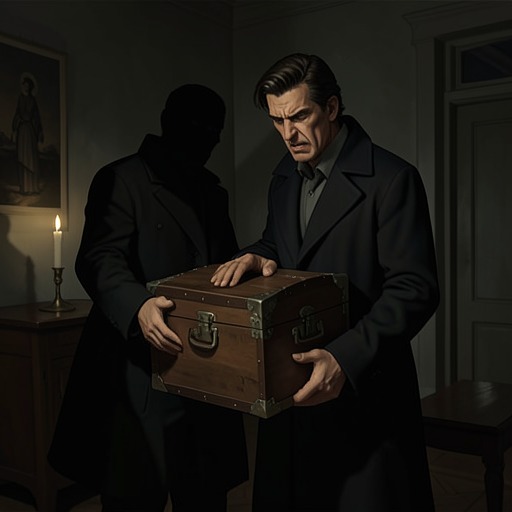
Furibon’s power is rooted in the undead persistence of his soul. Vainqueur learns that killing the lich does not make him stay dead because Furibon has hidden his soul in a phylactery, probably within his castle. A magical barrier protects that object, and Vainqueur cannot break the barrier or restore his hoard by force alone. The problem changes his objective: he announces that he must become a wizard so that he can destroy the phylactery and end Furibon permanently.
Vainqueur initially frames the struggle through wealth. Furibon’s attack on the hoard is especially devastating because it turns the dragon’s most secure possession into an exposed vulnerability. When Furibon asks whether the gold on the ship’s bridge is Vainqueur’s hoard, Vainqueur desperately orders him not to throw it into the lava. The lich does not waste the treasure in that crude fashion. Instead, he casts [Transmute Gold to Lead], and the entire hoard changes from beautiful gold into dull lead. The result leaves Vainqueur too shocked even to process what has happened. Furibon’s magic thus attacks both the substance and the meaning of the treasure: the hoard remains physically present, but its preciousness has been stripped away.
The destruction of Furibon becomes larger than a quarrel over property. Vainqueur tells Victor Dalton that the conflict is no longer about wealth but about all dragons and all hoards, present and future. He identifies Furibon as the greatest threat to the dragon way of life since the Gold-Eating Insects. The claim is grandiose, but it also reveals how Vainqueur converts personal injury into imperial purpose. His rivalry with Furibon becomes a defense of a civilization organized around hoarding, possession, and the sacred status of treasure.
The War of the Hoard
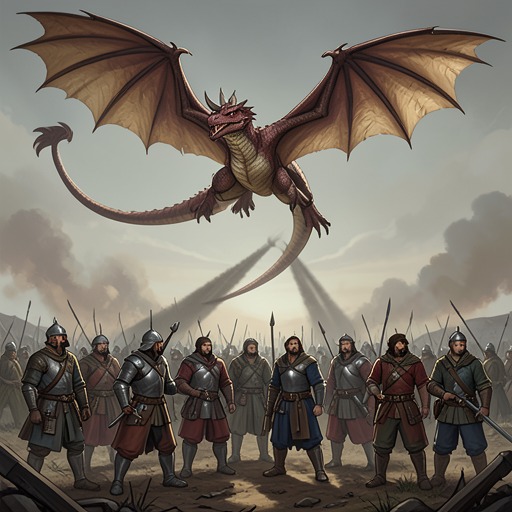
The conflict is formalized in the Chronicles of the War of the Hoard, whose final chapter gives the struggle a stark imperative: "Furibon must die." The accompanying account presents Murmurin as a land at war and describes Furibon as having kidnapped Lord Victor, first among Vainqueur’s minions. His evil spreads across the land by corrupting everything shiny, making the hoard conflict both a rescue mission and a campaign against a contagion of anti-treasure magic.
Furibon’s confidence rests on a sharp contrast between brute strength and magical mastery. When Vainqueur repeatedly tries to trample and bite him, the lich dodges every attack and taunts the dragon for relying on physical power. Furibon boasts that he has mastered magic, peered into the abyss of time, overcome death, and become power incarnate. The scene makes Vainqueur’s usual superiority useless: the dragon is physically overwhelming, yet his anger merely turns the confrontation into a frustrating chase.
The reversal comes through cooperation rather than Vainqueur’s direct attack. While Vainqueur remains focused on Furibon, his undead abomination catches the lich from behind in its jaws. Victor Dalton is riding on the creature’s back with Chocolatine, encouraging it as though it were a dog shaking a mouse. The grotesque intervention punctures Furibon’s self-presentation as an untouchable master of forbidden power. His grand magical duel is interrupted by an undead beast, a cheerful minion, and a deliberately comic display of physical restraint.
Victor then delivers the decisive blow. After using Enhanced Teleportation and Teleportation, he swings the scythe and cuts off Furibon’s skeletal head. Furibon’s bones crumble immediately, and black spectral energy escapes, apparently attempting to flee. The escape fails because a dark force drags the spirit into the scythe. The weapon then reflects Furibon’s screaming face within its blade, converting the lich’s body and soul into an object under Victor’s control. Victor’s next swing confirms the humiliation: Furibon’s ghost remains silently snarling inside the weapon while Chocolatine takes pleasure in the silence.
Containment and Consequences
Furibon’s defeat is not presented as an uncomplicated destruction. Victor explains that the lich’s soul will probably return to its phylactery if the scythe is destroyed, but that Furibon is sealed for the present. The phylactery therefore remains a possible source of future danger, while the scythe functions as an imperfect but effective prison. This distinction preserves the rivalry’s underlying logic: death alone cannot resolve a conflict with an undead enemy whose identity has been separated from his body.
For Vainqueur, sealing Furibon ends the immediate threat to his wealth. He declares that Furibon’s evil will never befoul his treasure again, joining moral language to proprietary relief. The narrative reward is equally concrete. Because Furibon has been sealed in Victor’s weapon and Vainqueur has claimed Castle of Murmurin as his dungeon, Vainqueur gains a level in the Kaiser class, receives substantial increases to his health, spirit, physical, mental, social, and luck attributes, and earns the Dungeon Owner (Castle of Murmurin) class Perk. The rivalry consequently changes Vainqueur’s status as well as the balance of power around the castle.
The victory also becomes a political founding myth. Vainqueur declares Vainqueur Day, an annual celebration of Furibon’s defeat, with a great cattle feast and the burning of a wooden puppet representing the lich before an adoring crowd. He further demands a statue of himself in the werewolf village, larger than the statues of the gods in human temples. The commemoration turns a dangerous private war into public imperial pageantry, preserving Vainqueur’s preferred version of events in which the dragon is both conqueror and object of worship.
Trust, Debt, and the Rivalry’s Afterlife
The conflict strengthens the relationship between Vainqueur and Victor Dalton even as it preserves their language of hierarchy. Vainqueur permits Victor to borrow items that the dragon cannot wear, formally presenting the arrangement as an act of limitless generosity and expecting thanks in return. After Furibon is sealed, Vainqueur declares that Victor alone is worthy to wield his sacred treasures in battle because he is the only minion Vainqueur fully trusts not to lose them. Trust is therefore expressed through access to objects: the scythe becomes the instrument of victory, while the hoard’s other weapons remain guarded possessions loaned under conditions.
This exchange is never free of accounting. Vainqueur pays Victor eight gold coins for a corpse-sale arrangement, while insisting on a deliberately distorted interpretation of a tenth of the sales. Later, after Victor’s revival on Outremonde, the goddess of commerce states that mortals paid a generous church donation for the resurrection. Victor suspects the villagers of Murmurin pooled their money, since Vainqueur would never willingly part with his coins. The revival confirms that the rivalry’s consequences extend beyond the battlefield: Victor’s service, death, resurrection, and continued usefulness are all treated through overlapping systems of gratitude, payment, and obligation.
The most extreme form of that obligation appears when Victor describes friendship as remaining with someone even after release from service. Vainqueur accepts the sentiment only by converting it into another debt. He forbids Victor from sleeping until he has repaid twelve million, five hundred forty-five thousand, one hundred thirty-three gold coins, added to the life debt owed for raising Victor as his prized chief of staff. Victor nevertheless promises to find a way to repay it, and Vainqueur concludes that they will work until both become gods and force the goddess to reimburse him. Furibon is gone from the immediate scene, but the economic and emotional structures intensified by the war continue to shape the survivors.
Narrative Significance
The Vainqueur–Furibon rivalry combines rivalry, pursuit, rescue, revenge, and ascension. Its comic surface repeatedly undercuts conventional heroic grandeur: the dragon fails to overpower the lich directly, the lich is seized by an undead creature, and the final soul-binding is performed by a minion wielding a scythe. Yet the comic reversals do not lessen the stakes. They reveal that Vainqueur’s power depends on recognizing the limits of brute force, accepting magical knowledge, and relying on a servant whose value he gradually acknowledges.
The rivalry also makes objects central to identity and power. Gold becomes lead; the phylactery becomes the hidden anchor of Furibon’s immortality; and Victor’s scythe becomes a prison containing the lich’s remaining self. Each transformation exposes the instability behind apparently fixed categories such as treasure, death, ownership, and victory. Vainqueur wins only when Furibon’s mobility is converted into containment and the threat to the hoard is placed inside another coveted object.
In that sense, Furibon’s defeat is both a triumph and a warning. Vainqueur gains a castle, a higher class, political prestige, and a festival devoted to his victory, but the phylactery remains relevant if the scythe is destroyed. The rivalry ends in domination rather than absolute erasure: Furibon’s body is defeated, his soul is imprisoned, and his evil is excluded from the hoard, yet the conditions that made him dangerous have not vanished. The War of the Hoard therefore establishes Vainqueur’s empire through a victory that is spectacular, materially focused, and permanently shadowed by the possibility that containment may fail.