Victor's Resurrection
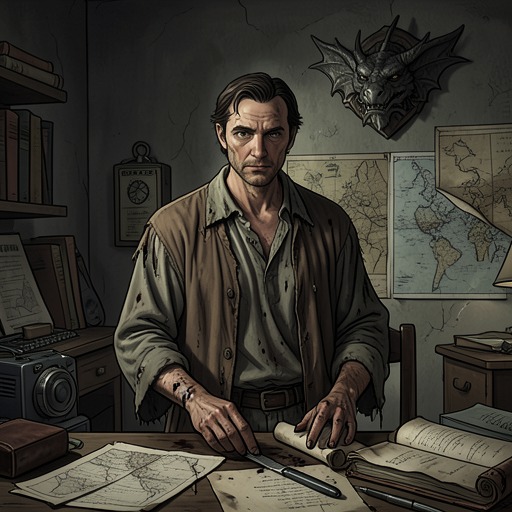
Vainqueur the DragonVictor's Resurrection is the decisive act that converts Victor Dalton from a mortal chief of staff into Vainqueur Knightsbane's dragonized greatest treasure. Vainqueur publicly presents the revival as evidence that his hoard has become so vast that he can afford to spend it, but the exchange also preserves the older pattern between them: rescue becomes debt, generosity becomes ownership, and service becomes something closer to chosen loyalty.
Causes and Background
Victor's place beside Vainqueur had been built through the Class System and through repeated acts of service. Vainqueur himself gained a level in the Noble class through his ego and dragon bloodline, while Victor gained the Monster Squire class after becoming the chief enforcer of a mighty dragon. That class granted Victor substantial increases to health, stamina, strength, vitality, skill, agility, intelligence, charisma, and luck, establishing the system's tendency to translate loyalty and achievement into measurable power.
Victor's advancement continued when he led monsters against superior opponents. His victory earned seven additional levels in Monster Squire, along with the Monster Lifeforce (Red Dragon), Monster Rider, and Monster Insight Perks. The resurrection therefore does not occur in isolation from Victor's development: it culminates a progression in which his identity has already been shaped by proximity to Vainqueur, command over monsters, and participation in the dragon's expanding domain.
The relationship is also structured by material exchange. Vainqueur loaned Victor wearable treasures because the dragon could not use them himself and wanted his reliable servant kept safe. He sold corpses for necromantic transformation and gave Victor a fee of eight gold coins, while Victor discovered that even this payment was governed by Vainqueur's deliberately narrow interpretation of their agreement. Later, Vainqueur allowed Victor alone to wield sacred treasures in battle because he trusted him not to lose them. These earlier transactions make the cost of revival legible as both extraordinary sacrifice and a continuation of their unequal contract.
What Happens
The revival is described through Vainqueur's later account before other dragons. He tells them that he gathered a greater golden hoard and sacrificed it to revive his greatest treasure, his prized dragonized chief of staff. The wording recasts Victor's restoration as a transfer of value: gold leaves the hoard, but Victor returns in a new form, becoming more precious to Vainqueur than the accumulated treasure itself.
Vainqueur does not conceal the price. He boasts that he is wealthy enough to spend twelve million gold coins reviving one minion. The declaration shocks the audience because dragonly wealth is normally understood as something to preserve rather than consume. Icefang calls the claim heresy and insists that a dragon does not spend a hoard; Vainqueur answers that such a response belongs to a poor dragon, arguing that true wealth makes twelve million coins no more precious than one.
The transformation is not merely a return to life. Victor is explicitly dragonized, making the revival an ontological change as well as a medical or magical one. His former status as a mortal servant is replaced by a closer alignment with the species and power structure of his master, while Vainqueur's public language still calls him a minion. The contradiction is central: Victor is elevated into a dragonized treasure, yet the hierarchy of chief and subordinate remains intact.
Consequences and Aftermath
The revival becomes a public demonstration of Vainqueur's claimed magnificence. Victor kneels in gratitude as the surrounding minions cheer, "Vainqueur best dragon!" Their chant confirms that the act has been converted into political spectacle: Vainqueur is not simply rescuing an individual but manufacturing a story of imperial generosity for an audience of dragons and subjects.
The event also helps Vainqueur turn a potential embarrassment into a triumph. He presents the expenditure not as a loss but as proof that his hoard has reached a scale at which spending itself is impressive. The value shift is therefore double-edged. Victor moves from death to restored life and dragonized existence, while Vainqueur's hoard moves from static accumulation to a visible instrument of prestige. The dragon's wealth is validated precisely because he can survive reducing it.
The Class System continues to frame the aftermath. Vainqueur later discovers that a Crest has worked, granting effects including Imperial Authority, which reduces enemy evasion by twenty percent, and Malefic Secrecy, which causes divination spells and Perks attempting to ascertain information about him to fail unless they overcome an opposed Charisma check. The resurrection and its public defense thus belong to a broader pattern in which achievement, status, and spectacle produce mechanical rewards.
Debt, Loyalty, and Relationship
Miel explains that the revival on Outremonde was funded by a generous church donation. Victor suspects that the villagers of Murmurin pooled their money, since Vainqueur would never willingly part with his own coins. This detail complicates Vainqueur's boast without negating it: the dragon claims responsibility for spending twelve million gold coins, but the immediate payment appears to have been enabled by communal support and divine commerce.
Victor asks about his Necrophobia status after returning from death, revealing that revival has left him with consequences beyond the change into dragonized form. The exchange makes resurrection neither a clean reset nor a simple reward. Death remains attached to Victor's identity through a continuing status condition, even as his restored life gives him a stronger place beside Vainqueur.
When Victor defines a friend as someone who remains beside another even after release from service, Vainqueur responds by forbidding him from sleeping until he repays a debt of twelve million, five hundred forty-five thousand, one hundred thirty-three gold coins, in addition to the life debt incurred when Vainqueur raised him as his prized chief of staff. Victor accepts the burden and promises to find a way to repay it. Vainqueur then declares that they will work until both become gods and force the goddess to reimburse the supposedly overpriced service. The exchange is comic in its accounting, but emotionally it confirms that Victor's loyalty has outgrown the original terms of service even while Vainqueur continues to describe their bond through debt.
Narrative Significance
Victor's Resurrection joins sacrifice, transformation, and ascension in a deliberately inverted heroic pattern. The restored figure does not return with a moral lesson or a universal gift; he returns as a more powerful servant, while the master turns personal expenditure into a claim of supremacy. The resurrection's miracle is therefore measured in both bodily change and social meaning.
The event also exposes the governing irony of the Class System. Vainqueur's identity as a dragon, emperor, and wealthy power is repeatedly confirmed through numerical growth, Perks, Crests, and visible demonstrations of dominance. Yet the most revealing proof of his wealth is an act that contradicts the hoarder's instinct: he spends. Victor's body becomes the living receipt for that expenditure, and his continued service becomes the emotional and political return on the investment.
By the end of the episode, Vainqueur has not abandoned possession; he has expanded its definition. Treasure is no longer only gold, weapons, or trophies. It can also be a trusted chief of staff, restored at an extravagant price and displayed before rivals as evidence of power. Victor's resurrection consequently strengthens both characters at once: Victor gains a dragonized existence, while Vainqueur gains the most spectacular argument yet for his claim to be the richest and most magnificent dragon present.