
Television, Surveillance, and Attention
VinelandThis thread traces television from shared entertainment into addiction, political conditioning, and a metaphor for the surveillance that shapes the novel’s world.
increasing Bearing strength in each event
 decreasing
Bearing strength in each eventdecreasingA Family Watches
The Screen at Home
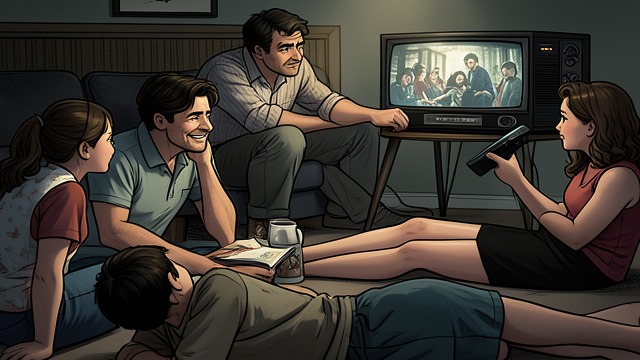
Shared nightly viewing
Frenesi watches old films with Sasha and Hub, whose reactions reveal the political histories embedded in familiar images. Television becomes both entertainment and a route into family memory.
Attention is contested
The screen can teach and distract at once. What viewers notice, and what they ignore, becomes part of the family’s unresolved history.
Hector’s Addiction
The Viewer Becomes a Patient
Treatment fails
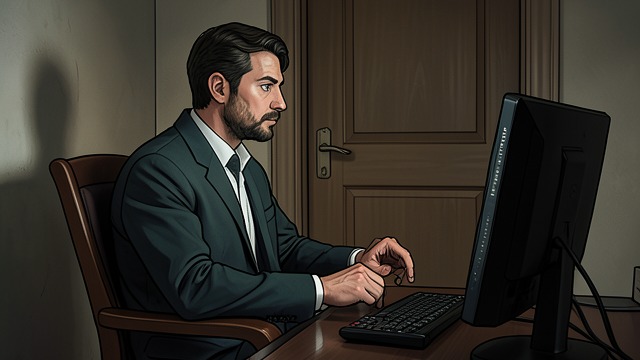
Hector’s television use becomes so compulsive that a rehabilitation program tries to control his exposure. The treatment itself turns television into both a drug and an institutional instrument.
Saturation takes over
He escapes the clinic and seeks images wherever he can find them. His dependence makes him vulnerable while also revealing how thoroughly television organizes his inner life.
Television as State Habit
Political Stories Enter Homes
Crime dramas normalize authority
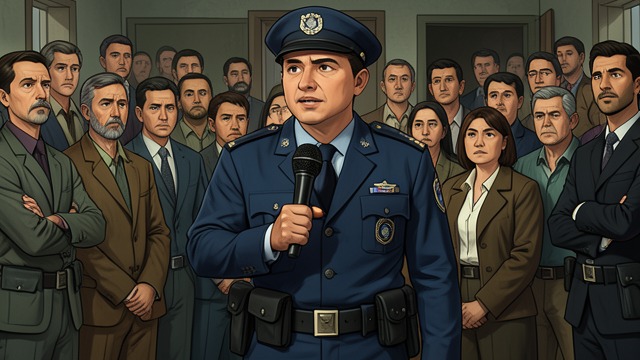
Popular police programs depict officers as understandable heroes and make routine abuses familiar. The screen narrows public expectations about law and justice.
Private life becomes legible
The same medium that comforts viewers can be monitored, repeated, and repurposed. The novel links television’s reach to a state that wants citizens visible and predictable.
The Family as a Screen
Roles Rehearsed at Home
A child observes
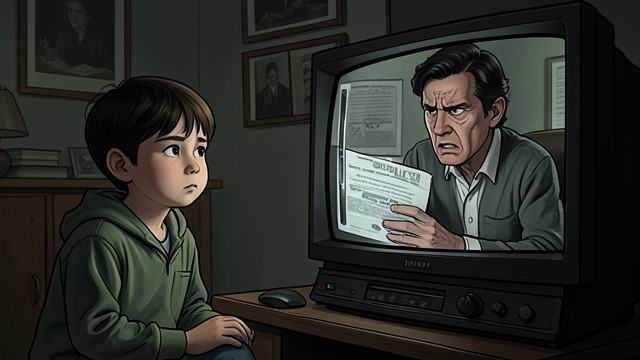
Justin watches his parents’ conflicts and learns to imagine them as television characters. This distance helps him survive a household shaped by uncertainty.
Performance replaces speech
The family often avoids direct explanation, falling into roles and repeated scenes. Television supplies a language for what they cannot safely or clearly discuss.
A World of Constant Images

Attention Under Pressure
The screen is everywhere
Television programs, news, and recordings accompany the characters through personal and political crises. Even private experiences are interpreted through familiar televised forms.
Refusal becomes difficult
The novel suggests that attention is a scarce resource controlled by institutions and media alike. Remembering clearly requires effort against saturation, distraction, and official images.
During Frenesi’s childhood
Before his return to Vineland
During the Reagan-era conflict
During Frenesi and Flash’s years together
Near the end of the story
