
A Door as Family Memory
Voices from ChernobylThis flow traces how the family door becomes a physical bond linking childhood, evacuation, death, and remembrance.
increasing Bearing strength in each event
 decreasing
Bearing strength in each eventdecreasingMarks of Growth
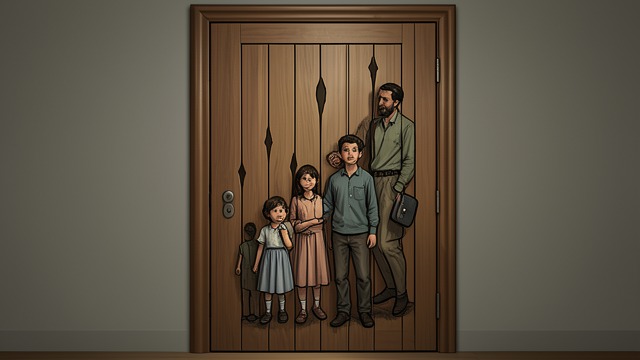
Marks of Growth
Heights Recorded
The door bore marks showing how Nikolai Fomich Kalugin and his children had grown. The family had transformed an ordinary fixture into a record that could be read over time.
A Household Archive
Those small marks preserved years that no official document could represent. The door held a shared history precisely because it belonged to daily life.
A Father's Wake
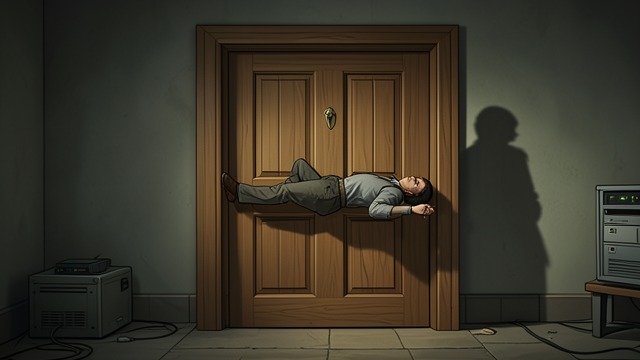
A Father's Wake
The Door's Earlier Duty
The family had used the door as a surface on which to lay Nikolai's father before burial. The object already joined domestic space with death and family custom.
Memory Accumulates
Its meaning grew through generations: a place for grief, then a record of children growing up. The later choice to rescue it was shaped by this history.
The Door Is Stolen Back
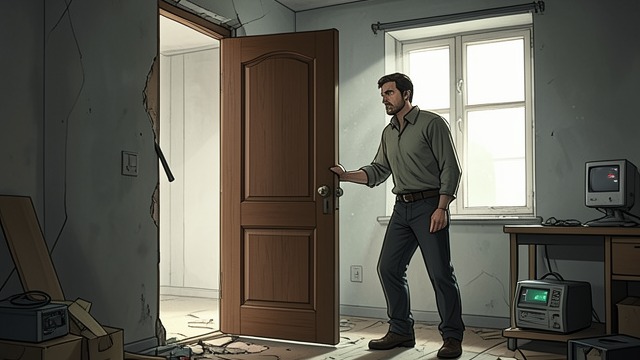
The Door Is Stolen Back
A Difficult Retrieval
Nikolai returned to the abandoned apartment and removed the door despite the risk of being challenged by police. He treated the family relic as something worth recovering from a looted home.
Home Carried Away
The door could not restore the lost apartment, but it allowed the family to carry a piece of its past. The act turned an object into a portable relationship with place.
A Daughter Laid Upon It
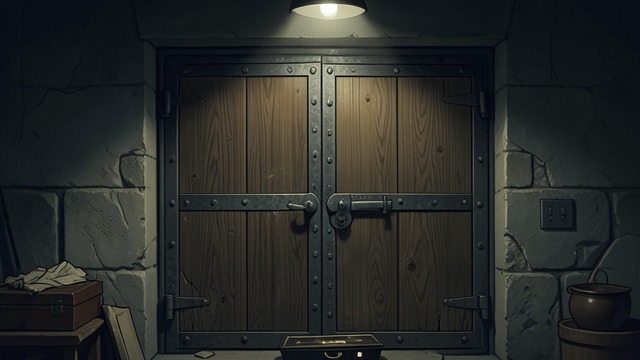
A Daughter Laid Upon It
The Familiar Surface Returns
The door served again as a resting place, this time for Nikolai's daughter before her small coffin arrived. The family's history of death and home came together on one piece of wood.
Continuity in Mourning
The object links a father's death, children's growth, and a child's loss. Its significance is not symbolic decoration but a lived family practice carried into catastrophe.
The Door Bears Witness
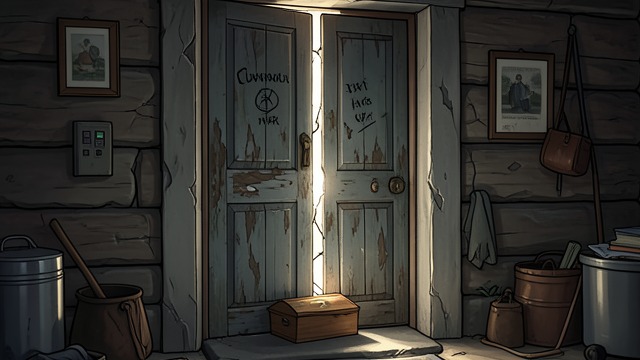
The Door Bears Witness
A Material Testimony
The rescued door stands for a family life that forced displacement threatened to erase. Its marks make the lost home tangible to anyone willing to look.
A Demand to Remember
Nikolai's account uses the object to insist that his daughter's death be acknowledged. Family memory becomes a public claim against forgetting.
Before the family's evacuation
Before the Chernobyl evacuation
After the family's evacuation
After his daughter died
The interview's present
