
Pripyat Evacuates
Voices from ChernobylThis flow traces how a supposedly brief departure from Pripyat became a permanent loss of home and ordinary life.
increasing Bearing strength in each event
 decreasing
Bearing strength in each eventdecreasingThree Days Promised

Three Days Promised
Temporary Departure
Residents were told to prepare for a short evacuation and to take basic belongings. Many expected to return after the city had been cleaned and inspected.
Trust in the Announcement
The promise made departure easier to accept, but also encouraged people to leave possessions behind. A brief official phrase became the beginning of an irreversible separation.
Buses Fill

Buses Fill
Orderly Departure
Buses carried residents away while soldiers and officials managed the operation. Families packed documents, food, or whatever they could seize in the confusion.
A City Left Behind
The evacuation removed people but not their memories, domestic routines, or animals. The contrast between orderly transport and sudden uprooting made the absence that followed especially stark.
The Return Is Denied
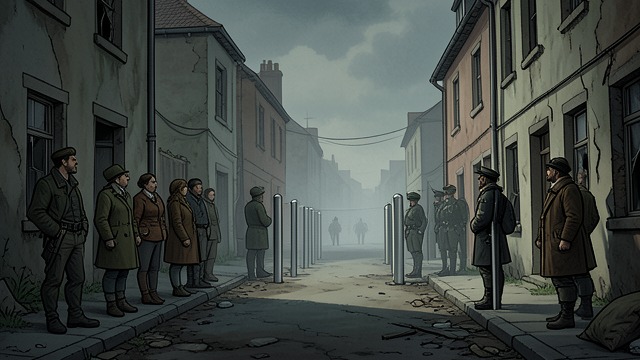
The Return Is Denied
Restricted Access
Residents discovered that the promised temporary absence had no clear end. Soldiers controlled entry, and families could not freely retrieve belongings or visit homes.
Separation Becomes Policy
The departure turned into forced displacement. A boundary intended to manage danger also divided people from graves, streets, and the material evidence of their former lives.
Stigma Travels

Stigma Travels
Marked as Different
Evacuees encountered suspicion in schools, transport, and new neighborhoods. Some were treated as if contamination made them personally dangerous.
A Social Border
The label of Chernobyl survivor followed people after they had left the physical zone. Relocation offered safety from exposure but not automatic acceptance or a restored sense of belonging.
Home in Memory

Home in Memory
Remembered Streets
Former residents continued to revisit their vanished city in dreams and recollections. Familiar houses and landscapes survived as intimate memories even when access was forbidden.
A Permanent Exile
The evacuation did not end when buses reached safety. It continued in the inability to return, the interrupted family histories, and the knowledge that the old home could not be reclaimed.
April 27, 1986
April 27, 1986, during the evacuation
The weeks and months after April 1986
After resettlement, during the late 1980s
Ten years after the evacuation
