1986 May Day parade
Voices from ChernobylThe 1986 May Day parade became a revealing public scene in the aftermath of the Chernobyl accident: families assembled in the streets even as danger and uncertainty surrounded them. In later testimony, attendance appears at once voluntary and compelled by an internalized sense of duty. The parade’s cheerful crowds and official pageantry did not resolve the fear beneath them; they made visible the pull of collective belonging at a moment when people lacked dependable grounds for deciding what was safe.
The information vacuum
In accounts of the days after the accident, residents describe trying to judge a hazard that ordinary senses could not reliably detect. One witness recalls that books on radiation, Hiroshima, Nagasaki, and X-rays disappeared from the library, reportedly to prevent panic, while medical bulletins and clear information were absent. Potassium iodide was difficult to obtain locally, and some people took too many tablets and ended up having their stomachs pumped. In this vacuum, rumor and improvised rules competed with official silence.
Other testimony describes reassuring television segments that showed food and people near the reactor being checked with military dosimeters. The commentary presented the results as proof that all was well, although the instruments were designed to measure background radiation rather than individual products. Such accounts illuminate the uncertainty surrounding public life after the accident, without establishing that every marcher knew the same things or understood the risks in the same way. The parade took place in a world where signals of danger and assurances of safety were difficult to reconcile.
Preparing for danger, continuing as usual
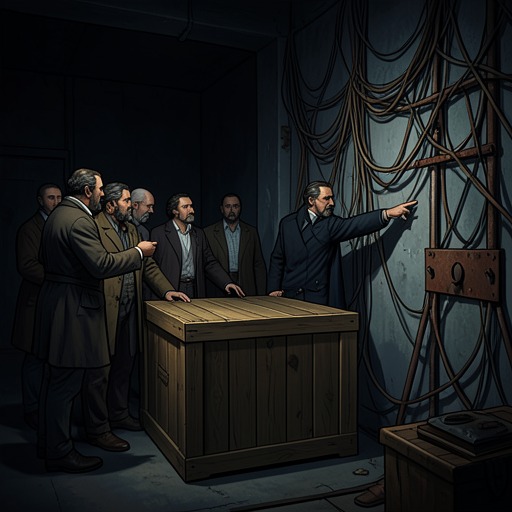
One schoolteacher recalls being told during exam preparations to bring shovels to work. Teachers were ordered to remove contaminated topsoil from around the school; no special protective clothing or respirators would be provided. Most went out to dig, while two young teachers refused. The task carried both a sense of oppression and the conviction that dangerous work had to be done. When the teachers returned home, stores were still open and women were buying ordinary goods such as perfume and panty hose. Later, bread, salt, and matches became the focus of lines, and families began drying bread into crackers. Television comedies continued while people tried to imagine how they would leave and what they would take.
Against that unsettled background, one woman remembers a doctor friend urging caution. The others felt that they should wait for an announcement and regarded the doctor as panicking; she left the next day. The remaining adults dressed their children and took them to the demonstration. No one forced them to go, but they believed that, on such a day, everyone should be together. They ran through the streets with the crowd. The decision was not presented as a simple choice between knowledge and ignorance: it was also shaped by loyalty, shared custom, and the conviction that public unity was a duty.
The platform and the crowd
The parade’s official platform offered a sharply composed image of authority. Regional Party committee secretaries stood beside the first secretary. His young daughter was visible there in a raincoat and hat despite the sunny weather; the first secretary wore a military trench coat. The image joined the political leaders’ public presence to the visible precautions taken by their own family, while ordinary families were moving through the streets below.
A separate recollection describes the parade as unusually crowded and cheerful, even though people were worried. In retrospect, the speaker understands the crowd as a refuge: people wanted to belong to the group and to direct their anger at the authorities, the government, and the Communists. Yet that hindsight also identifies an earlier failure. Before people could ask whether they should attend, many had not wanted to know the truth at all; the immediate concern was whether the radishes were safe to eat. The event’s public brightness therefore coexisted with private uncertainty and delayed recognition.
Memory and significance
The accounts do not reduce the parade to an order imposed from above. One witness stresses that participation was not compulsory, while also recalling that the group felt it ought to attend. This tension makes the parade significant: collective action could be chosen freely in the narrow sense and still be governed by learned expectations about solidarity, courage, and public duty. In a testimony shaped by memories of war, going together into the streets could feel more familiar than confronting an invisible danger alone.
The parade also stands in contrast to the practical decisions that the accident forced into daily life: what to eat, whether to leave, and how to protect children. In another account, a speaker reflects that people had been accustomed to thinking and living collectively, but contamination made each household responsible for judging its own risks. The May Day crowd temporarily gathered people into a visible whole; it could not supply the missing information or make their choices safe. Remembered afterward, the cheerful procession becomes evidence not that fear was absent, but that fear could coexist with ritual, uncertainty, and the desire not to stand apart.