Chernobyl cleanup operation
Voices from ChernobylThe Chernobyl cleanup operation was a vast, uneven effort to contain radioactive danger and manage its aftermath, carried out by workers and soldiers while residents were removed from contaminated villages. In the book’s recollections, the operation’s scale is measured not only in reactor debris or decontamination procedures but in blocked roads, buried houses, missing neighbors, and the damage that followed people home. Its central contradiction is that the landscape could look peaceful and beautiful even as it remained dangerous, while the people ordered to clean it were often left without adequate information or lasting recognition.
Background and scope
The work began in the shadow of a hazard that could not be reliably perceived by ordinary sight. One rural resident recalled being told that radiation lay on the ground and entered the soil, though it could not be seen. She insisted that she had seen cesium in her garden: after rain, pieces she described as black, blue, and red disappeared before the police arrived. The account gives the cleanup operation a defining problem: contamination could be present without leaving evidence that residents or officials could easily inspect, and the disappearance of visible material did not settle the question of what remained.
The operation extended beyond the reactor to villages and farmland. In one child’s account, the first day of school came without flowers because they were radioactive. Soldiers, rather than the masons who had previously worked there, mowed the flowers, removed the soil, and carried it away in trucks with trailers. A year later, the child’s village had been evacuated and buried. This progression—from contaminated plants and soil to the disappearance of an entire settlement—shows how cleanup could mean removing the visible substance of home rather than restoring the place for its former inhabitants.
Work at the reactor
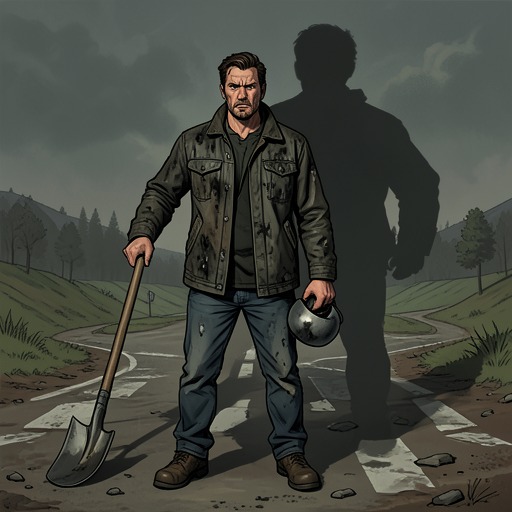
A young soldier recalled being ordered to carry buckets of graphite from the reactor and shovel it with ordinary tools. He said the dose was ten thousand roentgen and that masks, which the workers called muzzles, had to be changed as many as thirty times in a shift. The unit poured the sarcophagus over the ruins. The structure became a giant grave for the senior operator, Valery Khodemchuk, who had been trapped beneath the wreckage in the first minutes after the explosion. The soldier’s account joins an immense engineering task to a particular death, then places both inside the routine of military service: three months remained in the unit’s term, and after returning its members were not even given changes of clothes. They wore the same trousers and boots they had worn at the reactor until demobilization.
Machines did not remove the need to expose people. Radio-controlled equipment could fail or act against its commands when radiation disrupted its electronics; soldiers became the most reliable workers on the roof of the ruined reactor. Another account describes volunteers diving into water beneath the reactor to open a safety valve, amid fear that water and the uranium-graphite mixture could form a critical mass and cause an explosion of three to five megatons. The men made repeated dives and opened the bolt. Their unit received 7,000 rubles, while promised cars, apartments, and support for their families were forgotten. The testimony insists that those promises were not why they went. Their willingness to risk death is presented both as extraordinary self-sacrifice and as part of a culture that repeatedly mobilized people to do what seemed impossible.
Evacuation, exclusion, and burial
For residents, the cleanup operation brought abrupt departure and a prolonged severing from their possessions and land. One evacuee remembered taking earth from her mother’s grave in a small sack and kneeling to ask forgiveness for leaving. As people prepared to go, they wrote their names on houses, fences, wood, and asphalt. Such marks turned ordinary surfaces into messages addressed to a home that might not be seen again. In another village, an elderly woman named Anna Sushko, mute from birth and unable to read, was put into an ambulance during the transfer and taken away to an unknown destination. Neighbors who had cared for her—bringing milk, chopping wood, and sitting with her by the stove—later asked for her address so they could bring her back. They feared that she would die of sorrow among strangers.
The removal of residents did not mean that all activity stopped in the contaminated zone. A soldier assigned to prevent former inhabitants from returning described roadblocks and observation posts. Farmers asked why they could not retrieve a bucket, pitcher, saw, or axe, or harvest their crops. On one side of a road, soldiers kept people out; on the other, cows grazed, harvesters worked, and grain was shipped. Women begged to enter their own homes and brought eggs, bacon, and homemade vodka. Soldiers had to watch a woman milk a cow and then pour the milk onto the ground, or ensure that eggs were buried. Potatoes were raised and harvested only to be buried as well. The soldier found the scene especially difficult because the land still looked beautiful. The order to destroy usable food and deny people access to their property made the boundary between necessary protection and bewildering deprivation painfully visible.
Burial made that boundary permanent in physical form. The child whose father drove past the evacuated village described pits five meters deep. Firemen washed houses from roof to foundation, including windows and doors, to avoid stirring up radioactive dust. A crane then pulled each house from its place and lowered it into a pit. Dolls, books, and cans were gathered by an excavator; sand and clay covered the contents, and the ground was leveled. The village became an empty field sown with corn. Beneath it remained the family’s house, the school, and the village council office, as well as plants, stamp albums, and a bicycle the child had hoped to take away. The procedure removed contaminated structures, but it also buried the ordinary objects through which a community recognized its life.
Return, loss, and the long aftermath
The operation’s effects continued after the work crews and soldiers left. An abandoned house could still contain signs of its former occupants: a cat on a windowsill, geraniums eaten inside, and notes asking visitors not to take valuables or damage the home. Other messages said when their writers expected to leave, asked forgiveness of the house, or pleaded that a cat named Zhulka not be killed. These traces complicate the idea of evacuation as a completed administrative act. The houses remained inhabited by belongings and animals, while the people who had written the notes were absent and expected, at least in some cases, to return.
Workers also carried the operation into workplaces and family life without always being able to explain it. The soldier who had shoveled graphite said he had signed a nondisclosure form and kept silent. After leaving the army at twenty-two, he became a second-group invalid. Later, when his factory cut back his work because he was ill, he invoked his identity as a Chernobyl liquidator and said that he had protected others; his director replied that the factory had not sent him there. The conflict exposes the distance between a mission represented as service to the state and the limited recognition available to the worker afterward. Another soldier recalled being warned, before returning, not to tell people what the crew had seen in the state’s interests. Silence was part of the operation’s aftermath, even for those who had witnessed it directly.
Families described consequences that unfolded over years. A boy said his father returned from Chernobyl and resumed factory work without telling the family what had happened. A year later, the father became ill. Only after a second operation, walking together in a hospital courtyard, did he speak about the work near the reactor: the setting had been quiet and pretty, the gardens were blooming, and crews removed contaminated topsoil and washed roofs, only for dosimeters to click again the next day. His certificates of gratitude for self-sacrifice could not make the cleanup seem finished. The son, who had cancer of the blood and was afraid to be touched by classmates, said doctors attributed his illness to his father’s work at Chernobyl. The account records that explanation as the doctors’ judgment, while showing how the operation’s risks became part of family life and a child’s sense of the future.
A worker’s wife recalled that her husband left for Chernobyl on her birthday, October 19, 1986. He had worked high above evacuated villages, climbing light poles after the lights had been turned off. His brigade had seven men; one by one, all died, with her husband the last. When he returned, he described the work as ordinary and said little about danger. The difference between that understatement and the later sequence of deaths gives the operation its slow, retrospective force: what had looked like another work assignment became legible through illness, loss, and the deaths of the men who had gone together.
The operation also left unresolved practical needs. A filmmaker who had spent six months in the Zone sought benefits for a crew member who needed an apartment, but officials required certificates with seals. In the Zone’s regional committee, the only person the filmmaker found was a woman with a mop; the officials who might have issued the papers had fled. The contrast between a director holding a stack of certificates and the abandoned office makes documentation itself part of the aftermath: service could be praised, yet help depended on records that were difficult or impossible to obtain. Across these testimonies, cleanup is therefore not a clean transition from danger to recovery. It is an extended process of removal and restriction, followed by disputed recognition, bodily consequences, and the persistence of home in memories, buried things, and unanswered requests to return.