Chernobyl reactor fire suppression
Voices from ChernobylChernobyl reactor fire suppression began with firefighters responding to what they had been told was an ordinary fire, not a radioactive emergency. It became a large-scale attempt to contain the burning reactor and clear its debris, carried out amid official concealment, inadequate protection, and severe human and material consequences. The effort may have limited the disaster even as the people sent to perform it were left exposed to dangers they had not been warned about.
The First Response
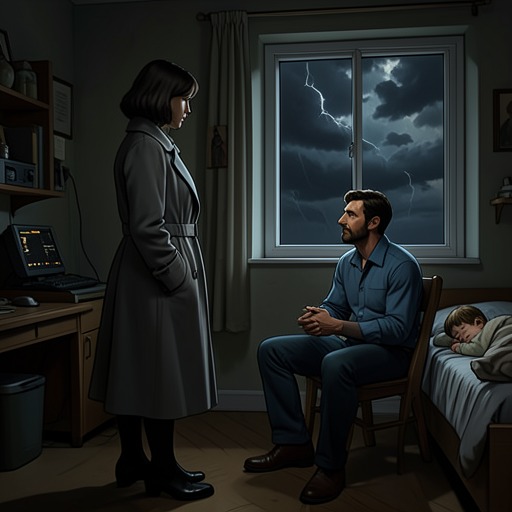
In a survivor’s recollection, the fire first appeared at night as flames, smoke, and a sky made radiant by the blaze. Her husband told her to close the window and return to sleep, saying there was a fire at the reactor and that he would be back soon. He did not return. The account does not describe the explosion itself; it stays with what could be seen from outside and the waiting that followed.
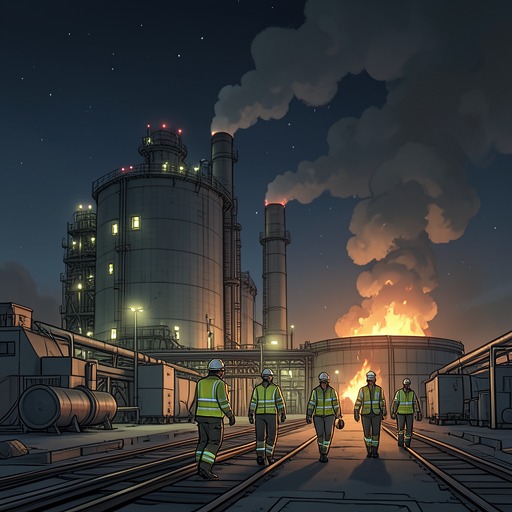
The smoke came from bitumen covering the roof. Firefighters tried to beat down the flames and kicked at burning graphite with their feet. They had gone out in their shirt sleeves, without their canvas protective gear, because they had been called to a fire and had not been told of the radiation. The distinction between the call they received and the danger they faced defines the first response: they entered an extraordinary hazard without being given the information needed to recognize it.
The recollection sets this emergency against an ordinary plan for the following morning. At six, the couple had expected to travel from Pripyat to Sperizhye, forty kilometers away, to visit his parents and plant potatoes. He loved sowing and plowing; his parents had built him a new house, but after military service in Moscow, he had chosen to become a firefighter. The interrupted journey gives the response a human scale: the man summoned to the reactor had a life organized around work, family, and a day that was supposed to begin in a field.
A Wider Suppression Effort
In the week after the accident, the Soviet authorities poured thousands of men into the effort while refusing to acknowledge publicly that anything seriously wrong had happened. Helicopters dropped bags of sand onto the reactor fire through open doors. Later analysis cited in the account suggests that this measure may have done more harm than good, underscoring how urgent action and uncertainty could coexist.
When the fire stopped, workers climbed onto the roof to clear radioactive debris. The machines brought for the work broke down in the radiation. Human beings, by contrast, continued working; the account describes the consequences as emerging weeks or months later, when some would die horribly. The contrast is stark: equipment failed at once, while the damage to the men could remain unseen until much later.
Deaths and the Cost of Exposure
The first day’s losses were already becoming visible before the full scale of the danger was understood. At ten in the morning, cameraman Shishenok died, described in the testimony as the first. Valery Khodemchuk was left beneath the debris. Rescuers never reached him, and he was buried under the concrete. These deaths mark the early human cost alongside the work of fighting the fire; the testimony emphasizes that those present did not yet know they were only the first victims.
The suppression effort therefore had two different temporal registers. The flames and debris demanded immediate action, while radiation’s harm to the people exposed to it unfolded later. That delay helps explain the disparity between visible labor and consequences that arrived weeks or months afterward, when the men who had continued working began to die.
Emergency, Concealment, and Significance
The account places the operation between two realities: an official refusal to admit the seriousness of the accident and a frantic attempt to deal with its consequences. Thousands of men were deployed, helicopters carried sand, and workers went onto the roof after the fire stopped. The effort was not proof that the danger had been honestly communicated or responsibly managed; the first firefighters had not even been told what they were facing.
The comparison made in the account is to 1941, when untrained and unarmed men were sent against the Wehrmacht in the hope that they would at least make the Germans stop to shoot them. The analogy stresses the human beings treated as expendable resources, while the account also cautions that without the intervention the catastrophe might have been much worse. Fire suppression thus remains neither a simple tale of successful heroism nor one of futile sacrifice: it is a desperate response whose potential benefit cannot be separated from the failures and concealment that exposed its workers to the danger.