Dogs
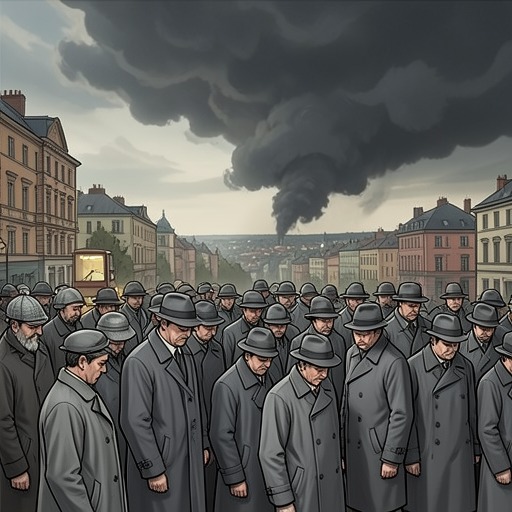
Voices from ChernobylDogs in Voices from Chernobyl are not merely part of the landscape left behind after evacuation: they wait for their absent owners, depend on human caretakers, and are later shot by people sent to clear the contaminated villages. Their changing place in human life—from household companions to abandoned animals and, in some accounts, feral threats—reveals the disaster’s violence across species.
Abandonment and Return
After the villagers left, dogs remained in their yards, still waiting for their masters. One resident went from house to house giving them pieces of bread, while also pouring milk for the cats; the dogs’ expectation of return outlasted the first days of evacuation. A later account describes residents coming back together with their dogs, slipping through the forest at night after riot troops tried to keep them out. For those who returned, the animals were part of the homecoming, not disposable possessions to be left behind.
The Culling and Its Contradictions
The animals’ return to the villages did not restore their former lives. Cleanup crews rode through evacuated settlements for two months, where dogs first ran toward familiar human voices, still guarding houses and seeming to welcome the visitors. The crews shot them in houses, barns, and yards, dragged the bodies into the street, and loaded them onto dump trucks. The dogs did not understand why people who had come near them were killing them; their trust made them easy to approach. What had once been loyalty to a household now exposed them to the violence of the operation.
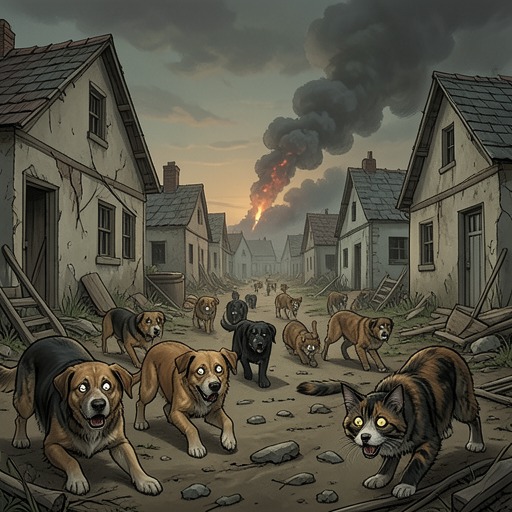
The task changed as abandonment continued. At first, houses were sealed, and the crews did not break in to reach a cat glimpsed through a window. Later, looters smashed doors and windows and stripped the houses; dogs still alive moved inside, where they no longer trusted people and could charge at anyone entering. With chickens and eggs gone, starving dogs began hunting cats. In some villages, foxes had moved in too, feeding on chickens alongside them. The emptied settlements were not simply vacant: human departure and the destruction of ordinary protections rearranged the animals’ lives, turning familiar domestic spaces into dangerous territory.
The killings could become intimate and brutal. In Masaly, six kilometers from the reactor, one crewman shot a dog that sprang from the floor beside her puppies, then had to shoot the puppies at close range. A black poodle remained vivid in his memory. The crew filled a dump truck with dogs and took them to a deep pit they called a cemetery, although required precautions against groundwater contamination were ignored. When the wounded animals cried from the truck, the men had no bullets left to finish them. The poodle tried to climb back out; they pushed him down and buried him alive. Later, an old man asked a passing crewman to check on his dog, along with his house and belongings. The dog had been shot, the house looted, and the crewman could not bring himself to take the keys or deceive him. Such encounters make the cull more than a procedure: it is a collision between the human order to contain danger and the bonds that order destroys.
Feral Lives and Human Witness
The killing did not end the dogs’ story in the abandoned villages. A year after returning, one resident found Rex, once his own dog, gone wild. He called, but Rex did not come; the man could not tell whether the dog no longer recognized him or had chosen not to answer. That uncertainty marks a changed relationship more sharply than a simple report of feralization: the animal remained familiar by name, yet the old bond no longer guaranteed recognition or trust.
Other accounts imagine this estrangement widening into a new order. Wolves and dogs that fled into the forest were said to have produced wolf-dogs larger than wolves, heedless of flags and light, unafraid of people, and unresponsive to hunters’ calls. Feral cats, meanwhile, were reported to have formed packs and attacked humans. The claims carry the unease of rumor as well as observation, but their place in the testimony matters: in the evacuated landscape, animals are no longer reliably subordinate to human commands or recognizable human categories. The imagined loss of the boundary between domestic and wild accompanies the witnesses’ own difficulty in deciding what remains familiar.
The scale of the cull also returns in the image of animal burial grounds. A speaker foresees scientists calling them bio-cemeteries: thousands of shot dogs, cats, and horses buried without a single name. The term gives these pits an institutional label, but the testimony recasts them as graveyards and even modern temples. Dogs that had once belonged to particular households are gathered into an anonymous mass, their individual lives erased by the very operation that treated them as hazards to be removed. The contrast between the named Rex and the nameless dead makes the cost of that erasure concrete.
The animals’ suffering also alters what witnesses believe should count as a subject of attention. A filmmaker recalls an old woman refusing evacuation without her cat, insisting that she would not abandon a member of her family. The encounter helped turn his work toward filming animals. When he later showed his Chernobyl films to children, one boy asked why nobody had been able to help the animals; the filmmaker could not answer. His reflection is not only about dogs, but it places their fate within a larger challenge to human-centered accounts of disaster: the people who evacuated, returned, guarded the villages, and killed the animals remain at the center of the testimony, while the dogs’ own dependence, fear, and altered lives press against the limits of that human perspective.
Uneven Encounters
The accounts do not give the dogs a single, consistent response to human return. Some cleanup workers recall dogs running toward their voices, still guarding houses and apparently welcoming whoever approached; another remembered dogs and cats behaving strangely on the road, not recognizing people and fleeing. He said he only understood what was happening when the men were ordered to shoot them. The contrast resists any simple division between loyal pets and dangerous feral animals: the same emptied settlements held animals seeking human company, avoiding it, or surviving beyond the reach of familiar bonds. Their different reactions are preserved through the workers’ testimony, while the order to kill made those reactions consequential. In the villages, a dog’s approach or retreat could no longer be read as an ordinary gesture of trust; it unfolded within an operation that treated animals as targets.