Evacuation of villages in the Chernobyl exclusion zone
Voices from ChernobylThe evacuation of villages in the Chernobyl exclusion zone turned a public-safety measure into a wrenching conflict over home, land, and the right to remain. In the recollections gathered here, soldiers arrive among frightened residents, livestock, and household possessions; departure is enforced before the hazard can be seen or fully understood. The event does not end when people are driven away: its consequences continue in abandoned homes, blocked roads, ruined routines, and the memories of those who left or stayed behind.
Background: An Invisible Danger
The evacuation unfolded amid a profound mismatch between what people could observe and what authorities said they must fear. Villagers had been told that radiation lay on or entered the ground but could not be seen. One rural woman recalled finding colored chunks in her garden after rain, gathering other women to search a nearby field, and watching the pieces disappear before the police arrived. The episode captures the uncertainty that shaped the evacuation: people encountered signs they could not interpret or preserve as proof, while the danger itself was described as invisible.
Measurements by a scientific team showed how extensive the contamination was. On a first trip into the affected area, one specialist measured forest radiation levels five to six times higher than on roads or fields. Thyroid activity among adults and children in several villages reached one hundred to as much as three hundred times the allowable level. Breast milk tested radioactive, and ordinary food in village shops—including salami and eggs—was judged unsafe. Yet the measurements and the orders that might have followed them did not translate into a coherent explanation for residents. The specialist recalled being told to take measurements and watch television, while official reassurance continued. Evacuation thus began within a crisis of knowledge as well as a physical emergency: the grounds for leaving were grave, but the hazard could not be made visible in the way a fire or flood could.
Orders, Resistance, and Departure
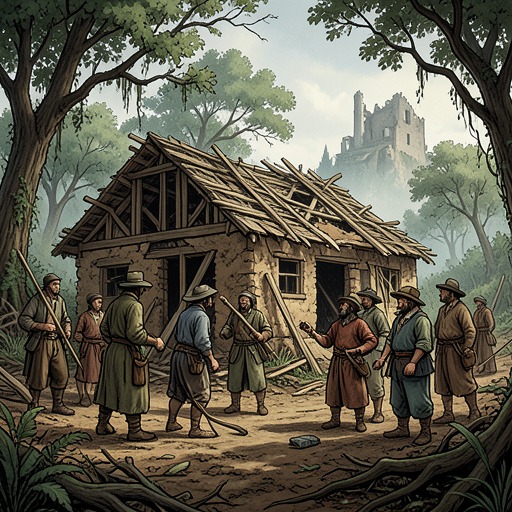
For residents, the arrival of military vehicles, aircraft, helicopters, trucks, and soldiers looked like the beginning of another war. In one recollection, a woman described low-flying planes, crying children, moaning livestock, and people covering themselves or hiding. When soldiers asked whether she had packed, she challenged them to tie her hands and feet if they meant to make her leave. They said nothing and went away. Elsewhere, old women crawled or knelt in front of houses, begging not to be taken; soldiers lifted them under the arms and carried them to vehicles. The combination of military force and pleading made evacuation an intimate confrontation, conducted at doorways and in front of neighbors rather than as an abstract administrative operation.
Other residents likewise refused at first. Some said they had survived the war and would not leave because of radiation; one household worried that its potatoes had not yet been dug. Residents resented instructions not to take belongings and questioned the compensation offered for their homes, insisting that money could not pay for the beauty of the place. An elderly man already dying asked to be allowed to walk to the cemetery himself. These accounts place the loss in concrete terms: an unfinished harvest, a familiar path to a grave, a house and landscape whose value could not be replaced by a payment.
Departure could involve a final act of leave-taking. One evacuee took soil from her mother’s grave in a small sack, knelt, and asked forgiveness for leaving. People wrote names on houses, fences, and asphalt; some addressed messages to their homes as if they were people. Such gestures made the evacuation visible as separation from both the living community and the dead. The emptied village was not an anonymous place being cleared from a map; it held family graves, remembered neighbors, and the record of everyday life.
Animals, Property, and the Barrier to Return
The departure also broke relations with animals and land. One resident remembered soldiers shooting dogs and said that afterward the sound of anything living and screaming became unbearable. Other accounts describe livestock left without water or feed, while children cried and animals crowded into the evacuation scene. The official movement of people did not resolve what would happen to the animals or the produce of the villages; instead, those responsibilities became part of the trauma of leaving.
A soldier called up for the operation later described the system used to keep former residents out. Soldiers established roadblocks and observation posts, and their assignment was to prevent people from returning to evacuated villages. Farmers could not retrieve ordinary things from their yards, harvest crops, or resume life on their land. Yet the landscape presented contradictory instructions: soldiers guarded one side of the road while cows grazed and harvesters worked on the other. A woman might milk a cow beside a soldier and then be required to pour the milk onto the ground; eggs had to be buried, and potatoes grown by farmers were also destined for burial. The rule of exclusion was enforced amid visible agricultural activity, making the boundary between usable and contaminated land seem both absolute and bewildering.
The contradiction extended to local services. In the Krasnopolsk region, kindergartens lost cooks and nurses, children went hungry, and a patient needing an appendectomy had to travel sixty kilometers over a rough road because the surgeons had left. Meanwhile, planting and harvesting plans continued without adjustment. The evacuation therefore did not produce a clean division between a dangerous abandoned area and a functioning outside. Residents and workers encountered an improvised landscape in which some activities continued, others were forbidden, and the reasons were not consistently explained.
Aftermath and Significance
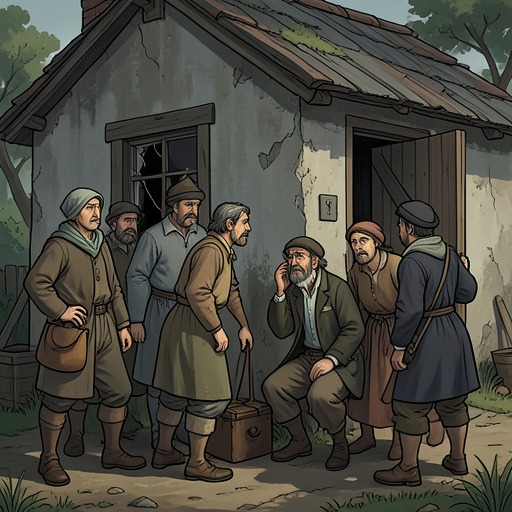
Displacement did not guarantee a safe or secure new life. One evacuee recalled walking for two weeks with a cow and sleeping in the forest after being refused entry to a house. An older woman who remained alone in her village recalled that people had said they were leaving only for a while; years later, no one had returned, and she waited for death. Her account, with its loneliness and continuing attachment to the place, shows the evacuation from the opposite side of the separation: some residents were removed, while others endured the emptied settlement and the absence of the community around them.
The testimonies make the evacuation a continuing struggle over access, evidence, and belonging. A soldier could obey orders and still see the distress of the people barred from their own homes; residents could see fields, animals, and familiar houses while being told that the land was poisoned. For those required to enforce the restrictions, the people’s faces and the beauty of the surroundings remained in memory. For evacuees, the grave soil, messages on houses, abandoned animals, and lost harvests carried the cost of departure into the future. The event’s decisive consequence was not simply that villages were emptied, but that home became inaccessible while remaining unmistakably present.