Forced displacement after the Chernobyl disaster
Voices from ChernobylForced displacement after the Chernobyl disaster turned evacuation into a rupture that reached far beyond the journey out: people lost homes, routines, livelihoods, and the right to decide where they would live. In the testimonies, buses and soldiers arrive amid secrecy and confusion, while the people being moved try to preserve the relationships and objects that make a place home. For some, departure was followed by years of exclusion; for others, resistance or return became a way to reclaim life on familiar land.
Evacuation Under Uncertainty
In Pripyat, the evacuation unfolded against a background of incomplete information. One resident recalled leaving on the third day, while the reactor was still burning. Over the radio, residents heard that the evacuation might last only three to five days and that they should take warm clothes for a temporary stay in the forest. Some prepared as if for a camping trip, packing radios and guitars and expecting to celebrate May Day away from town. The women whose husbands had been at the reactor understood the danger differently and were already crying.
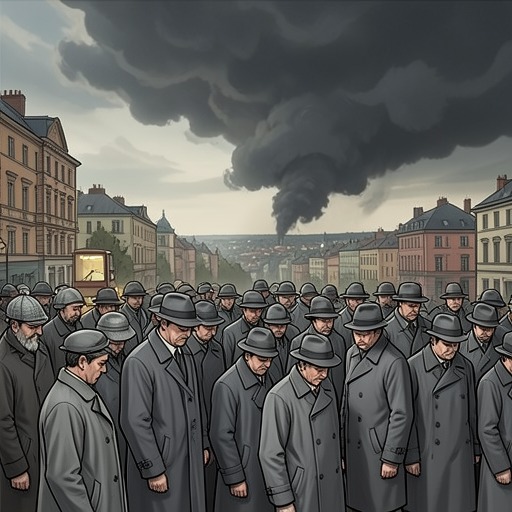
That mismatch between official reassurance and private alarm marked the departure. Hundreds of buses gathered on one side of a street, while fire trucks from across the region lined the other; white foam covered the road. The evacuation was presented as temporary even as its scale made ordinary life impossible to mistake for an excursion. The town’s residents were being moved without being told what they were leaving behind or for how long.
The separation of families began before the buses left. Wives gathered outside the hospital after learning that their husbands would be flown to Moscow. They demanded to accompany them, but soldiers pushed them back. A doctor then told the women to bring clothes because the men’s station clothing had been burned. They ran across the city for the bags; when they returned, the plane had already departed. The departure was concealed from them so they would not be present to protest. Evacuation thus meant not only removal from place but also a sudden loss of access to loved ones and decisions made beyond the family’s reach.
Village Removal and Resistance
In the villages, the military operation entered domestic space. One woman remembered aircraft flying low toward the reactor while residents hid, children cried, and livestock moaned. Soldiers knocked to ask whether she had packed. She refused, challenged them to tie her hands and feet, and stayed inside her house through the first day. Outside, she saw old women on their knees; soldiers lifted them under the arms and put them into vehicles. She later heard that people had been moved in one column and livestock in another. The planes overhead, the forced loading, and the animals being driven away made the evacuation resemble war, even under a clear sky.
Other residents recalled military vehicles rolling in and soldiers chasing them from their homes. An old man, already lying on the ground, wept that he would get up and walk to the cemetery himself. The compensation offered for houses seemed meager beside the beauty of the places being abandoned, which one speaker described as a resort. Such recollections make clear that an official valuation of property could not account for attachment to a home, a cemetery, or a landscape shaped by a lifetime of work.
Departure also carried acts of farewell that official transport plans could not contain. One person took earth from a mother’s grave in a small sack and knelt to ask forgiveness for leaving. People wrote their names on houses, fences, wood, and asphalt, marking the places from which they were being removed. Another testimony recalls soldiers shooting dogs; afterward, the speaker could no longer bear to hear a living creature scream. The evacuation divided people from familiar ground and from the animals that had shared it, while leaving visible traces of their presence on the surfaces they had to abandon.
Homes Carried Away, Homes Denied
For some evacuees, a home was not replaceable property but the record of a family’s life. One resident tried to save a cat by hiding it in a suitcase after being told pets could not be taken. The cat climbed out and scratched people. The resident also wanted to take the apartment door: the father had lain on it after his death, according to the family custom, and marks on its wood recorded the children growing up, from first grade through later years. The door held memories that could not be represented by compensation or a new apartment.
Two years later, after the apartment had been looted and emptied, the resident returned at night and took the door away by motorcycle through the woods. A neighbor had signaled that the plan seemed irrational; police pursued the resident, believing a thief was stealing from the building. The episode reverses the meaning of theft: the displaced person was reclaiming a family object from a home that had become inaccessible. Elsewhere, money paid for houses and livestock could be quickly consumed by inflation or taken up by relatives, leaving people with little control over what their old home had been worth or what its replacement could provide.
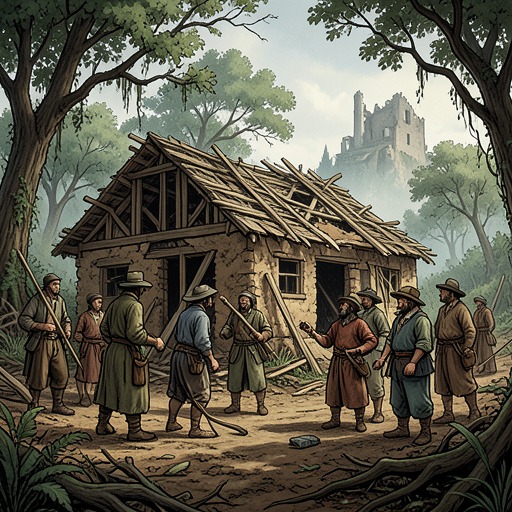
The insecurity of return could be starkly physical. One displaced resident walked for two weeks with a cow, was refused entry to a house, and slept in the forest. The account refuses the tidy separation between evacuation and resettlement: leaving did not guarantee shelter, and reaching a familiar place did not guarantee admission. For older residents in particular, the loss of a household could also mean losing the practical support, status, and daily patterns that had made life possible.
Prolonged Displacement and New Arrivals
Displacement extended into social identity. A former resident of Pripyat described how an ordinary working life was abruptly replaced by the label of a Chernobyl person: strangers looked differently, asking about the burning station, fear, and whether the person could have children. The disaster’s aftermath made people conspicuous even when they wanted to be treated like everyone else. Evacuation therefore continued beyond the act of departure, shaping how displaced people were received and understood elsewhere.
The abandoned land did not remain empty in the same way for everyone. Later, refugees from wars in Armenia, Georgia, Abkhazia, Tajikistan, and Chechnya came to live in abandoned houses that had not been destroyed and buried. To people fleeing armed violence, warnings that the land, water, and air could kill sounded almost unreal beside the immediate threat of people killing one another with guns. The contaminated territory became, for some, a place of refuge from another kind of displacement. The movement of people into the abandoned zone did not undo the earlier expulsions; it showed how one disaster’s emptied landscape could become another displaced population’s destination.
Meaning and Aftermath
The testimonies resist treating evacuation as a single, completed operation. Its effects appear in separated families, graves left behind, animals killed or abandoned, homes stripped of their contents, and residents who could neither settle comfortably elsewhere nor freely return. A four-year hospital life described elsewhere in the book, including a child’s repeated operations and the parents’ struggle to secure medical help, further conveys the long burdens surrounding the disaster, though it is not presented as a direct result of evacuation. Across these accounts, displacement is a condition produced by danger and administration together: people are moved, but their needs, attachments, and choices are not thereby resolved.
The later arrival of refugees from other wars sharpens the book’s central contrast. The abandoned land remains dangerous, yet danger is not measured in only one way. Those who had lost homes to armed conflict could judge the risk of contamination against the more immediate violence they had escaped. Forced displacement thus has no simple endpoint in these accounts. It begins with the command to leave, but continues through exclusion, stigma, uncertain return, and the search for any place where life can resume.