Minsk
Voices from ChernobylMinsk is both a lived-in city and a measuring point in Voices from Chernobyl: a place where people pursued work, love, and ordinary errands beneath a radioactive cloud, and where the consequences of the accident arrived unevenly, through instruments, rumors, and personal loss. The accounts set the city’s familiar streets and institutions against a danger that could not be seen, while also making Minsk a destination for people uprooted by war and disaster elsewhere.
The city under the cloud
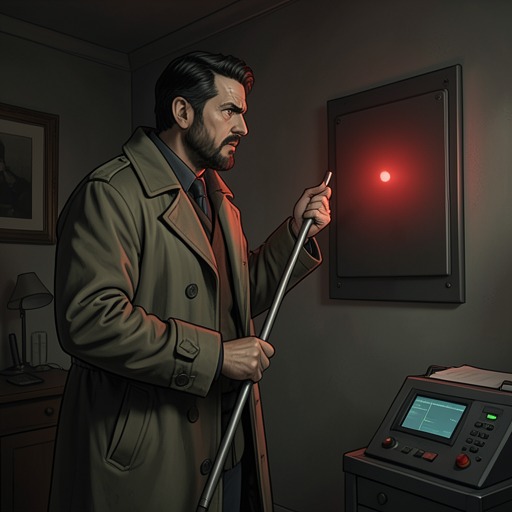
Minsk enters the book as a substantial scientific and public setting. One account is situated at the Sakharov International College on Radioecology, while another follows a researcher at an institute whose dosimetrists discover contamination inside the workplace: the desk, clothes, and walls all register as radioactive. The researcher washes his hair over a sink and checks the instrument again; the reading improves, but the office no longer feels safe. His pride in the institute’s reactor, whose every millimeter he had studied, sharpens the reversal. Expertise and familiarity have not made the danger legible in advance.
The researchers call the nearby Ignalina nuclear plant and learn that its instruments are also behaving abnormally. They call Chernobyl, but no one answers. By lunchtime, they establish that a radioactive cloud is over all of Minsk and identify the activity as iodine, evidence that the accident has occurred at a reactor. The discovery turns an abstract alarm into a citywide fact, but not into public knowledge. One researcher wants to warn his family; the institute’s telephones are bugged, and he fears the professional consequences of making a call. He calls anyway, with his daughter still out after a music lesson and eating ice cream. The scene places the intimate urgency of warning a child inside the machinery of surveillance and official silence.
That contrast continues in the streets. A scientist who has measured dangerous radiation in towns nearer the station returns to Minsk to find people selling pies, ice cream, sandwiches, and pastries beneath the cloud. The city’s ordinary commerce persists beside a threat that the people buying and selling food cannot perceive. The account’s force comes from this unbroken coexistence: the cloud is present, the market is open, and the gap between what instruments register and what daily life acknowledges remains wide.
Work, rumor, and public knowledge
Minsk is also where incomplete information circulates through workplaces and public transport. A cameraman returns from the forest and rides a bus to work, hearing fragments of a report that a young cameraman has died in Chernobyl. The name is first misheard as Vitya Gurevich; a correction identifies the dead man as Sergei Gurin. For a moment, the passenger fears that the report is about him. He imagines arriving at the studio to find a memorial with his photograph, and even wonders how anyone would have obtained it from the personnel department. The mistake makes the disaster personal before the facts are clear: a name, a job, and the possibility of death are jumbled together in the ordinary journey to work.
The account links such rumors to the mismatch between the disaster’s scale and the small number of victims first reported. Familiar measures of catastrophe—such as a battle with thousands dead—seem easier to grasp than consequences described as lasting for generations or forever. In Minsk, as elsewhere, the inability to picture radiation gives rumor room to grow. The city’s importance lies not in possessing a complete account, but in showing how people tried to make an immense and invisible event intelligible with the scraps reaching them.
Arrival and displacement
For people displaced from war, Minsk figures as a destination reached through an exhausting journey. One narrator recounts traveling from Dushanbe through Tashkent toward Minsk with a two-ton container of possessions. Officials repeatedly raise objections about weight, volume, and what the container might contain; the narrator realizes that a bribe is expected. At the station, a woman warns that demanding fairness could leave the family’s belongings abandoned in a field. They spend the night sorting through clothes, mattresses, a broken refrigerator, and two bags of books, including works by Chernyshevsky and Sholokhov. The books and the broken appliance are not incidental baggage: they are pieces of a household being inspected and reduced as the travelers try to carry a former life across borders.
The journey’s destination also marks a double loss. The narrator describes having lost both Tajikistan and the Soviet Union, making arrival in Minsk more than a change of address. It belongs to a larger experience of displacement in which the familiar political and personal worlds have disappeared together. The account does not present the city as a simple refuge or a settled home; it shows the strain of getting there and the vulnerability that accompanies arrival.
A city of remembered attachments
Minsk is remembered not only through danger and transit but through the precise geography of love. A woman recalls meeting her future husband near the main post office, beneath a large clock. She took bus number five, which passed the meeting point before reaching the children’s clothing store; sometimes she was deliberately a little late so she could see him waiting from the bus. The route, the clock, and the small delay preserve the texture of a courtship experienced as daily anticipation rather than grand declaration.
On her birthday, after they failed to get into a restaurant, the couple bought champagne and cake and celebrated on a bench in Gorky Park until morning. She proposed marriage, and they went to register the next day. The city’s landmarks become inseparable from the beginning of their shared life: a bus journey, a meeting beneath the clock, and a night in the park. Later, when her husband is gravely ill, she pleads that they might recover enough to live together in an abandoned village if he cannot bear a crowded town. That imagined future extends the emotional geography established in Minsk, even as illness threatens to end their life together.
Minsk as a point of connection
Across the accounts, Minsk gathers distinct forms of movement and knowledge. It is a workplace where radiation appears on desks and walls; a city whose markets remain active beneath contamination; a route through which rumors about death reach workers; a destination approached by displaced people with whatever remains of their homes; and the setting of memories that retain their force through familiar streets and transit details. These perspectives do not collapse into a single citywide experience. They show instead how the same place can contain routine and alarm, arrival and loss, scientific measurement and uncertain understanding.
The city’s narrative significance comes from that coexistence. The radioactive cloud is established by instruments, but its presence is set beside food stalls, a music lesson, a bus ride, and a meeting under a clock. Minsk makes the disaster’s invisible reach concrete without turning it into spectacle: ordinary life continues within its atmosphere, while the accounts reveal how much that ordinary life has already changed.