Natasha Ignatenko
Voices from ChernobylNatasha Ignatenko is the unborn daughter whom Lyudmilla Ignatenko and her husband, Vasily Ignatenko, name together in the hospital as he is dying. Her brief life and death become inseparable from the parents’ final exchange, the secrecy surrounding her body, and her mother’s enduring conviction that the child took the radioactive shock into herself. In Lyudmilla’s account, Natasha is at once a named child and a child denied a place in the official record: loved as a daughter, but remembered at the cemetery only at her father’s grave.
A name chosen together
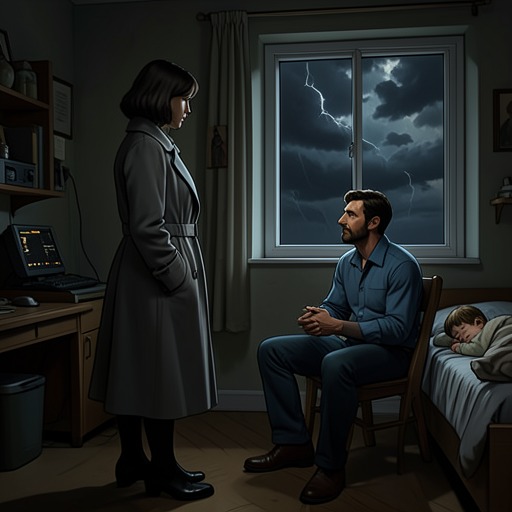
One quiet night in the hospital, Vasily asks Lyudmilla how their child is and what they will call the baby. She answers that she will decide, but he insists that the decision belongs to both of them. If the child is a boy, he proposes Vasily; if a girl, Natasha. The name is thus made in a moment of shared futurity, when the two parents can still speak as a couple about the child they expect to raise. His choice gives the girl a name before birth, even as the conversation takes place under the shadow of his grave condition.
The exchange matters in Lyudmilla’s recollection because it is one of the few scenes in which the future remains grammatically open: they discuss what the baby will be called, not what will happen to her. Later, after the baby is born, Lyudmilla addresses her as Natashenka and says that her father named her. The name carries Vasily’s presence into the daughter’s short life, making the naming both an act of parental intimacy and the fulfillment of a promise made before he could meet her.
Birth and death in Moscow
Two months after the hospital episode, Lyudmilla travels to Moscow and goes straight from the train station to the cemetery. She begins talking to Vasily, then goes into labor. The ambulance takes her to the hospital where Angelina Vasilyevna Guskova had earlier told her she would give birth. Natasha arrives two weeks before her due date. The sequence brings the expected future back to the place of mourning: Lyudmilla goes to her husband’s grave and, while speaking to him, is taken to deliver the child they had named together.
The baby appears healthy to her at first glance; Lyudmilla sees arms and legs. But the doctors tell her Natasha has cirrhosis of the liver, with twenty-eight roentgen in the liver, and congenital heart disease. Four hours after the birth, Lyudmilla is told that Natasha has died. The small interval between seeing a living baby and being told she is dead gives the account its stark measure of loss. The promised child exists long enough to be seen and named by her mother, but not long enough for the future imagined in the hospital conversation to begin.
A body withheld, ashes returned
After Natasha’s death, Lyudmilla is told that the baby will not be given to her. She understands the refusal as an attempt to take Natasha for science and protests against it. The conflict is not simply over custody of a body: to Lyudmilla, the child is her daughter, while the institution’s claim threatens to turn her into material for study. Her anger insists on the difference between a human loss and a scientific object.
Eventually, someone brings Lyudmilla a small wooden box and tells her that Natasha is inside. The baby has been cremated. Lyudmilla asks that the ashes be placed at Vasily’s feet. At the cemetery, however, the marker bears only his name. Although Lyudmilla has called the child Natasha and links her name to her father’s choice, the grave gives her no separate inscription. In her words, the child had no name there, nothing there, only a soul. The contrast between the name spoken by her parents and the absence of a name on the grave makes remembrance itself part of the loss.
The meaning Lyudmilla gives her daughter
Lyudmilla continues to visit the grave with two bouquets, one for Vasily and one placed in a corner for Natasha. She says she crawls around the grave on her knees. Her repeated visits preserve the distinction between the husband whose name is written there and the daughter who has no marker of her own. The flowers make a small, recurring memorial where the inscription does not.
Her account also turns toward guilt. Lyudmilla says she killed Natasha, then describes the child as having saved her by taking the radioactive shock into herself, like a lightning rod. This is Lyudmilla’s understanding of what happened, not an independently established medical explanation. The two statements remain side by side: she accuses herself and imagines her daughter’s death as a sacrifice that preserved her own life. She insists that she loved them both, and cannot reconcile love with death. Natasha’s significance in the testimony lies partly in that unresolved contradiction. The child is not reduced to a diagnosis or to an explanation for her mother’s survival; she remains the daughter chosen by name, mourned with her own bouquet, and carried in a story that cannot make her loss intelligible.