October 19, 1986
Voices from ChernobylOctober 19, 1986, is remembered as both a birthday and a summons to Chernobyl: Valentina Timofeevna Panasevich’s husband left that day for work in the disaster zone. The date marks the turn from a marriage accustomed to farewells and returns toward an absence that would end only with his death, years later, and remain present in the objects and memories left behind.
The birthday departure
Guests were at the table when a car arrived for Panasevich’s husband. He apologized to them, kissed his wife, and went out to the waiting vehicle. A notice with a red banner, dated October 19, called him up as if for war. The summons came on her birthday, giving an official act of mobilization the intimate shape of a parting at home.
Travel was not new to their marriage. He was a construction worker who went throughout the Soviet Union, and the couple had grown used to saying goodbye and meeting again. They thought of themselves as inseparable, and each return could bring a celebration. The fear that overcame their mothers did not seem to reach the couple at the time. In retrospect, Panasevich wondered why they had not felt it, and why she had not looked in a tenth-grade physics textbook to learn more about where he was going. He did not even wear a hat when he left.
Work in the evacuated villages
Panasevich later described her husband working high above evacuated villages. After the lights were turned off, he and the other men climbed utility poles over deserted houses and streets. The work’s height and danger seemed at odds with her image of him: nearly two meters tall and weighing ninety kilograms, he appeared too strong to be killed. The question in her recollection—who could kill him?—carries the distance between the sturdy body she knew and the danger that had become ordinary in the zone.
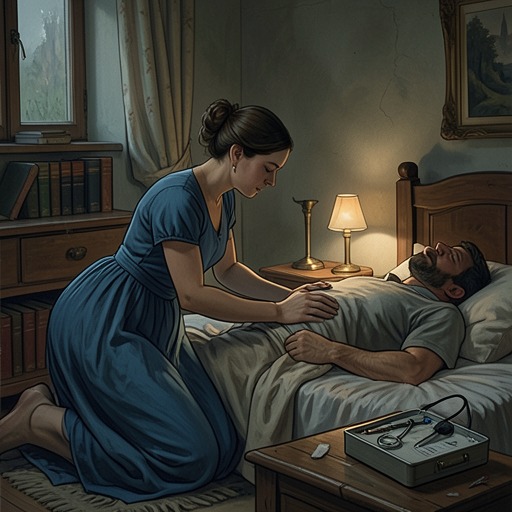
His return initially preserved the marriage’s old rhythm. When he came home, they held a party; she wore a long, beautiful nightgown kept for special occasions. Their intimacy was described as physical and habitual, down to knowing each other’s bodies by heart. When he was away, missing him could leave her disoriented: for a while she would not know what street she was on or what time it was. The departures that had once promised reunion acquired a different meaning after the October call-up.
A private summons within a wider operation
Other accounts in the book show the conditions surrounding such assignments without establishing that Panasevich’s husband performed the same tasks. Cleanup workers describe military orders, secrecy forms, and work in dangerous areas. One soldier recalled carrying buckets of graphite from the reactor with ordinary shovels, changing masks repeatedly during a shift, and returning to his unit without a change of clothes. Another described soldiers posted at roadblocks to keep residents out of evacuated villages, even as farming continued nearby and crops, milk, and eggs had to be discarded or buried. These accounts give the red-banner notice its wider context: the call sent people into an operation whose danger and consequences were not openly discussed.
The operation was also remembered through the language of war and sacrifice. A witness described volunteers diving to open a safety valve beneath the reactor, where an explosion could have made a large part of Europe uninhabitable. Their promised rewards were not what drove them, he argued; the act became an emblem of self-sacrifice. A different witness recalled being warned, before returning from the zone, not to tell others what had been seen. In this atmosphere, October 19’s personal farewell belonged to a larger history of compulsory service, hazardous labor, and restricted testimony.
The date’s aftermath
Panasevich’s account places her husband last among the seven men in his brigade: all died, one after another. The first died three years after the work; at first, the others took the death as coincidence, but the successive losses made each man wait for his turn. Her husband died last. The sequence transformed a single departure into a long period of anticipated bereavement, though the account does not specify his date of death.
The material traces of that departure remained after him. His protective suit had stayed in their storage space until he died. Panasevich wanted to keep it, but her mother feared the danger to the children, so the family took his belongings outside town and buried them. When the urn was brought to her, Panasevich felt tiny fragments in it, which she recognized as his hip bones. She also recalled seeing what she understood as his soul: a small puff of smoke beside him after his death and again at the crematorium. October 19 therefore persists not simply as the day he left, but as the beginning of a separation that altered the meaning of home, reunion, and the objects his family could safely keep.