People are already living after the nuclear war—though when it began, they didn’t notice
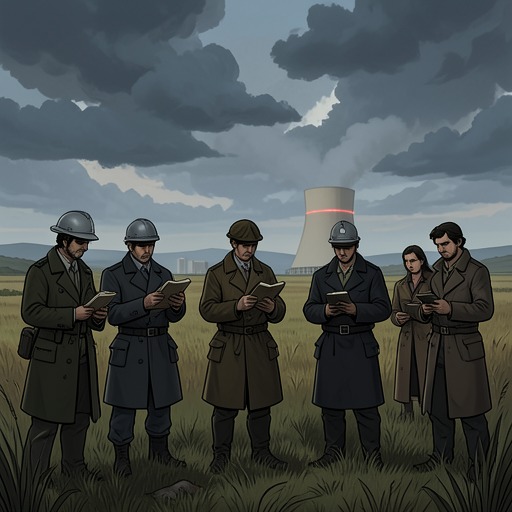
Voices from Chernobyl“People are already living after the nuclear war—though when it began, they didn’t notice” is an expression of belated recognition: catastrophe may already have reshaped ordinary life before people know how to name what has happened. In the book’s epilogue, the line gathers accounts of displacement, radiation, and abandoned animals into a claim about living in an aftermath whose beginning escaped notice. The war is not presented only as a future threat or a single spectacular blast; it is also a condition people inhabit without fully understanding.
The Epilogue’s Claim
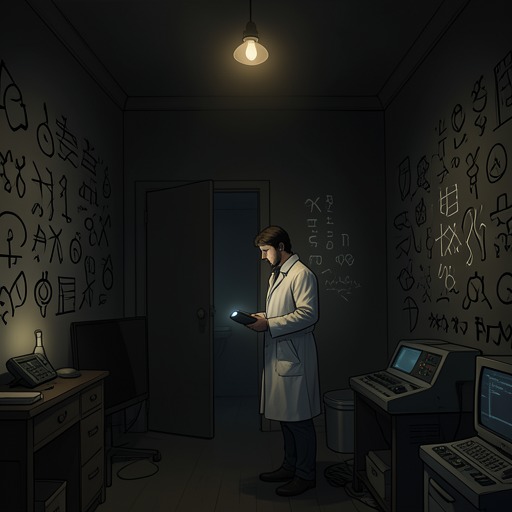
The phrase appears in the book’s closing movement, where the speaker says that the country contains 350 atomic bombs and then describes people as already living after nuclear war. Its force rests on the gap between the scale of the danger and the moment of recognition: the onset is not experienced as a clearly marked threshold. The epilogue’s speaker also reflects on the limits of expression, recalling that earlier confidence in being able to understand and articulate almost anything no longer holds before the Zone. The line thus works both as a description of a condition and as a warning about the inadequacy of familiar ways of recognizing catastrophe.
The epilogue sets this nuclear aftermath beside the immediate violence of other wars. Thousands of Russian refugees from Armenia, Georgia, Abkhazia, Tajikistan, Chechnya, and elsewhere come to abandoned houses in the contaminated region. For people fleeing gunfire, the danger posed by land, water, and air can sound like a fairy tale beside the older, tangible threat of people killing one another with guns. The contrast does not make radiation harmless; it shows how a danger that is difficult to see or grasp can lose urgency beside violence that is immediate and familiar.
Lives Displaced and Left Unaccounted For
The expression’s unnoticed aftermath is made concrete in the appeal to find Anna Sushko. Mute from birth, unable to read, and living alone in Kozhushki, she was put in an ambulance during the transfer and driven away to an unknown destination. Her neighbors do not know where she is or whether she is suffering among strangers. They remember how the village cared for her—bringing milk, chopping wood, sitting with her in the evenings and heating her stove—and ask that she be told her house is still standing and that they can repair what is broken or stolen. Her fate exposes a human consequence of evacuation that an account of routes and transfers alone cannot capture: a vulnerable person can disappear from the community that knew how to care for her.
Even the way Anna expresses pain underscores what goes missing when a person is moved beyond the reach of those who understand her. Because she cannot speak, she sings without words when something hurts. The neighbors remember that sound and want to bring her back before sorrow kills her. The appeal is not only for information about her whereabouts; it is an attempt to restore the everyday relations that made her life legible and supported. Against the broad language of nuclear aftermath, her untraced journey remains painfully specific.
Animals, Houses, and Unfinished Witness
Other accounts show an aftermath that human plans do not contain. One witness approaches what seems to be an empty house and discovers a real cat on the windowsill, alive and feeding on the geraniums. Notes left on doors record people saying goodbye to their homes, promising to return, asking that the place not be trashed, and pleading that their cat not be beaten or killed. The witness later says that memory has failed him in many respects, but the image of opening the door to the cat and the children’s notes remains. The surviving animal and the written pleas make abandonment visible not as an abstract consequence, but as a relationship abruptly left unresolved.
A different witness recalls birds nesting when he arrived and apples lying on snow when he left. Not all the apples had been buried; the burial extended to earth, bugs, spiders, and leeches. His memory of the place turns on these small lives and on the shock of encountering a world that seemed separate from ordinary human concerns. Elsewhere, a hunter remembers killing a fox as a child and later killing a doe before swearing never to kill another because of the animals’ expressive eyes. These details make the nuclear aftermath more than a human story: creatures and plants bear its consequences, while human habits of attention determine whether their suffering is even noticed.
A Change in What Counts as a Witness
The account of a filmmaker’s work with animals gives the expression a further ethical edge. After seeing an old woman refuse to leave her cat and an apple tree with no smell, he began filming animals. When he showed his Chernobyl films to children, one boy asked why nobody could help the animals. The filmmaker could not answer. He connects that question to a culture that centers human suffering and love while failing to descend to the level of animals, plants, and other forms of life. A proposed project to evacuate animals alongside people raises the practical and moral limits of human control: how could birds in the sky, or bugs and worms in the earth, be moved and informed?
Across these episodes, the expression describes not just a delayed understanding of nuclear danger but a delayed understanding of who and what has been caught in its aftermath. Anna’s disappearance, the cat in the abandoned house, the buried insects, and the boy’s unanswerable question all resist a single, clean account of disaster. The phrase’s quietest implication is that catastrophe can begin before it becomes a recognized event, while its losses continue in lives and forms of life that ordinary narratives have not learned to count.