Radiation-associated congenital disorders
Voices from ChernobylRadiation-associated congenital disorders are presented through families’ accounts of children born with severe anatomical and organ abnormalities, and through their efforts to establish whether small doses of radiation from Chernobyl were responsible. The testimonies make the disorders more than a medical category: they show the daily work of care, the uncertainty of diagnosis, and the distress of being told that a child’s condition is unrelated to the disaster. For parents, recognition of a connection matters not only as scientific explanation but as an answer to whether their love, marriage, or family history was at fault.
Conditions and Medical Care
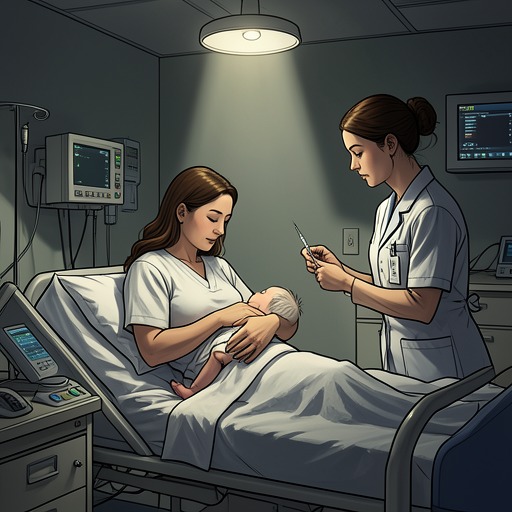
One mother describes her daughter’s birth as the beginning of an intensive medical life. The child had aplasia of the anus, vagina, and left kidney. On her second day, she underwent surgery; over the following four years, she had four operations. Doctors created an anus and began forming a vagina, but after the most recent operation her urinary function failed completely. They could not insert a catheter, and further operations were expected. Her urine had to be manually expressed every half hour through artificial openings. The family was advised to seek treatment abroad, but the cost ran to tens of thousands of dollars while the father earned 120 dollars a month.
The child’s life was organized around hospitals. She had spent four years there with her parents, knew the hospital as the place where her friends were growing up, and asked to return after visits home. Her speech, singing, dancing, poetry, and mental development were described as normal, but her play reflected the world of treatment: she gave dolls injections, took their temperatures, put them on IVs, and covered a doll with a white sheet when it died. The testimony holds these details together rather than reducing her to a diagnosis: she was a lively four-year-old whose everyday surroundings and games were shaped by repeated surgery and hospitalization.
A separate account describes a baby girl born with cirrhosis of the liver and congenital heart disease. Her liver was reported to have twenty-eight roentgen. Four hours after the mother saw her, the child died; the mother was then told that the body would not be given to her. She later learned that the baby had been cremated and placed in a small wooden box. The account conveys both a grave medical condition and the family’s exclusion from decisions about the child’s remains. It does not make the circumstances interchangeable with the surviving child’s case, but places another devastating birth and loss within the book’s record of radiation-era family experience.
Causation and Institutional Dispute
The surviving child’s mother spent four years seeking a medical document that linked the girl’s condition to ionizing radiation in small doses. Doctors repeatedly classified the condition as a congenital handicap and declined to recognize the connection. According to the mother, they said that official instructions required cases of this kind to be recorded as general illnesses, and that science would not begin connecting such conditions to radiation until a database had been assembled over twenty or thirty years. That timetable offered no answer to a family facing immediate operations, manual urinary care, and decisions about further treatment.
The mother tried to make the case through family history as well as medical evidence. She examined her family tree and found no similar condition; relatives, she said, had lived into their eighties and nineties, including a grandfather who reached ninety-four. She considered suing the government, but bureaucrats mocked her and accused her of seeking Chernobyl benefits. A professor privately advised her to write to hospitals abroad because the child’s pathologies would interest scientific institutions. She did so, describing the care her daughter required and accepting the possibility that the child might be treated as a research subject if that were what it took to keep her alive. The eventual medical paper confirming a connection did not undo the years of refusal, but it gave the mother evidence she had fought to obtain.
The conflict over naming the cause also shaped the mother’s understanding of blame. She wanted her daughter, when old enough to ask why she was unlike other children, to know that her parents’ love was not responsible. She had gone to a church minister and been told to pray for her sins, although she could identify no wrongdoing in her family that explained the child’s condition. Her insistence that the girl was a victim of Chernobyl directly opposed the administrative label of congenital handicap: the disagreement concerned not whether the child was ill, but whether the disaster belonged in the account of why.
Reproduction, Family, and the Future
The mother feared that her daughter might never be able to love a man or have children, and she wondered how the child would understand the differences separating her from other people. These fears were not presented as settled predictions about the girl’s adult life; they were the parent’s attempt to imagine consequences that medicine had not resolved. The mother herself could not contemplate another pregnancy. After returning from the maternity ward, she trembled when her husband approached her, afraid that another child might face the same suffering. A doctor’s remark that the girl had been born in armor rather than in a shirt captured the family’s sense of how exceptional and dangerous the condition seemed, without relieving that fear.
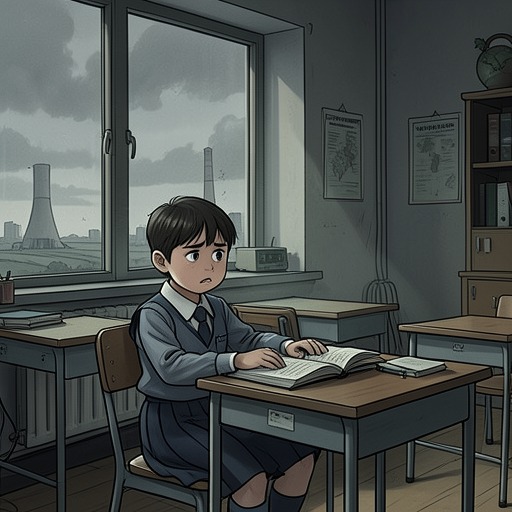
A related testimony extends the concern beyond one household. A pediatrician describes children who know their diagnoses, medicines, and procedures in detail, yet do not understand that cancer means death; when they die, their expressions seem surprised. In villages, children were measured at 1,500, 2,000, and 3,000 micro-roentgen or more. The speaker reports genetic mutations among girls and asks whether tractor drivers working the fields at least wear gas masks; the accompanying Party worker says they do not. These observations do not supply a complete account of individual congenital diagnoses, but they place children’s health within contaminated landscapes and working conditions that remained part of ordinary life.
Narrative Significance
The testimonies resist a clean division between a child’s condition and its social consequences. Surgery, hospital stays, unaffordable treatment, administrative categories, family planning, and the search for proof all belong to the disorder’s lived history. In one account, the hospital becomes the child’s familiar world; in another, a mother’s knowledge of her infant’s death is shaped by the refusal to return the body. The children’s bodies are described through intimate acts of care as well as clinical terms, making visible what a label such as congenital handicap leaves out.
The accounts also preserve the difference between experience and established explanation. Parents and doctors observe illnesses and abnormalities; one mother eventually obtains a document linking her daughter’s condition to radiation, while others describe exposure, mutations, or severe disease without establishing a cause for every individual case. That unevenness is central to the subject. The record shows families trying to live with consequences before institutions can—or will—name them, and with the burden of uncertainty falling most heavily on the children and those caring for them.