Return and self-settlement in evacuated Chernobyl villages
Voices from ChernobylReturn and self-settlement in evacuated Chernobyl villages describe an uneven, continuing condition rather than a single homecoming: residents stayed, slipped back, or were prevented from returning, while officials tried to control movement through evacuated settlements. In the testimonies, home is at once a contaminated place, a household that can be entered or destroyed, and the ground where family and community remain. People’s insistence on living there exposes the gap between administrative evacuation and the attachments that evacuation could not end.
Evacuation and the Decision to Stay
For some residents, removal began as an interruption they expected to be temporary. One elderly speaker recalled that people were told they would leave for a while, not forever. As the evacuation approached, she packed her clothes, her labor medals, and a lucky coin, but could not make herself leave. When soldiers came to ask whether she had packed, she refused to be carried away. She described houses being entered, livestock crying, children weeping, and aircraft flying low toward the reactor while residents were being moved out. The soldiers were young, and some older women crawled before them, pleading to stay. After the shouting came silence; she remained inside her house that first day.
The choice to remain was not presented as freedom from fear or hardship. The speaker had lived alone for seven years after other people left, first waiting for them to return and later waiting for death. Her children lived in the city, but she said she would not join them: her husband was buried at home, and she understood her own life as bound to his grave and their shared place. Loneliness, pain, and the practical difficulty of growing old in an emptied village coexisted with her insistence that everything there still grew and lived. Staying was thus neither simple defiance nor an uncomplicated preference; it was a claim on a life and a history that relocation could not reproduce.
Return Through the Forest
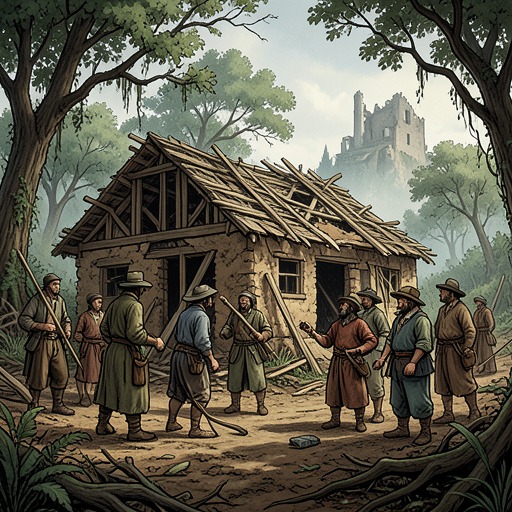
Other residents returned after leaving. In accounts from Bely Bereg, return is described as collective and clandestine: three families came back together, bringing cats and dogs, and passed through the forest at night when riot troops tried to stop them. The route recalled partisan movement, turning an ostensibly peacetime journey home into an evasion of armed authority. The returnees did not describe themselves as asking for new territory. They wanted to resume life in their own houses and to be left alone.
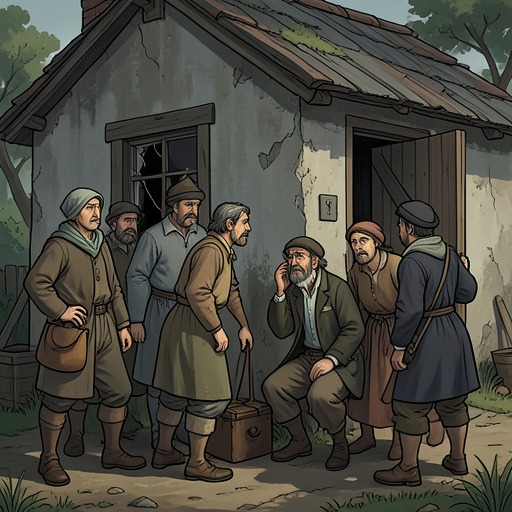
The journey could be prolonged and materially punishing. One resident said that they walked for two weeks with a cow and slept in the forest because they were not allowed into the house. For others, getting back did not mean finding a home intact. Houses had been looted: stoves smashed, windows broken, doors removed, and lamps, switches, and outlets taken. A returnee described putting things back together with their own hands. The work of repair made residence possible again, but also recorded how evacuation and the absence of protection had left domestic life exposed to another kind of damage.
People who stayed or returned accepted the loss of ordinary conveniences as part of the bargain. They said they did not need a shop or a bus and described walking twenty kilometers for bread. One resident contrasted this self-reliance with the freedom from bosses and government interference that the abandoned land seemed to offer. Yet that independence was not an absence of need: it depended on labor, animals, crops, and the ability to repair what had been taken. The aspiration was less to thrive without limits than to choose the terms of life in a familiar place.
Rules, Checkpoints, and Unequal Access
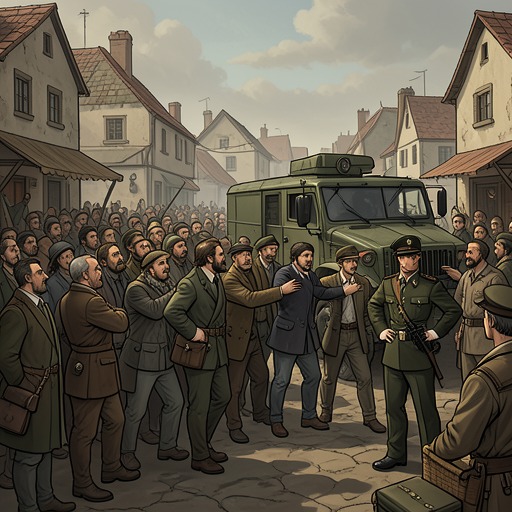
A soldier assigned to keep former inhabitants out recalled roadblocks and observation posts established around evacuated villages. Farmers asked why they could not retrieve a bucket, a pitcher, a saw, or an axe, or harvest their crops. The soldier’s account emphasizes the contradiction they witnessed: guards prevented residents from entering on one side of the road, while cows grazed, harvesters worked, and grain was shipped on the other. A woman might milk a cow only to be watched by a soldier as she poured the milk onto the ground; eggs and potatoes were likewise destroyed or buried. The land remained productive, but its former residents were denied ordinary use of it.
Access was also selective. A resident said the police kept lists of people permitted to return and that children under eighteen could not come. Visits to one’s house could therefore be granted without restoring a family’s right to live there. The rituals surrounding such visits show what permission could not settle: people went first to the cemetery and then to their yards, weeping and praying in both places. They left candles on fences, sometimes a wreath at a house, and brought food to the cemetery to share symbolically with the dead. The village was not simply a set of buildings to which access might be granted; it held relations among the living, the dead, and the places where those relations had taken shape.
The boundary between displacement and return was especially stark for the sick and isolated. Anna Petrovna Badaeva pleaded for news of Anna Sushko, a mute, disabled woman who had lived alone in their village. During the transfer, Sushko was put into an ambulance and taken somewhere unknown. Because she could not read, no letters came; Badaeva said that lonely and sick people had been placed in special institutions and hidden from view. After two years away, villagers had returned to their houses and wanted to find Sushko and bring her back. Their account makes return a question not only of crossing a checkpoint but of whether a displaced person can be located, remembered, and restored to a community able to care for her.
Household, Animals, and the Meaning of Home
The testimonies repeatedly make animals part of the return, not incidental property. Returning families came with cats and dogs; an elderly resident who had lost one cat searched the village for days until she found him under a store and coaxed him home with promises of food and company. They lived together for two winters. Elsewhere, a surviving cat on the windowsill of an abandoned house unsettled a visitor who had assumed it was a clay figure. The house also held flowers the cat had eaten and notes left by departing residents, including messages asking that the home not be trashed and warnings not to harm a family cat. The abandoned dwelling preserved evidence of both human departure and nonhuman survival.
Such scenes complicate the idea that evacuation cleanly separated people from their former lives. Residents returned with animals, searched for animals left behind, and read the condition of houses as the trace of absent families. In a separate account, a filmmaker recalled that an old woman’s refusal to leave her cat, together with an apple tree that had no smell, began a shift in his work toward filming animals. When a child asked why nobody had helped them, he could not answer. The question widened the moral field of the disaster beyond human relocation: evacuation and its aftermath had also exposed animals and other living things to abandonment and harm.
An Unfinished Homecoming
The accounts do not resolve the conflict between radiological danger and the wish to return. They show residents acting on attachment even where official controls barred them, and officials enforcing restrictions even as familiar agricultural activity continued nearby. Some people lived alone among empty houses; some came back at night, repaired what they found, and walked long distances for necessities. Others were separated from home without a known destination or a way to communicate with those who remained.
Return therefore remains incomplete in these testimonies. A house can be reached but not legally inhabited, visited but not shared with children, or found again only after its doors and fittings have been stolen. The dead remain in local cemeteries; animals cross the boundary with their people or survive in emptied homes; the living continue to speak of land as theirs. By setting these stubborn domestic details against roadblocks, lists, and forced removal, the accounts present self-settlement as a fragile practice of rebuilding belonging where official evacuation had tried to make belonging impossible.