Soviet secrecy and misinformation about Chernobyl
Voices from ChernobylSoviet secrecy and misinformation about Chernobyl did more than conceal the scale of the disaster: they transferred the burden of uncertainty to the people living and working in its path. Residents were told that conditions were under control, workers were denied or forbidden to discuss their radiation exposure, and medical evidence was withheld or classified. At the same time, thousands of people were sent into a frantic cleanup. In the testimonies collected by Svetlana Alexievich, official silence is not an abstract policy. It enters homes, hospitals, markets, schools, and marriages, altering the smallest decisions because the danger itself could not be reliably seen.
Official assurances and emergency response
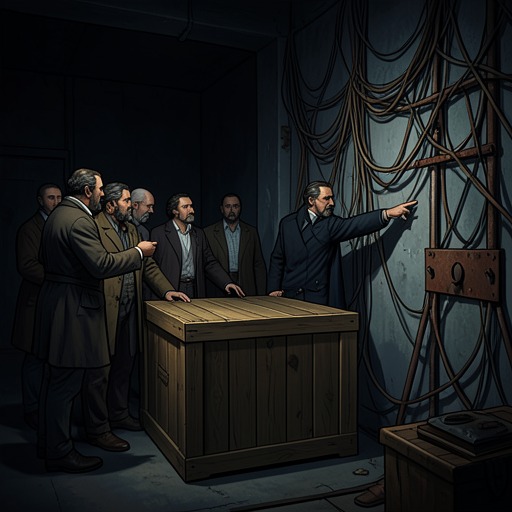
During the first ten days, while the reactor core burned and released radioactive material, authorities repeatedly represented the situation as under control. The Soviet Government did not promptly admit to the outside world that the disaster was severe. Yet concealment did not mean that no emergency response took place: in the week after the accident, thousands of men were sent to confront its consequences. Helicopters dropped bags of sand onto the reactor fire; after the fire stopped, workers cleared radioactive debris from the roof. Machines failed in the radiation, while the people sent to work in its place became ill and, in some cases, died weeks or months later. The evidence holds two facts together: a genuinely frantic effort to limit the catastrophe, and a system that exposed people to grave danger while withholding the truth about it.
That contradiction reached the population as a set of bewildering instructions and visible precautions. In Pripyat, residents saw military vehicles, road closures, stopped trolleys and trains, and streets being washed with white powder, but were not told that radiation was the danger. In one testimony, doctors attributed patients’ vomiting and collapse to gas poisoning. Only military personnel wore surgical masks, while townspeople continued to carry uncovered bread and eat cupcakes. On the night evacuation preparations began, hundreds of buses and fire trucks filled the streets. The radio announced a possible departure of three to five days, and some residents treated it as a temporary camping trip, taking guitars, radios, and food. The gap between what people were told and what was being prepared made ordinary reassurance itself part of the deception.
Restricted knowledge and controlled speech
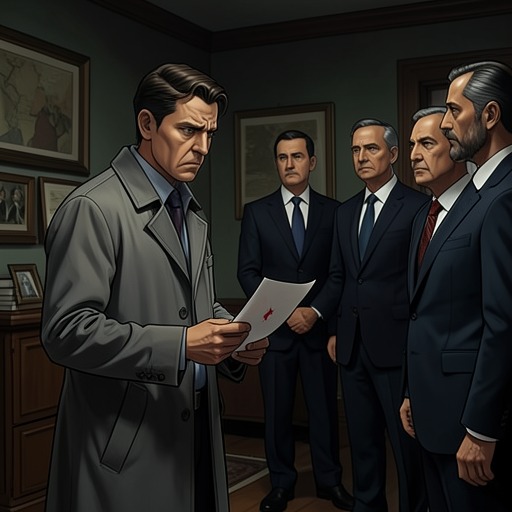
Secrecy continued after people were sent into contaminated areas. A worker recalled that his crew received equipment at Slutsk station before being told to remove the topsoil in a village near Khoyniki. On Victory Day, a general congratulated the crew; when one worker asked about radiation levels and their doses, a brigadier reprimanded him as an alarmist. Gas masks arrived days later, but were not used, and dosimeters were shown to the workers without being handed over. Before the men went home, a KGB officer warned them not to speak about what they had seen. The worker contrasted this experience with his return from Afghanistan: there, he had thought he would survive; after Chernobyl, he feared the danger would kill him only once he was home.
Another worker described driving soldiers to and from shifts beside the reactor, with a total-radiation meter around his neck. Their readings were taken in a classified department and recorded on cards, but the number of roentgen they had received was treated as a military secret. He said he left without being told his dose. He had signed a nondisclosure form, and his unit had shoveled graphite with ordinary shovels, changing masks as many as thirty times in a shift. After demobilization, he became a second-group invalid at twenty-two. Yet he could not provide doctors with the exposure records that might have helped explain his condition. At work, his illness was treated as a nuisance; when he called himself a Chernobyl survivor who had protected others, his director replied that the factory had not sent him. The withheld record outlasted the deployment: he described waking at night unable to speak to his mother about where he had been, because no one could understand it and he had been forbidden to tell it.
The control of information also shaped medical explanations. One mother spent four years pressing doctors and officials for a document connecting her daughter's severe condition to radiation. She said the doctors invoked instructions to classify such cases as general illnesses, arguing that science would need twenty or thirty years of data before drawing a connection. Her family history, she insisted, contained no comparable condition, and she needed to know that her daughter's illness was not the result of the parents' love or fault. The delay was not neutral: it kept the family from receiving recognition while leaving the mother to defend the connection against bureaucratic dismissal.
Uncertainty in daily life
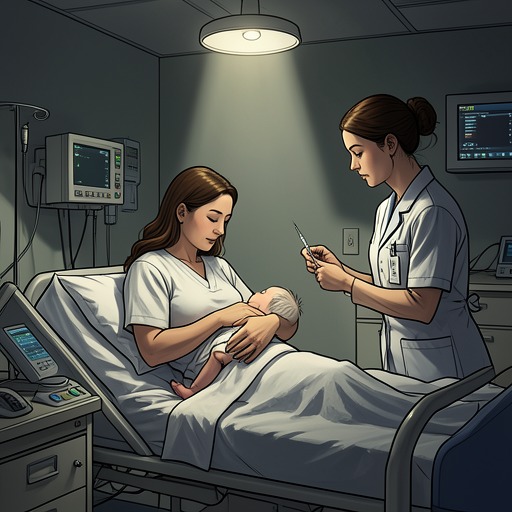
When official information was absent, people relied on rumor, improvised tests, and observations that could not settle what was safe. A resident remembered that library books about radiation, Hiroshima and Nagasaki, and even X-rays disappeared in the first days; some people believed the removal was intended to prevent panic. Potassium iodide was difficult to obtain locally unless someone had connections, and some residents took too many tablets and had to have their stomachs pumped. In the same account, birds became a makeshift sign of whether a town was habitable: people thought that as long as sparrows and pigeons remained, humans could stay. The rule failed when birds crashed into a taxi window as if blind.
Another woman recalled seeing what she identified as cesium in her garden: black material after rain, then blue, red, and other colored pieces scattered across roughly two hectares of gardens and field. She and her neighbors searched and found about four large chunks, some roughly the size of her kerchief; by the next day, after rain, they had disappeared, leaving nothing for the police to inspect. Later, signs near houses and in the street listed readings such as 60 or 70 curies. Residents were told not to eat what they had grown, to work in masks and rubber gloves, and to wash their yards, sheets, blankets, and curtains. The orders could seem nonsensical to people who believed contamination was in the field, not in stored linens behind closed doors. The testimony shows how invisible risk could make both official instructions and firsthand sight difficult to trust.
The false appearance of measurement could be as misleading as silence. A witness recalled television segments in which a military dosimeter was held near milk, fish, chocolate, or pancakes, while the commentary assured viewers that everything was fine and accused the West of spreading panic. The instruments in question measured background radiation, not the contamination of individual food products. Meanwhile, tests by a scientific group found forest background levels five to six times higher than on roads or fields, and thyroid readings in some villages reached one hundred to three hundred times the allowable dose. Breast milk tested positive for cesium; meat and other foods were described by the investigators as radioactive byproducts. The contrast between laboratory findings and reassuring broadcasts left people to judge food and exposure using measures that did not answer the questions they were being asked to trust.
Social consequences and the afterlife of silence
Uncertainty became a social label attached to those who had been evacuated. One former resident described being turned from an ordinary person into a Chernobyl person, treated as an object of curiosity and as something other than fully human. In Minsk, an evacuee's family paid triple the usual train fare, and a conductor asked for their tea cups while avoiding sharing them after learning they came from Chernobyl. At school, a boy from the affected area was called Shiny by classmates who feared he was radioactive. For a young woman from a Chernobyl family, the stigma entered her plans for marriage: her fiancé's mother asked whether she could have children, and an earlier boyfriend had treated her memories as material for drawings rather than as experiences deserving care. These responses did not require accurate knowledge of exposure. Fear flourished in the space where information had been withheld.
The same void affected decisions about family and future. One evacuated resident said that the word Chernobyl made people turn and look, and that the displaced had lost not only a town but their whole lives. Another recalled that her grandmother longed for sorrel, a food forbidden for years because it absorbed radiation; after the grandmother died, soldiers with a dosimeter tested the grass, flowers, and food at her burial in the restricted area. In these accounts, secrecy and misinformation did not end when people left the danger zone. They shaped what could be eaten, where families could return, how the dead could be mourned, and whether survivors felt safe to love or have children.
The consequences also extended into later policy and public speech. In 1999, physicist Yuri Bandazhevsky criticized the Belarusian government's push to describe more land as safe for agriculture and argued that contaminated food was knowingly being exported. The account notes that he had been jailed ever since. The testimony and the later political example together make secrecy a continuing condition, not merely an emergency tactic from the first days. Its deepest effect was to make people responsible for choices—whether to stay, what to feed children, whether to trust a diagnosis—while denying them dependable access to the evidence those choices required.