Stigmatization of Chernobyl evacuees
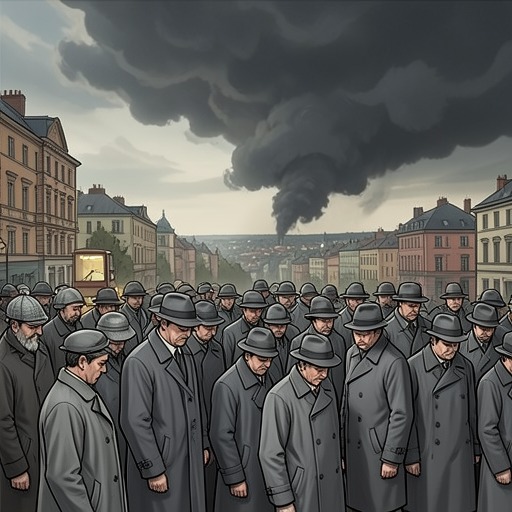
Voices from ChernobylStigmatization of Chernobyl evacuees is the social afterlife of forced displacement: people uprooted from contaminated places are marked as dangerous, treated as outsiders, and left to carry a disaster others cannot see. In the testimonies, the label becomes a signal that changes how strangers approach them, whether children are welcomed, and whether a future family seems possible. The stigma is not only prejudice between individuals; it grows around official secrecy, isolation, and the persistent uncertainty of radiation.
An Identity Imposed by the Disaster
Before the accident, one evacuee recalls, life in Pripyat followed an ordinary rhythm of work, salary, and annual vacation. Then a person could be transformed, in the eyes of others, into a Chernobyl person: an object of curiosity, suspicion, and questions about the burning station, illness, and the ability to have children. The speaker describes the experience as being reduced to something animal-like, both watched by everyone and understood by no one. The name of the place itself became a signal for people to turn and look.
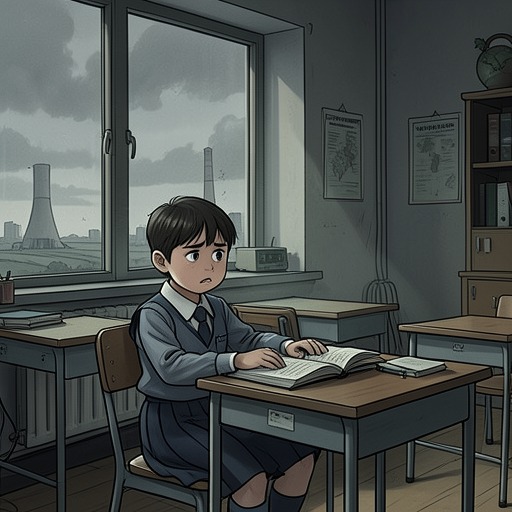
That sudden categorization outlasted the loss of home. An evacuee whose family settled in Mogilev remembers a stranger offering them a bed during an overnight stop, only to have her friend pull her away for fear that the family was contaminated. When the family’s son began school, he was the only child from Chernobyl in his fourth-grade class. A classmate refused to sit beside him; other children called him Shiny. The label attached not just to the displaced adults but to a child whose childhood, his mother says, had ended too early.
Suspicion in Ordinary Encounters
Exclusion took shape in small, unmistakable gestures. After reaching Minsk, one family had to pay three times the usual fare for train seats. The conductor brought tea to other passengers but asked the family for its cups; only afterward did they understand that she feared them because they came from Chernobyl. Objects brought back from home could also become newly suspect. A blanket had a stain that remained after washing and vacuuming; at the dry-cleaner, the spot was found to glow and was cut out. The family could no longer sleep under the blanket or wear the coat recovered with it. Their rejection of these possessions was not simply fear of an unknown hazard: the speaker describes hatred toward objects that might have killed them.
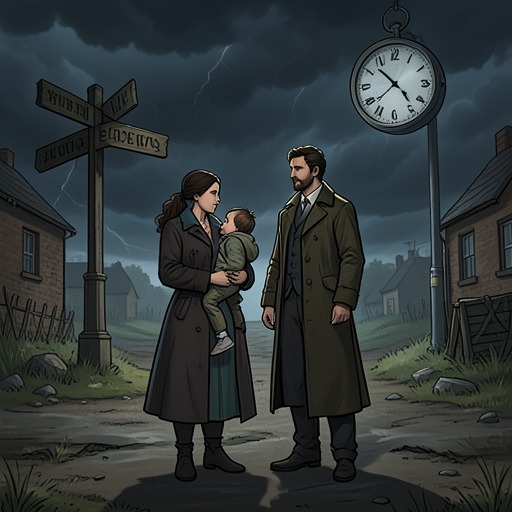
The same suspicion entered private homes and relationships. A woman who fled with her daughter to Minsk sought refuge with her own sister, who had a breast-feeding baby and would not let them in. Mother and daughter slept at the train station. Another evacuee, already engaged and registered to marry, feared that the fiancé’s family would regard her origins as a threat to future children. His mother asked whether she could have children; even the fiancé’s offer to leave home and rent an apartment could not silence the implication that loving or giving birth might be wrong. The speaker describes this as a fear of loving, produced not by the couple’s relationship but by the social meaning imposed on her family’s displacement.
Children encountered that meaning as ridicule and spectacle. At a pioneer camp, other children called one girl a Chernobyl rabbit that glowed in the dark, then sent her into the yard at night to see whether she would shine. The episode makes an invisible risk into a public performance: the child is expected to prove or disprove the frightening story told about her body. In another testimony, a daughter in tenth grade already imagines loving a child who might be born damaged. Her mother presents that thought as evidence of how deeply the disaster’s uncertainty has entered family life, before any such outcome is known.
Displacement, Control, and Unequal Exposure
The testimonies place social rejection alongside the systems that kept displaced people separated from their homes and from information. When wives of men hospitalized after the reactor accident tried to accompany them to Moscow, soldiers forced them back. A doctor told them to bring clothes for their husbands, and the women ran across the city with bags; by the time they returned, the plane had left. The clothes worn at the station had been burned. They understood that they had been deceived to prevent them from remaining at the hospital, turning a medical transfer into another enforced separation.
In evacuated villages, a soldier assigned to prevent former residents from returning describes roadblocks and observation posts. Farmers were stopped from entering their own yards, taking household tools, or harvesting crops. The contradiction was visible on the same roads: soldiers kept residents out while cattle grazed, harvesters worked, and grain was shipped. When women brought eggs, bacon, or homemade vodka and pleaded to enter, the soldier had to refuse them. Elsewhere, residents had to pour out a cow’s milk, bury eggs, and bury potatoes they had grown. The authorities’ restrictions made contamination an everyday conflict over home and livelihood, while the visible continuation of agricultural work made the boundary difficult to understand.
Secrecy and administrative treatment compounded the stigma. A young soldier who had signed a non-disclosure form says he could not tell people what he had done after returning from the cleanup operation. He had carried buckets of graphite from the reactor, shoveled with ordinary tools, and later became a second-group invalid at twenty-two. At a factory, his boss told him to stop being sick or face reduced work; when he protested that he had been sent to protect others, the director answered that the factory had not sent him. His experience is not the same as that of an evacuated family, but it shows a related isolation: the Chernobyl identity could be invoked as proof of sacrifice and still fail to secure recognition or a hearing.
A Shared Fate and Its Limits
Some testimonies describe Chernobylites as a people bound by common memories and fate. One family chose not to leave again because, among people who shared the same history, accepting an apple or cucumber from a garden did not require shame or concealment. Outside that community, the speaker expected to be treated as foreign, even as a leper. This solidarity was a response to exclusion, not evidence that the experience was uniform: evacuees recount different encounters, from a stranger’s offer of shelter to a relative’s refusal to open the door.
The book also shows how disaster categories could shape judgments about whose safety mattered. A television cameraman called back to the Zone had already been there, and the officials argued that it mattered less to expose him again because he already had children, whereas younger colleagues did not. His protest that he might want five or six children reveals how easily presumed family status could be used to discount a person’s future. In a different register, a doctor describes contaminated areas where people sought work on fields classified as dirty because the pay was higher, while refusing cleaner fields. The label of contamination did not simply produce avoidance; it interacted with material need and unequal choices.
The recurring stigma rests on a cruel mismatch: radiation is not visible in an ordinary encounter, yet it becomes the basis for treating a person as if danger were visible on their body. The evacuees’ testimonies resist that reduction by restoring the particulars the label erases: a child’s place in class, a cup withheld on a train, a sister’s closed door, a marriage made uncertain, a home and garden still longed for. Their accounts show that leaving a contaminated place does not end displacement. Suspicion and separation can follow the displaced into school, work, family life, and the imagined future of their children.