Vasily Ignatenko
Voices from ChernobylVasily Ignatenko’s story is told through his wife Lyudmilla Ignatenko’s memories of their new marriage, his response to the reactor fire, and the fourteen days in which radiation poisoning transformed his body and ended his life. He appears first as a young husband and devoted fireman; he becomes, in the hospital, a dying patient whose wife struggles to remain beside him. The account holds those identities together, making the catastrophe intimate without diminishing its physical horror.
Identity and Background
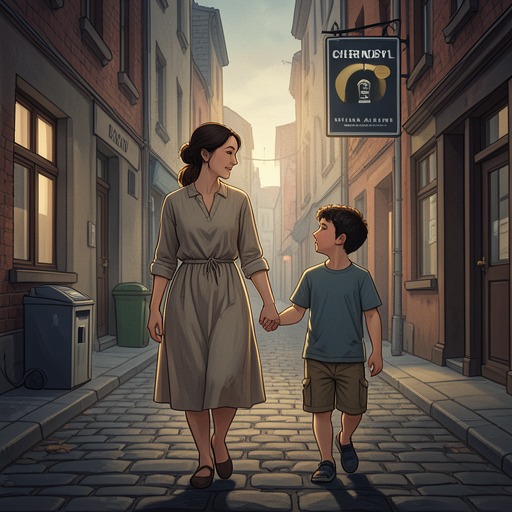
Vasily and Lyudmilla were newlyweds who still walked hand in hand even on a routine trip to the store. They lived in the dormitory of the fire station where he worked, sharing a kitchen with three other young couples. The fire engines were kept on the first floor, below their rooms. Lyudmilla describes knowing where he was and what he was doing—a closeness that makes the night he leaves for the reactor an abrupt break in their ordinary life.
His work was a chosen vocation. After being drafted into the army, he served in a fire brigade in Moscow; afterward, he wanted to be a fireman and nothing else. His parents had hoped he would stay near them and had built him a new house, but he moved to the city. He loved practical work on the family land, including sowing and plowing, and the couple were due to visit his parents in Sperizhye to plant potatoes on the morning after the fire. That postponed visit gives the crisis a precise domestic horizon: a planned day of work and family life that he will not reach.
The Call to the Reactor
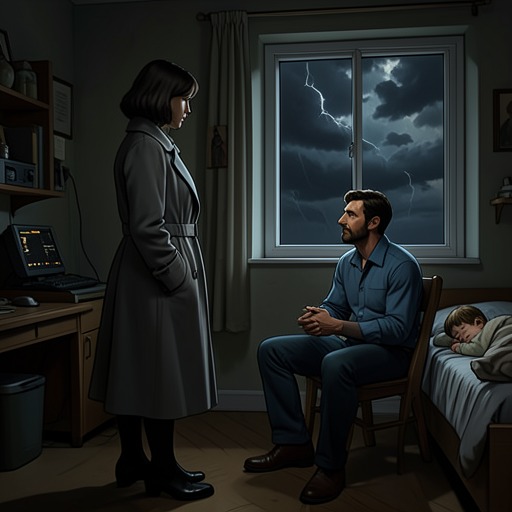
During the night, Lyudmilla heard a noise and saw Vasily outside. He told her to close the window and go back to sleep because there was a fire at the reactor and he would return soon. She did not see the explosion itself. From the window she saw flames, a radiant sky, smoke, and a tall column of fire. The heat was awful, and as the hours passed he did not come back.
The account identifies the smoke as coming from burning bitumen on the roof. Vasily later described walking on tar as the firefighters tried to beat down the flames; they even kicked at burning graphite. They had gone in their shirt sleeves, without their canvas protective gear, because they had been called to a fire and had not been told what they were facing. The contrast between an ordinary fire call and the radioactive reactor blaze defines the danger of his response: the men entered the scene as firefighters, without knowing the nature of the exposure.
Hospitalization and Physical Decline
At seven in the morning, Lyudmilla learned that Vasily was in the hospital. Police had surrounded it and kept people away, warning that the ambulances were radioactive. The wives of the men who had gone to the reactor were there too. Lyudmilla found a doctor friend arriving by ambulance and held on to her white coat until she was allowed inside briefly. She saw Vasily swollen and puffed up, his eyes barely visible. The doctors told her he needed large quantities of milk, though he did not like it; she did not yet know that doctors, nurses, and orderlies in the hospital would also become ill and die.
His condition changed from day to day. Burns surfaced in his mouth, on his tongue and cheeks, beginning as small lesions and growing. His skin changed color, and the damage made the familiar person beside her seem newly altered each time she saw him. Lyudmilla describes the change not as a distant medical process but as something happening to the person she loved. The hospital treated people with severe radiation poisoning; its stated span of fourteen days becomes the stark limit within which Vasily’s illness ran its course.
As his condition worsened, he was placed in a special bio-chamber behind a transparent curtain. Instruments allowed staff to give injections and place a catheter without entering, but Lyudmilla learned to open the Velcro fastenings and go in to him. She stayed beside his bed in a small chair because he called for her constantly. Other patients’ chambers were tended by soldiers after orderlies refused to work without protective clothing. The deaths of fellow firefighters reached her repeatedly in the ward, each report landing as another shock while she continued caring for Vasily.
The physical details grow more severe: he had bloody, mucus-filled bowel movements twenty-five to thirty times a day; the skin on his arms and legs cracked, boils covered him, and his hair came away on the pillow. Lyudmilla cut it herself, trying to do everything for him. Even an orange he received as a gift became a measure of the danger surrounding ordinary gestures: he offered it to her, while a nurse signaled that it was unsafe to eat or even touch. Their familiar exchange of care persisted inside a space where food, touch, and proximity could no longer be taken for granted.
Family, Death, and Burial
An American professor, Dr. Gale, performed a bone-marrow operation and offered only a small ray of hope. Vasily’s relatives were called in; his fourteen-year-old sister Natasha was frightened, but her marrow was the best match. When Vasily learned that his younger sister would be the donor, he refused, unwilling to let her undergo the procedure for him. His older sister Lyuda, a nurse, agreed instead. Lyudmilla watched the operation through a large window; afterward, Lyuda had eighteen punctures in her chest and struggled to recover from the anesthesia. She later became an invalid and never married. Vasily’s illness therefore reached beyond his own body, bringing lasting consequences to the sister who tried to save him.
In the final days, Lyudmilla left the hospital for a short walk and returned to learn that Vasily had died fifteen minutes earlier. She had been away for three hours. His last words were “Lyusya! Lyusenka!”; the nurse had told him that his wife had stepped away and would be back. Lyudmilla returned to his bio-chamber and stayed with him afterward, accompanying him to the burial. The friends and families who had been happy together in a photograph the day before the explosion had already been divided by death: she had gone to the cemetery for the burial of Viktor Kibenok and Vladimir Pravik before Vasily died.
The funeral rites could not restore an ordinary farewell. His feet were too swollen for shoes, and his formal clothes had to be cut; they buried him barefoot. His body was placed in a transparent plastic bag, then a wooden coffin, which was itself enclosed in a zinc coffin. The image of the bag remains central to Lyudmilla’s memory of the grave. Vasily’s story ends not with a return to the home and family visit they had planned, but with the material barriers required to bury a body made dangerous by radiation.
Narrative Significance
Vasily is remembered through the collision of a shared life and an emergency whose danger the firefighters had not been told to expect. The account moves from hand-holding, planting potatoes, and a promise to return soon to a hospital where even an orange cannot safely be handled. That movement gives the disaster its human scale: radiation is made legible through the body, through the wife who keeps entering the chamber, and through the burial that separates the couple even in death.
His fate also shows the cost borne by those who responded before they understood the reactor fire. He went because he was a fireman, dressed for an ordinary call rather than the hazard he encountered. Lyudmilla’s testimony preserves both the consequences of that exposure and the particulars that official abstractions can leave out: the shirt sleeves, the small chair, the hair on the pillow, the shoes that would not fit. In her account, Vasily remains at once a casualty of the reactor fire and the beloved person whose life had been bound to hers.