
The Railroad Through the Woods
WaldenThis flow traces the railroad from a practical link with society into a symbol of speed, labor, commerce, and the costs of progress.
increasing Bearing strength in each event
 decreasing
Bearing strength in each eventdecreasingThe Nearby Line
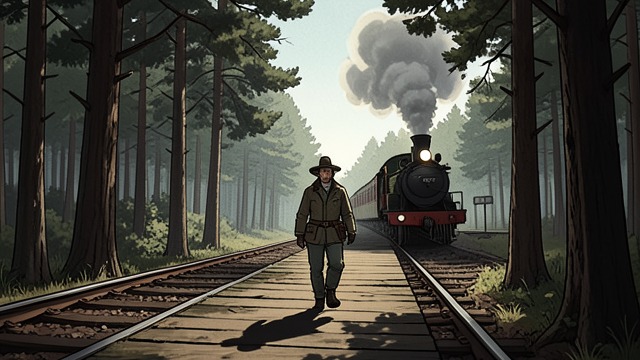
A Link to Town
An Audible Presence
The Fitchburg Railroad passes near Walden Pond, and its cars can be heard from Thoreau’s house. He uses the causeway when walking to Concord, remaining connected to the village.
The line brings human traffic into the woods without fully ending his solitude. Its sound becomes part of the daily landscape that he observes.
Significance
The railroad is both an intrusion and a connection. Thoreau’s response develops beyond simple rejection as he studies what the line carries and whom it serves.
A Merchant’s Whistle
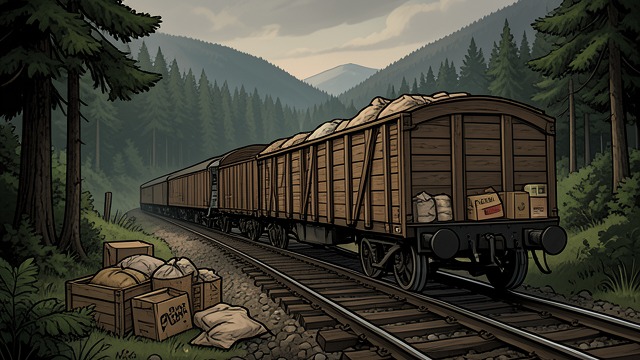
Trade in Motion
Goods on the Track
Thoreau watches freight trains carry timber, textiles, food, paper materials, and other goods between countryside and city. The cars make distant commerce visible and suggest how rural resources feed urban demand.
He finds the freight vivid and informative, sometimes more legible than printed accounts. The movement connects New England to far-off places while changing local land and labor.
Significance
Thoreau’s view is ambivalent: commerce offers enterprise and contact with the world, but it also shapes lives around exchange and consumption.
The Iron Horse
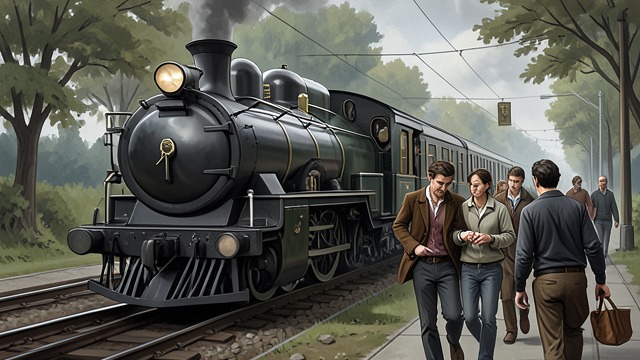
Speed and Its Master
A New Authority
Thoreau describes the locomotive as an iron horse whose regular passage orders village time. Farmers set clocks by the trains, and people hurry to meet its schedule.
The line appears to improve punctuality, yet its discipline can be mistaken for human advancement. Travelers may be carried quickly without gaining a more meaningful destination.
Significance
The railroad’s power lies not only in motion but in the habits it imposes. Thoreau asks whether people ride the machine or have become its passengers in a deeper sense.
The Cost of the Track
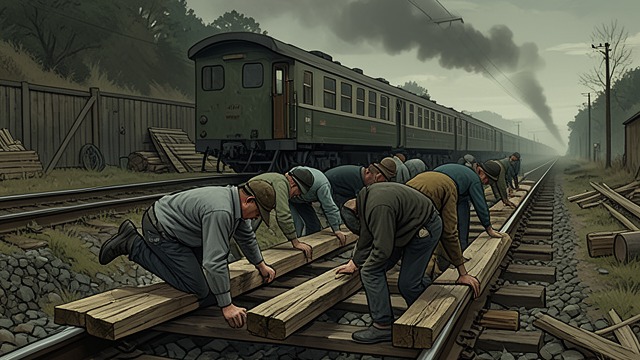
Workers Beneath the Rails
Progress and Labor
Thoreau reminds readers that railroad sleepers are people whose labor supports the smooth passage of others. Irish workers and other laborers build the route while bearing costs concealed by the speed it promises.
The image turns infrastructure into a human burden. The apparent convenience of travel rests on bodies, time, and work that passengers seldom see.
Significance
Progress cannot be assessed only by engineering or speed. Thoreau’s metaphor exposes the unequal distribution of its benefits and sacrifices.
A Line Through Walden
The Railroad’s Mark
Altered Landscape
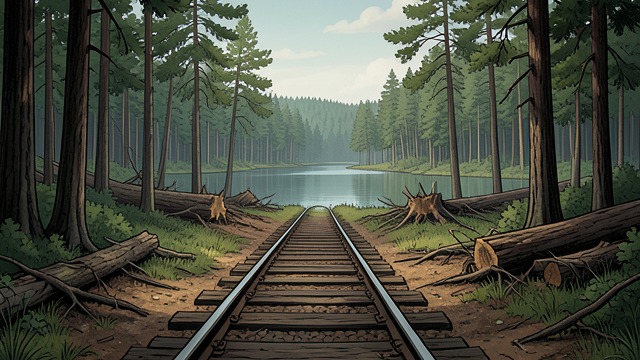
Thoreau later associates the railroad and commercial ice cutting with the loss of woods around Walden Pond. The line that once linked his cabin to Concord also contributes to the transformation of the shore.
The pond continues to endure, but the former wooded setting does not return at once. The railroad’s presence therefore becomes a lasting mark on the landscape.
Significance
The thread resolves in a conflict between access and preservation. Thoreau values connection while resisting the assumption that every expansion of access leaves nature unharmed.
When Thoreau establishes his cabin beside Walden
During his observations of passing trains
In the reflections on railroad speed and punctuality
During the critique of railroad construction
In the later remembrance of changes to the pond’s shore
