
The Changing Pond Through Winter
WaldenThis flow follows Walden Pond through ice, thaw, and spring, using its seasonal transformations to illuminate renewal and natural law.
increasing Bearing strength in each event
 decreasing
Bearing strength in each eventdecreasingThe First Ice
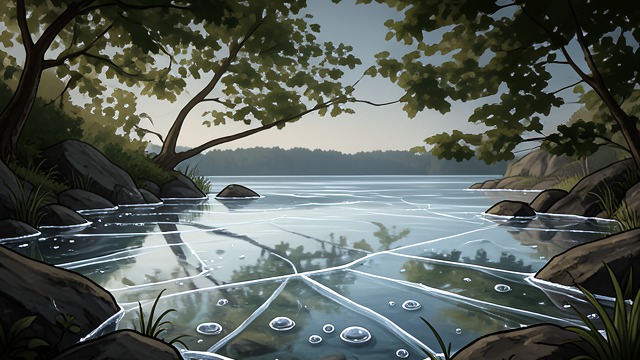
A Transparent Beginning
Surface Becoming Solid
Thoreau observes the earliest ice as dark, clear, and thin enough to reveal the bottom beneath it. Bubbles and small air pockets gather as the water begins to freeze.
The new surface is not simply a barrier. It offers a temporary window into the pond’s hidden structure and makes changing weather perceptible at close range.
Significance
Winter begins as a transformation rather than a sudden silence. Thoreau’s close looking finds complexity in what others might treat as a blank frozen surface.
A Pond Under Ice
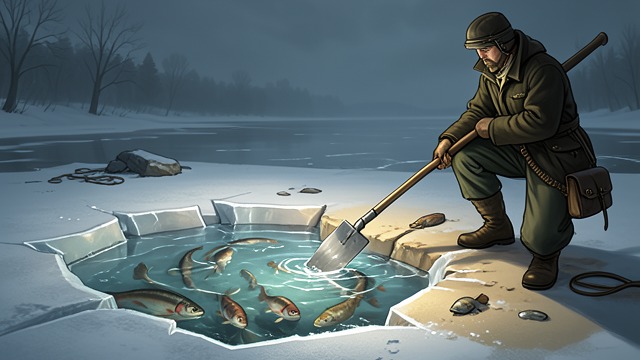
The Hidden Parlor
Life Beneath the Surface
With snow and ice covering Walden, Thoreau cuts through to reach water. From the opening he sees a softened light on the sand and imagines the fishes’ winter world beneath his feet.
The frozen pond appears quiet but remains a living place. Its surface supports travelers and teams while concealing an active world below.
Significance
The scene reverses ordinary ideas of above and below. Thoreau suggests that wonder and life remain present even when winter hides them from sight.
The Thawing Edge
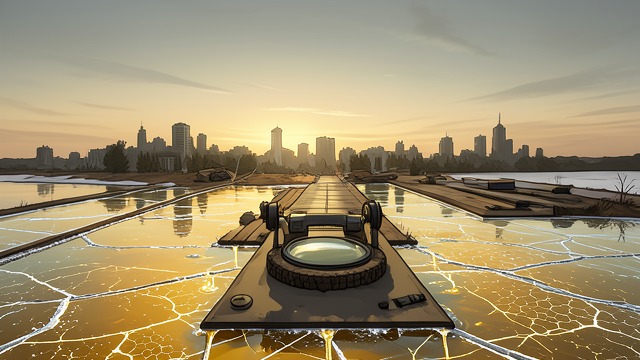
Ice Gives Way
Seasonal Change
As warmth returns, Walden begins melting around its edges while the center remains honeycombed. Sunlight, rain, and reflected heat weaken the ice until it can disappear rapidly.
Thoreau compares the pond’s changes with those of other nearby waters, observing that its depth delays the opening. Careful seasonal attention reveals patterns hidden by casual impressions.
Significance
The pond’s physical rhythm becomes a lesson in patience and observation. Nature follows processes that are gradual even when their final transition seems sudden.
The Pond Breaks Free
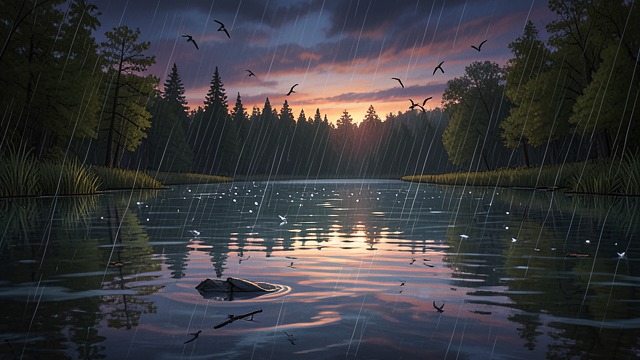
Water Reappears
A Sudden Renewal
After days of melting, rain, and mist, Thoreau looks out and finds open water where gray ice had remained the previous day. The pond reflects a hopeful evening sky, and the returning birds make the change audible.
The transformation seems nearly instantaneous after its gradual preparation. Familiar trees also appear brighter and more alive following the rain.
Significance
The scene links natural renewal to renewed perception. Spring does not merely alter the pond; it changes what the observer believes is possible.
A New Year’s Promise
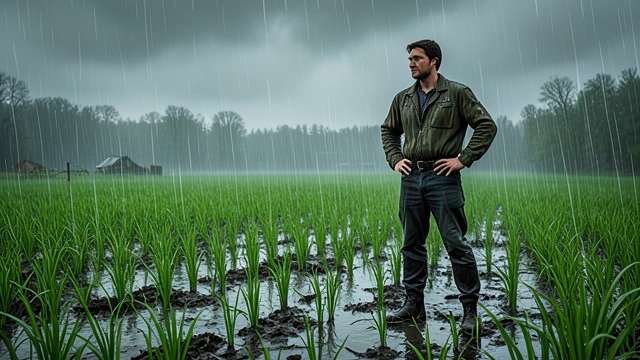
Renewal Beyond Nature
The Human Analogy
Thoreau treats spring as a model for moral renewal, imagining that a person might recover innocence and begin again. A gentle rain can make grass greener; better thoughts can brighten human prospects.
The seasonal return exposes how habit and guilt can prevent people from accepting new possibilities. Thoreau asks why society fails to respond to the pardon and renewal offered by each new day.
Significance
The pond’s seasonal story becomes an ethical argument. Nature’s recurring changes suggest that human character, too, need not remain fixed.
Autumn, as the pond begins to freeze
Midwinter during his pond observations
Late March, near the pond’s annual opening
A spring evening when the ice vanishes
In the reflections at the end of “Spring”
