
John Field’s Constrained Choices
WaldenThis flow traces John Field’s poverty as Thoreau portrays it, while keeping visible the tension between structural hardship and advice to simplify.
increasing Bearing strength in each event
 decreasing
Bearing strength in each eventdecreasingA Family at Baker Farm
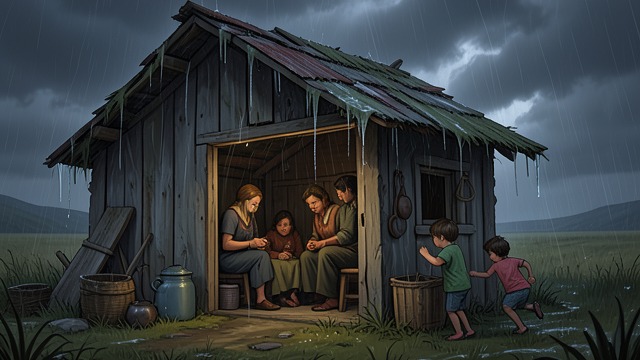
A Household in Shelter
Meeting the Family
John Field lives at Baker Farm with his wife and several children in a hut that offers little protection from rain. Thoreau encounters the family while seeking refuge from a storm.
The children’s presence makes hardship immediate and domestic. The household must manage hunger, work, and the demands of daily survival inside a fragile shelter.
Significance
Field’s story contrasts with Thoreau’s chosen cabin life. Similar simplicity can signify independence for one person and involuntary deprivation for another.
The Bogging Contract
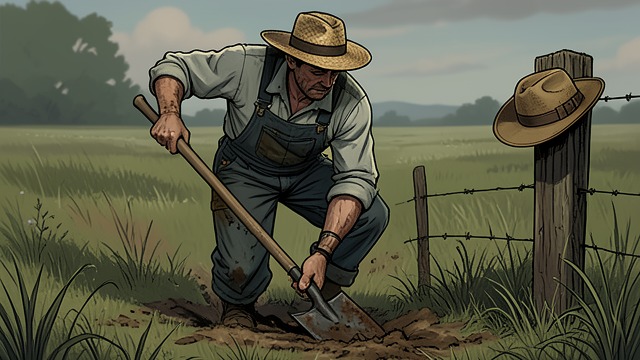
Labor for a Living
A Narrow Return
Field describes turning meadow land with a spade for a neighboring farmer, receiving modest pay and temporary use of land. His labor is difficult, and the arrangement leaves his family with little security.
Thoreau presents him as industrious but economically trapped. Work meets immediate demands without giving him the time or resources to change the conditions that keep them pressing.
Significance
The contract shows why effort alone does not guarantee independence. Field’s poverty is shaped by arrangements beyond his individual character.
The Costly Daily Diet

Needs That Multiply
Work and Consumption
Thoreau argues that Field’s reliance on tea, coffee, butter, milk, and meat requires harder work to pay for them. He contrasts these purchases with his own plain diet and low expenses.
The comparison suggests that habits of consumption can tighten a cycle of labor. Yet Field’s household does not necessarily have the same freedom to alter its habits as Thoreau assumes.
Significance
The scene gives Thoreau’s economics a concrete illustration while exposing its limits. Necessities are partly shaped by custom, but they are also shaped by unequal circumstances.
A Plan Hard to Enter

The Uncertain Alternative
Advice and Doubt
Thoreau tells Field that a simpler house and diet could free time for fishing, berrying, and recreation. Field and his wife seem unsure whether they possess enough capital or arithmetic to begin.
Their hesitation is not a simple rejection of freedom. The proposed change requires confidence and practical resources that their present situation may have denied them.
Significance
Field’s response challenges the assumption that insight can quickly change a life. The episode leaves open whether Thoreau’s example is transferable to people under economic pressure.
Back Toward Familiar Work
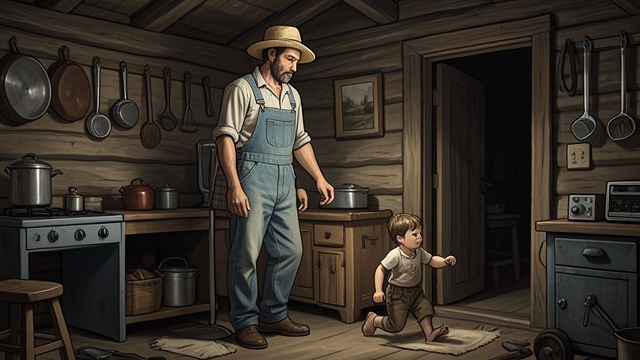
An Unresolved Future
No Easy Conversion
Field’s household remains in the hut after Thoreau leaves. His narrative later suggests that Field continues to follow familiar work and inherited habits rather than making the proposed change.
Thoreau portrays this as a loss of opportunity, but the evidence also suggests how difficult it is to depart from a life organized around immediate need. Field’s future is not presented as transformed by the encounter.
Significance
The story ends without rescue or resolution. Field’s constrained choices remain a counterpoint to Thoreau’s ability to make voluntary poverty into an experiment.
During the summer fishing excursion
During Field’s account of his work
As Thoreau compares his food with Field’s
As Thoreau offers advice in the hut
After the rain, as Thoreau departs
