
Thoreau and the Loon
WaldenThis flow follows Thoreau’s pursuit of the loon from a contest in observation to admiration for a creature that eludes human control.
increasing Bearing strength in each event
 decreasing
Bearing strength in each eventdecreasingA Seasonal Arrival
The Loon Comes
A Wild Presence
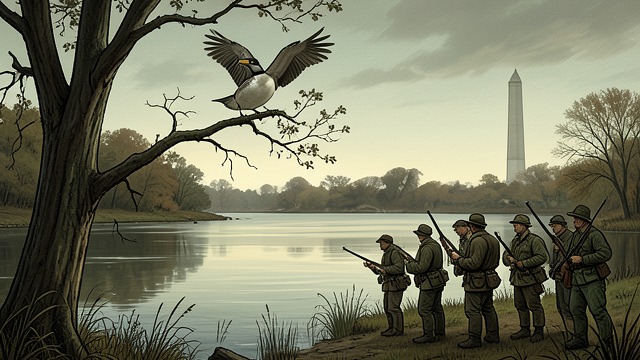
A loon arrives at Walden Pond in autumn, and its laughter carries through the woods. Local sportsmen gather with rifles and spyglasses, hoping to locate it on the open water.
Thoreau recognizes the bird as both a seasonal visitor and an independent presence. The pond gives it room to evade the people who would turn its arrival into a hunt.
Significance
The loon introduces a relationship based on attention rather than possession. Its freedom becomes a challenge to the human desire to capture what is beautiful.
The Pursuit Begins
Man Against Loon
A Game on Water
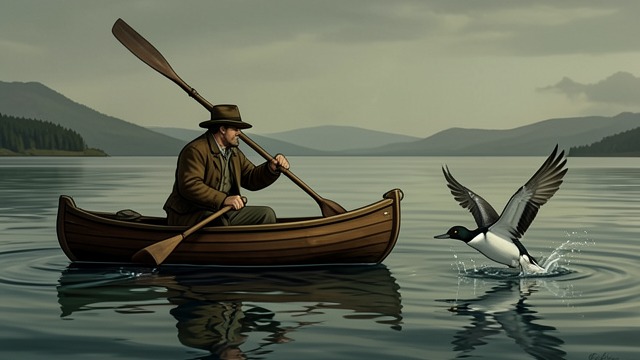
Thoreau paddles toward the loon, which repeatedly dives and resurfaces far from his boat. The bird seems to choose its course with remarkable speed and judgment.
Their chase becomes a contest of prediction. Thoreau tries to calculate where the loon will emerge, while the bird uses the pond’s depth and open space to keep its distance.
Significance
The pursuit turns natural observation into a meeting between two forms of intelligence. Thoreau admires the loon most when it refuses his control.
A Changing Strategy
The Bird’s Advantage
Beneath the Surface
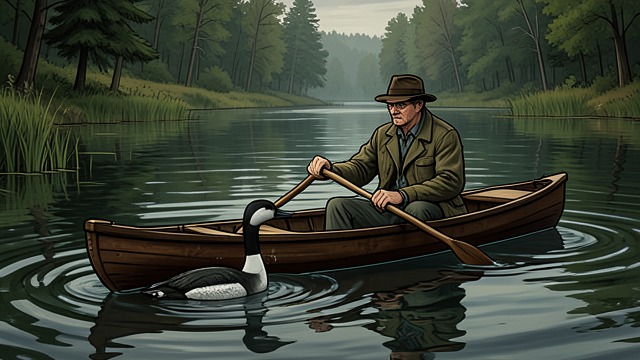
The loon disappears under the water and sometimes resurfaces behind Thoreau. Its long dives make the pond seem larger and less knowable than its visible surface suggests.
Thoreau learns that waiting may work better than chasing. The encounter shifts from a test of rowing skill into an exercise in patience and respect for a creature with its own route.
Significance
The loon exposes the limits of human calculation. The pond belongs to more lives than the observer can track or direct.
The Loon’s Laughter
A Voice of Defiance
Sound Across Water
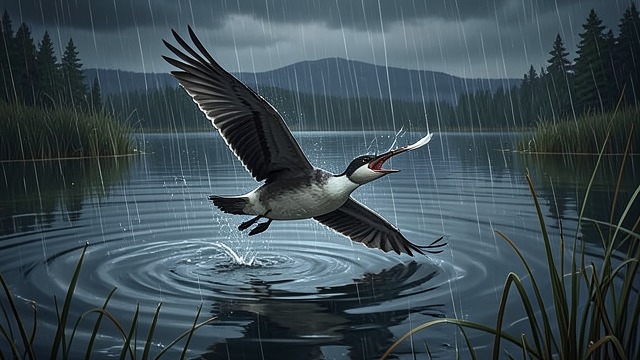
The loon repeatedly laughs after escaping Thoreau’s approach. Its cry makes the chase feel less like human sport and more like an exchange in which the bird has the advantage.
At last, a wind rises and rain ripples the water, concealing the loon from view. Thoreau imagines the weather as a response that helps the bird elude him.
Significance
The episode gives the loon emotional force without making it tame. Its laughter represents the stubborn independence of wild nature.
Leaving It Uncaught
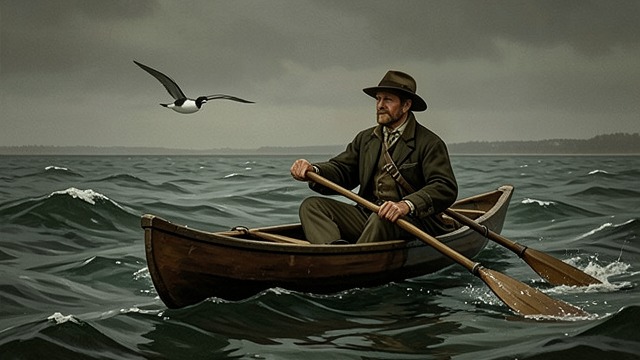
The Chase Ends
Respectful Withdrawal
Thoreau leaves the loon disappearing across the roughened pond. He has not captured it or resolved its behavior, but the encounter has made its skill and freedom more vivid.
The failed pursuit becomes a successful act of attention. Thoreau carries away knowledge of the bird’s choices rather than possession of the bird itself.
Significance
The relationship ends in acknowledged limits. The loon remains wild, and that remaining beyond human reach is part of its value.
Autumn during Thoreau’s Walden years
A calm October afternoon
During the middle of the chase
Near the close of the October encounter
As the storm breaks over Walden Pond
