
The Bean Field’s Living Neighbors
WaldenThis flow traces the emotional and ethical shift by which Thoreau’s cultivated field becomes a shared habitat rather than a private possession.
increasing Bearing strength in each event
 decreasing
Bearing strength in each eventdecreasingA Field Among Wild Growth
Clearing and Choosing
A Changed Ground
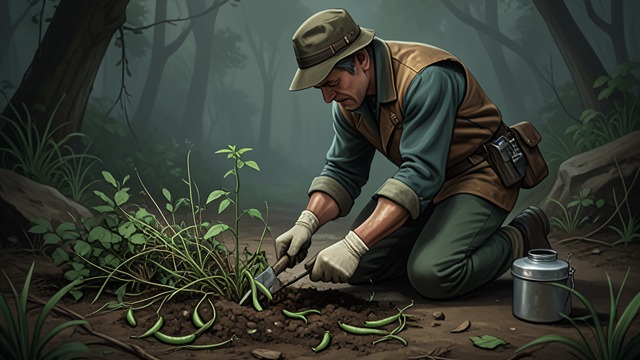
Thoreau breaks into a patch of wild growth to cultivate beans, replacing plants that had occupied the ground before him. He wonders what right he has to displace the old herb garden.
The act of cultivation is practical, but it also exposes a conflict between human purpose and the lives already present. The field cannot be treated as empty simply because it is not a farm.
Significance
Thoreau’s attention makes the cultivated plot morally complicated. His work begins a relationship with the land that includes responsibility and doubt.
Woodchucks at the Rows
Shared Crops
A Rival Appetite
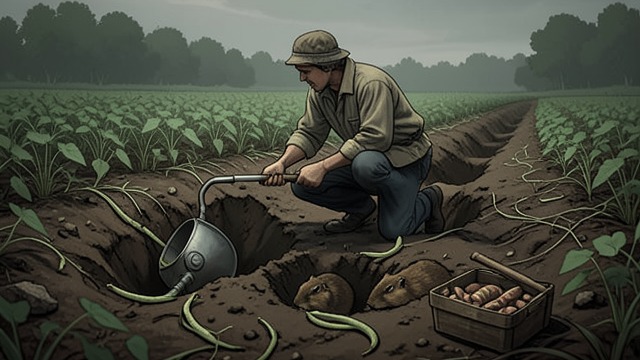
Woodchucks nibble a substantial portion of Thoreau’s beans, making them the crop’s most troublesome enemies. The damage forces him to acknowledge that cultivated plants attract other lives as well as his own.
At first, the animals appear as obstacles to his labor. Yet the field’s growth is not solely for the person who planted it.
Significance
The woodchucks complicate ownership of the harvest. Their presence begins to shift the story from protecting a crop toward recognizing a shared landscape.
The Bird’s Instructions
A Voice in the Field
Thrasher and Cultivator
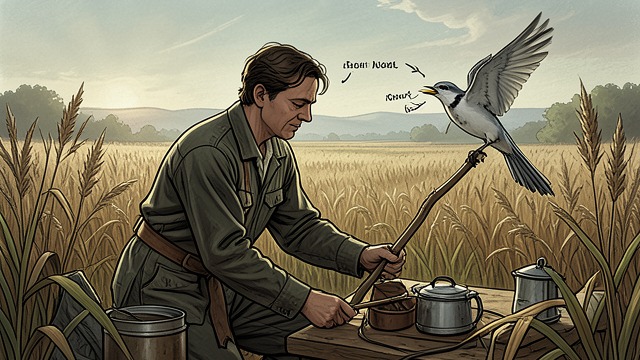
A brown thrasher sings from a birch as Thoreau works, and he imagines its repeated calls as advice about planting, covering, and pulling up seeds. The bird’s voice becomes part of his agricultural labor.
Rather than treating every wild presence as interference, Thoreau accepts the song as a kind of natural accompaniment. The field remains connected to the surrounding woods.
Significance
The episode makes work receptive to nonhuman company. Cultivation becomes more than exertion when the worker listens to the life around him.
The Unclaimed Yield
Who Benefits
Beyond the Barn
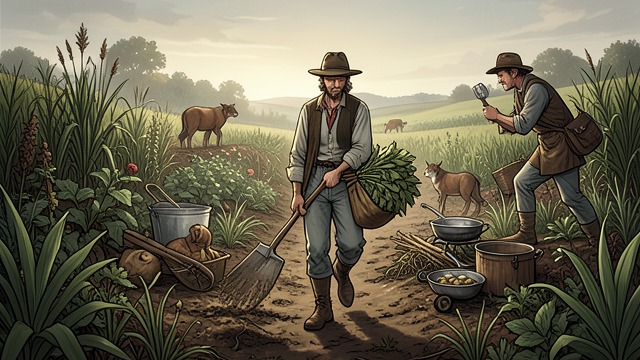
Thoreau recognizes that beans grow partly for Woodchucks and that wild plants feed birds. The sun treats cultivated and uncultivated ground without distinction.
The harvest therefore exceeds the farmer’s account. The field’s value includes lives and processes that do not appear in his sales totals.
Significance
The change turns a private crop into part of a larger ecology. Thoreau’s attachment to the field grows alongside a loosening of exclusive claim.
Releasing the Claim
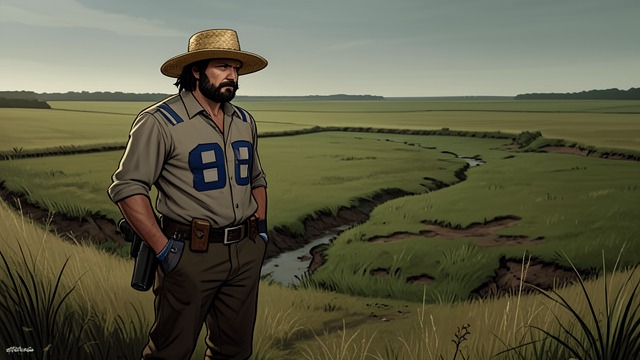
Work Without Possession
A Wider Practice
Thoreau concludes that a true cultivator can finish each day’s work without anxiety and relinquish a claim to the whole produce. The land’s abundance is not exhausted by what one person gathers.
His attitude does not eliminate labor or care. It changes their aim, allowing cultivation to coexist with what grows for other creatures.
Significance
The emotional thread resolves in a less possessive relation to nature. Attention and participation matter more than total control of the yield.
When Thoreau first prepares the bean field
During the early summer growth
During a morning of planting and hoeing
After Thoreau considers the field’s harvest
Near the end of “The Bean-Field”
