
The Hunt Moves Toward Restraint
WaldenThis flow follows Thoreau’s changing relationship to hunting and fishing, from youthful intimacy with nature toward ethical restraint and observation.
increasing Bearing strength in each event
 decreasing
Bearing strength in each eventdecreasingThe Boy with a Gun
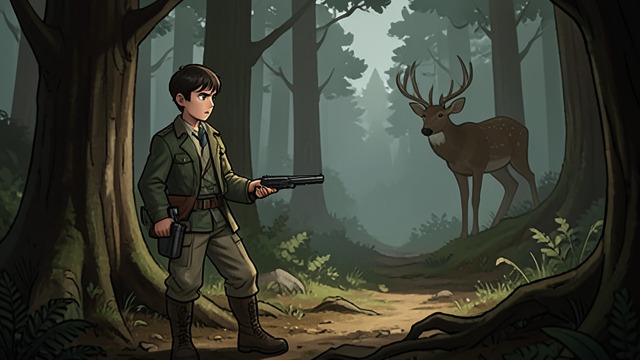
An Entry into Nature
Early Pursuits
Thoreau remembers that hunting and fishing brought young people into forests and fields. These pursuits gave him close acquaintance with landscapes he might otherwise have known only at a distance.
The hunter’s practical presence can make observation direct and embodied. Thoreau does not dismiss the education of these early experiences, even as his judgment later changes.
Significance
The conflict begins within a valued relationship. Nature teaches through pursuits that can also involve taking the lives of animals.
The Gun Put Aside
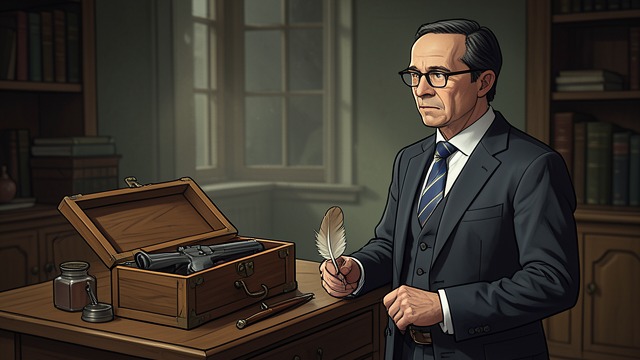
A Change in Method
Ornithology Without Shooting
Thoreau sells his gun before settling in the woods. He once defended shooting rare birds as a form of study, but begins to believe that closer attention to habits offers a finer kind of ornithology.
His interest in wildlife remains strong, but the means of knowing it change. Observation no longer needs to end in possession of a specimen.
Significance
The decision marks an ethical turn rather than a rejection of nature. Thoreau seeks a form of knowledge that does not require violence as its price.
The Fisher’s Unease
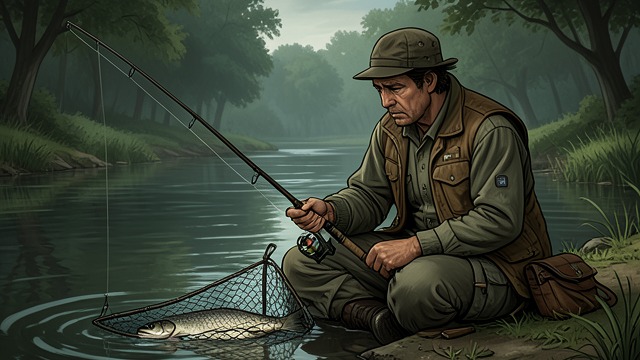
Pleasure Under Question
Catching and Eating
At Walden, Thoreau sometimes fishes for food and experiences the wildness of the pursuit. Yet afterward he increasingly feels that fishing has diminished his self-respect and that its cleaning and cooking bring unnecessary trouble.
The practice had once seemed natural, but his response grows more hesitant. He begins to distinguish enjoyment of the pond from the act of taking its fish.
Significance
The conflict is internal and gradual. Thoreau’s ethical position develops through repeated experience rather than a single rule imposed from outside.
A Higher Diet
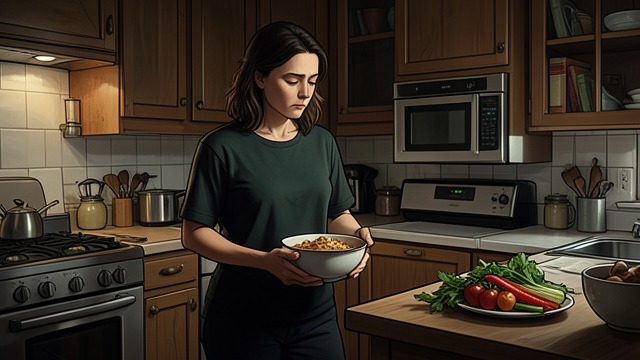
Appetite and Discipline
Beyond Necessity
Thoreau considers whether animal food is compatible with preserving poetic and spiritual faculties. He argues that food should nourish the imagination as well as the body and imagines humanity eventually eating more innocently.
He acknowledges that his own practice is imperfect and that his opinions exceed what he consistently follows. The discussion remains a personal inquiry rather than a claim of completed virtue.
Significance
Diet becomes one part of a wider contest between sensual habit and higher aspiration. The question is how daily choices shape attention and character.
The Observer Emerges

From Hunter to Witness
Restraint Without Withdrawal
Thoreau imagines that a young person may enter the woods as a hunter and later leave the gun behind as a poet or naturalist. The original pursuit can mature into observation.
Nature remains a source of education, but the observer no longer needs to prove closeness through capture. Restraint becomes a way of attending more carefully.
Significance
The conflict resolves as a change in relationship, not an escape from wildness. Thoreau seeks a knowledge that preserves both the observer’s sensitivity and the animal’s life.
During Thoreau’s youth
Before Thoreau moves to Walden
During the Walden years
In the reflections on food in “Higher Laws”
Near the end of “Higher Laws”
