
The Human Cost of Reform
WaldenThis flow traces Thoreau’s conflict with philanthropy that treats symptoms while preserving the conditions that create suffering.
increasing Bearing strength in each event
 decreasing
Bearing strength in each eventdecreasingThe Demand to Do Good

Goodness as a Profession
Social Expectation
Thoreau describes neighbors urging him to support poor families and take up philanthropic work. He questions whether every person must make charity a profession in order to be morally useful.
He insists that individuals should not surrender their own calling merely to satisfy a public expectation of doing good. An honest life may benefit others without being organized as charitable service.
Significance
The conflict is between prescribed benevolence and a person’s own judgment. Thoreau asks whether good intentions can obscure the deeper conditions of injustice.
An Offer Refused

Help and Independence
The Limits of Assistance
Thoreau says that people he offers to maintain comfortably prefer to remain poor. Their response unsettles the assumption that aid is always what another person most wants or needs.
He argues that charity must attend to the recipient’s agency rather than presume a single remedy. Assistance can become a form of control if it ignores the life the other person chooses.
Significance
The episode complicates easy judgments about giving. Thoreau’s account makes independence and consent part of any meaningful idea of help.
Branch and Root
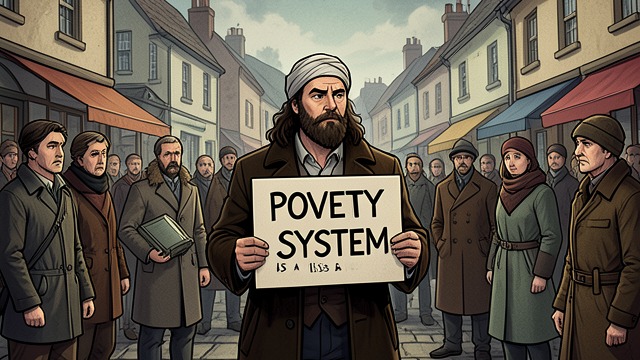
Treating Symptoms
The Source of Misery
Thoreau argues that people may spend money relieving poverty while maintaining social arrangements that produce it. A person’s way of life can do more to create misery than occasional gifts can repair.
His example of charity funded by exploitative wealth makes benevolence look compromised. The donor may relieve a visible injury without challenging the institution behind it.
Significance
The conflict shifts from charitable intention to structural responsibility. Thoreau asks people to examine what their ordinary choices support before praising their donations.
A Moral Example

Assistance Through Life
Example and Conduct
Thoreau argues that people should spend themselves along with their money and give the poor the help they most need. A way of living can offer an example that makes dependence less necessary.
He emphasizes courage, health, and ease rather than spreading another person’s despair. The point is not to ignore suffering but to ask whether a helper’s conduct perpetuates it.
Significance
Reform becomes a question of personal consistency. A generous life matters when its habits are aligned with the justice it claims to serve.
The Uneasy Reformer

Goodness Without Performance
Private Ailments
Thoreau suspects that some reforming zeal begins in the reformer’s own discomfort. When that private distress passes, the reformer may abandon the cause without having changed the underlying problem.
He advises that good work should not become self-display. The strongest contribution may be a steady, healthy life rather than a campaign driven by an unresolved personal need.
Significance
The conflict ends by turning scrutiny back upon the would-be helper. Thoreau demands that moral action arise from integrity rather than the desire to appear benevolent.
During the discussion of charitable duty in “Economy”
As Thoreau considers supporting poor neighbors
During Thoreau’s critique of organized philanthropy
In the argument about giving oneself with money
Near the close of the philanthropy discussion
