
Reading as an Encounter Across Time
WaldenThis flow traces Thoreau’s view of reading from practiced attention to the classics toward a demand for intellectual life beyond easy consumption.
increasing Bearing strength in each event
 decreasing
Bearing strength in each eventdecreasingBooks in the Woods

Reading and Work
A Delayed Study
Thoreau keeps Homer’s Iliad near him but spends much of his first summer building his house and hoeing beans. Physical labor makes sustained study difficult, yet he preserves the prospect of future reading.
The cabin’s distance from an ordinary library does not cut him off from books that carry ideas across generations. He treats reading as a serious practice requiring time and attention.
Significance
The scene presents learning as an activity shaped by one’s life, not merely by access to books. Work and study must be arranged in relation to one another.
The Classics as Living Speech

Ancient Thought Renewed
A Shared Inheritance
Thoreau argues that the greatest books preserve human thought across centuries. Reading an ancient writer can make the distance between past and present feel surprisingly short.
He distinguishes casual familiarity with a language from the disciplined ability to read its literature. A great text asks the reader to work for meanings beyond everyday speech.
Significance
The classics matter not as museum objects but as living challenges. Their age does not make them obsolete; it makes them witnesses to enduring human questions.
Reading Above Convenience

Against Mental Passivity
Books as Exercise
Thoreau criticizes reading undertaken only for convenience, amusement, or escape. The most worthwhile books demand alert hours and intellectual effort rather than soothing the reader into passivity.
He compares easy reading to repeating elementary lessons long after a person could attempt more challenging work. Familiar entertainment can become a habit that weakens attention.
Significance
Reading is valuable when it changes the reader’s capacities. Thoreau’s criticism is aimed less at pleasure than at a culture content with intellectual ease.
A Village Without Scholars
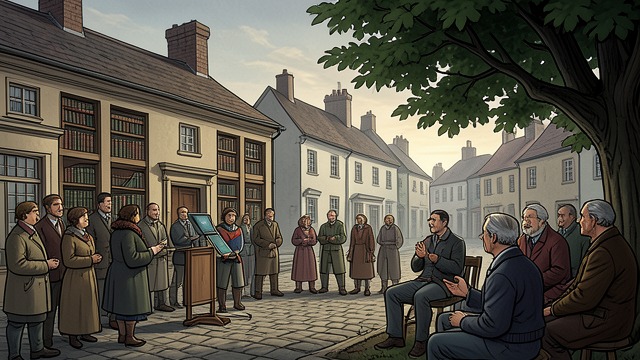
Learning Beyond Childhood
A Local University
Thoreau criticizes a culture that ends education when people leave school. He proposes that villages become places of ongoing study, with libraries, lectures, and serious conversation available to adults.
Concord can spend money on public buildings, he argues, and should also support intellectual life. A community’s prosperity is incomplete if it neglects the minds of its inhabitants.
Significance
The reading thread expands into a social program. Intellectual independence requires institutions that make serious study possible beyond elite universities.
The Book That Changes a Life

Encounter and Transformation
Words for the Unspoken
Thoreau imagines that a book may give expression to questions a reader could not previously articulate. Such a work can open a new era in someone’s life by making hidden possibilities legible.
Wisdom also enlarges sympathy: a reader may recognize that distant thinkers have faced similar questions. The resulting fellowship crosses cultures and centuries.
Significance
Reading culminates not in collecting titles but in transformation. A true encounter with literature can make a person more awake, more capable, and less provincial.
During the first summer at Walden
At the start of “Reading”
During the critique of easy reading
During the proposal for uncommon schools
Near the close of “Reading”
