
Learning to Wake
WaldenThis flow tracks Thoreau’s movement from the routines of ordinary time toward an alertness that makes daily life feel renewed.
increasing Bearing strength in each event
 decreasing
Bearing strength in each eventdecreasingThe Morning Practice

Beginning Again
A Daily Awakening
Henry David Thoreau rises early and bathes in Walden Pond, treating the morning as a chance to renew his attention. The practice makes the start of the day an inward event.
He argues that the hour matters less as a clock reading than as a condition of alertness. A person awakened only by routine may remain spiritually asleep through a busy day.
Significance
The morning ritual introduces wakefulness as an active discipline. It links bodily habits with the larger possibility of changing how life is perceived.
Mechanical Days

Life by the Clock
Habit and Hurry
Thoreau criticizes lives divided into schedules, news, work, and repeated obligations. People prepare anxiously for imagined needs, then mistake constant activity for meaningful progress.
He uses the railroad and the daily appetite for news as examples of speed that may carry people without improving their purpose. Their routines can make the present pass unnoticed.
Significance
The problem is not simply haste but unconsciousness. Thoreau’s critique asks whether people direct their tools and habits or are directed by them.
The Wish to Live Deeply

Testing Life’s Substance
The Purpose of the Woods
Thoreau says he went to the woods to confront the essential facts of life and discover what living could teach. He wanted to know experience directly rather than reach death with life unexamined.
His language of living deeply expresses a demand for intensity and clarity. Even an unpleasant truth would be preferable to a comfortable false picture of existence.
Significance
The experiment becomes a method of inquiry, not a picturesque retreat. Its success depends on attention to what life actually contains.
A Day Without Distraction

Keeping to the Day
Resisting Interruptions
Thoreau imagines a day lived as deliberately as nature, with bells, visitors, meals, and passing events unable to dictate its attention. He urges a person not to follow every distraction.
The challenge is to distinguish the essential from the merely urgent. The day becomes a small-scale test of whether someone can keep a chosen course amid social noise.
Significance
A life is shaped by repeated moments, not only by grand decisions. Deliberate attention is therefore a practical way to reclaim time.
The Unfinished Dawn
More Day to Come
An Open Ending
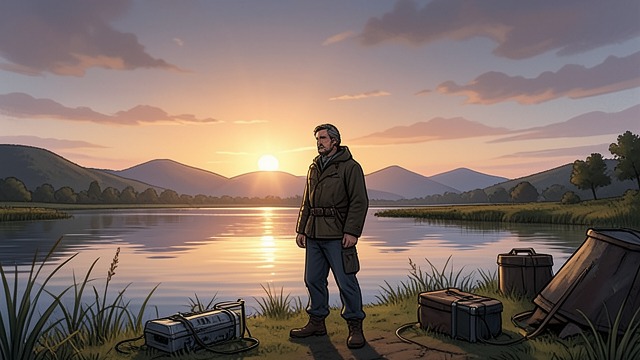
Thoreau closes by insisting that the sun is only a morning star and that more day remains to dawn. The last image refuses to treat present limits as final.
The ending recasts awakening as continuing possibility. A life can begin again whenever a person becomes capable of seeing beyond inherited expectations.
Significance
The book closes not with a settled program but with an invitation. Its promise rests on the reader’s capacity to become awake to another life.
During his early mornings at Walden
In the reflection on modern routines
In “Where I Lived, and What I Lived For”
In his counsel to spend one day deliberately
In the final paragraphs of “Conclusion”
