
Nature’s Language and the Seer
WaldenThis flow traces Thoreau’s movement from written knowledge toward direct, alert reading of the natural world.
increasing Bearing strength in each event
 decreasing
Bearing strength in each eventdecreasingBeyond the Page
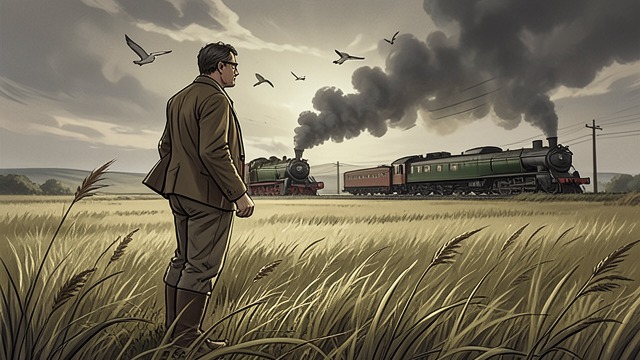
The World Speaks
A Language Without Metaphor
Thoreau warns that a life confined to books can cause people to forget the language spoken by things and events. The natural world offers knowledge that no selected course can replace.
Reading, study, and good company may prepare the mind, but they cannot substitute for attention to what is actually before it. Thoreau asks whether a person will be only a reader or also a seer.
Significance
The argument does not dismiss books; it sets limits on them. Knowledge requires an alert encounter with the world beyond written language.
The Broad Margin
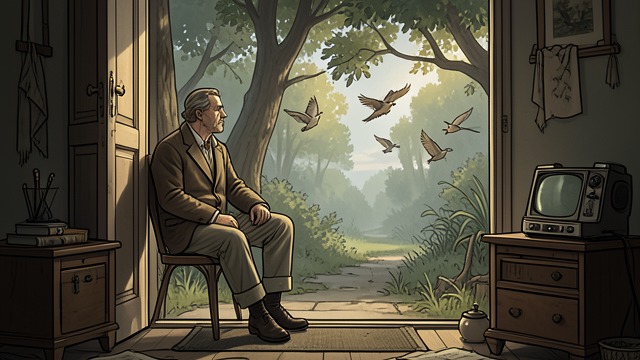
Time for Looking
An Unhurried Morning
Thoreau sits in his sunny doorway from sunrise toward noon, watching the woods without rushing to fill the hours with work. He feels that these quiet periods add to life rather than subtract from it.
Birds, wind, and the changing light become part of an experience that requires no formal task. The day’s value lies in sustained attention, not in a completed list of duties.
Significance
The broad margin makes room for perception to unfold. Thoreau presents leisure as a condition in which the world can become newly legible.
The Railroad in the Landscape
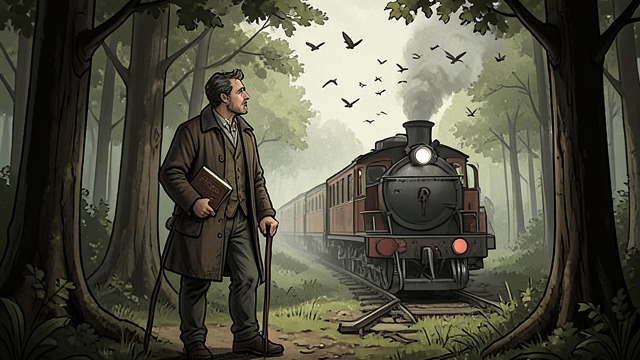
Listening Without Surrender
Two Kinds of Sound
Thoreau hears the railroad while observing birds, water, and woodland life. Its sound brings the distant city near, but the natural setting remains more than a background to the machinery.
He can appreciate the locomotive’s impressive motion while questioning the purposes it serves. His attention holds admiration and criticism together without reducing either to a verdict.
Significance
The scene demonstrates what it means to read events rather than merely accept them. Nature’s language includes human technology, but does not require obedience to it.
The Pond’s Small Signals
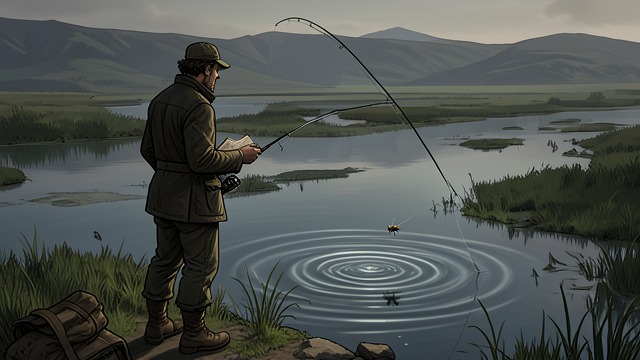
Reading Ripples
A Detailed Surface
Thoreau watches insects, fish, and the smallest movements of an oar disturb Walden Pond’s surface. Each event creates patterns visible from the shore, then gives way to renewed calm.
His close observation turns minor changes into a sustained source of thought. The lake reveals a world of activity that a hurried passerby might not notice.
Significance
Attention becomes a form of interpretation. Thoreau learns to read a natural event without treating it as a mere symbol detached from its physical life.
Reality Beneath Appearances

The Seer’s Task
Testing What Seems Obvious
Thoreau urges readers to work through opinion, tradition, and appearance until they reach reality. The task demands persistence, because familiar social descriptions may conceal what things actually are.
He compares the effort to finding firm ground beneath mud. A person must be willing to question accepted accounts and face facts directly.
Significance
Nature’s language leads toward a wider method of inquiry. The seer does not simply look harder; the seer tests the assumptions that shape what can be seen.
At the opening of “Sounds”
During a summer morning at the cabin
During an afternoon beside the passing trains
On a calm autumn day at Walden Pond
During Thoreau’s call to seek a hard bottom
