
Truth Against Appearance
WaldenThis flow traces Thoreau’s recurring effort to replace inherited appearances and social performance with direct encounter and honest judgment.
increasing Bearing strength in each event
 decreasing
Bearing strength in each eventdecreasingInherited Opinions

Testing What Everyone Believes
Tradition Questioned
Thoreau warns that a belief does not become trustworthy merely because everyone repeats or silently accepts it. Old habits and advice must be tested against experience.
He urges readers to try what they have been told is impossible and to judge by what they discover. The future may expose as false what once seemed self-evident.
Significance
Truth requires intellectual independence. Thoreau’s challenge is not simply to reject convention but to refuse belief without examination.
Clothes and Reputation

The Appearance of Respectability
Costume and Judgment
Thoreau observes that people often worry more about fashionable clothes than a sound conscience. Clothing can grant status while concealing the person beneath it.
His examples expose the social power of appearances: a person may be treated differently because of dress and wealth rather than character. He asks what rank would remain if everyone were stripped of costume.
Significance
The clothing discussion becomes a critique of social judgment. Truthful character cannot be replaced by the outward signs a community has learned to respect.
Reality Beneath the Town
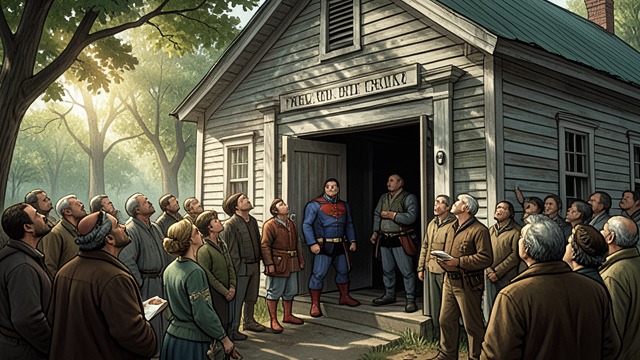
Looking Through the Surface
Familiar Places Reconsidered
Thoreau asks what a meetinghouse, shop, jail, or dwelling really is before a truthful gaze. The ordinary names and functions of places may disguise the forces and values that make them what they are.
He argues that people often locate truth in distant times and places, while overlooking the reality around them. The present moment is where the sublime must be encountered.
Significance
The effort to see reality becomes a critique of social habit. Truth is not remote simply because people have failed to notice it nearby.
The Hard Bottom
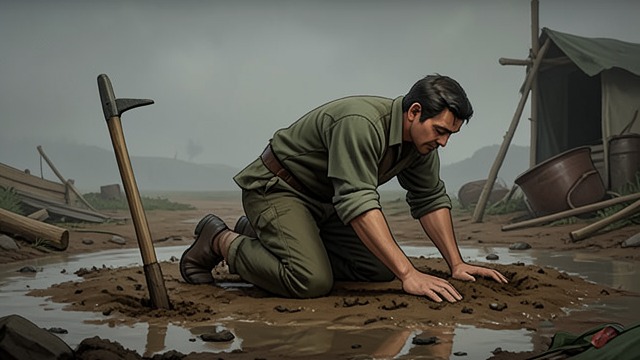
Finding Firm Ground
A Difficult Search
Thoreau compares the search for reality to working through mud, tradition, and appearance until reaching solid ground. The process demands persistence and a willingness to face facts without disguise.
He wants a secure basis for thought and action, something firm enough to support a wall, a state, or a simple object. Without such a basis, people build on assumptions they have not examined.
Significance
Truth is presented as a practical foundation, not an ornament. Honest action requires an understanding of what is actually there.
Truth at the End
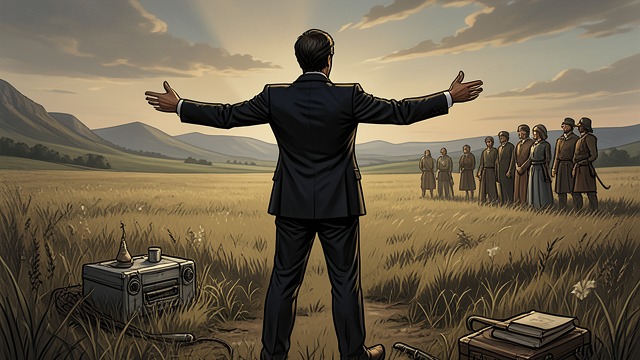
Living the Case That Is
Against Make-Believe
Thoreau advises readers to meet their lives as they are instead of shunning them or calling them hard names. A poor life can still contain pleasure, clarity, and a quiet mind.
He argues that no appearance will serve as well in the end as truth. People should say what they have to say, not merely what custom expects.
Significance
The thread culminates in a way of living rather than an abstract doctrine. Truth requires accepting the actual conditions of life while refusing to let convention define their meaning.
Early in “Economy”
During the discussion of clothing in “Economy”
During the reflection on appearances in “Where I Lived”
During the call to dig through opinion and tradition
Near the final pages of “Conclusion”
