
From Observation to Ethical Restraint
WaldenThis flow traces how close attention to animals, landscapes, and ordinary events gradually alters Thoreau’s sense of what humans should take from nature.
increasing Bearing strength in each event
 decreasing
Bearing strength in each eventdecreasingApproaching Without Capture
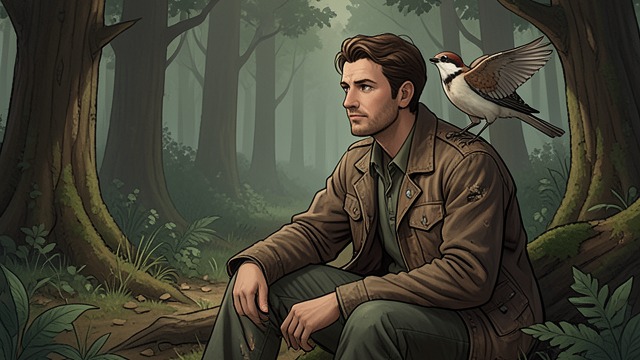
A Neighboring World
Watching the Woods
Thoreau notices birds and animals living close to his cabin, often behaving without obvious fear of him. Their presence makes the woods feel populated by lives with their own purposes.
He sees that sitting quietly can allow inhabitants of a place to appear in turn. Knowledge arises through patience rather than pursuit.
Significance
The relationship begins with attention and proximity. Animals are not simply objects in a landscape but neighbors whose behavior can be observed without control.
A Mother’s Diversion
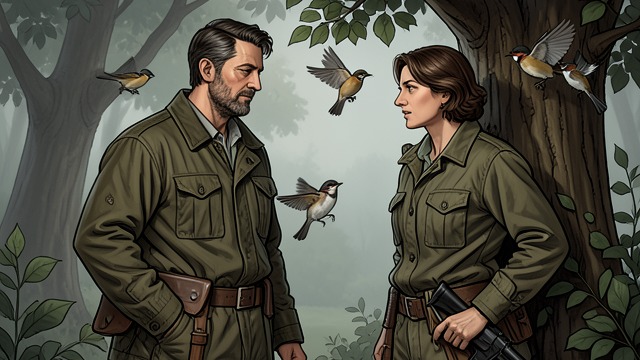
Care in the Forest
Protecting the Young
A grouse leads her brood past Thoreau’s windows and distracts him when he approaches. The young birds flatten themselves among leaves, relying on their mother’s calls and their own instinct to remain hidden.
Thoreau admires their precocious stillness and the care that protects them. The scene reveals a family life unfolding beside his own domestic space.
Significance
Close observation produces sympathy grounded in the animal’s behavior. The birds’ vulnerability makes careless hunting appear more consequential.
The Quiet of the Pond
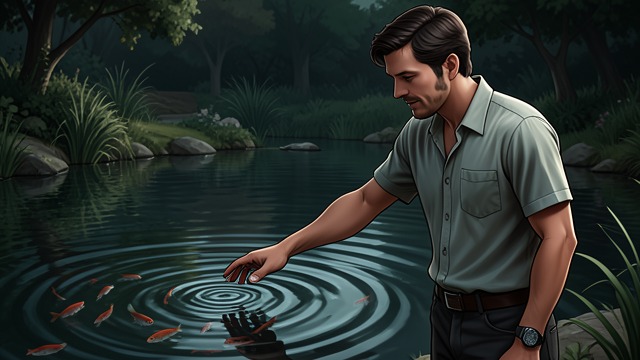
Life Beneath Attention
Ripples and Fish
Thoreau watches fish and insects disturb the pond’s smooth surface, each movement visible as a ripple or flash. The smallest action becomes part of an intricate and responsive world.
The water’s calm is not emptiness. Beneath and upon it, lives move continuously, leaving traces that a patient observer can learn to see.
Significance
Attention turns a landscape into a relation among many forms of life. Thoreau’s perception expands beyond what humans use or possess.
The Ethics of Eating
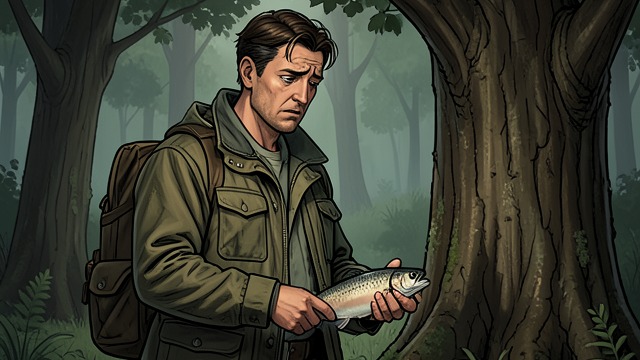
Taking Life for Food
Unease and Habit
Thoreau recalls fishing and eating animals, but increasingly finds the practice unnecessary and distasteful. He distinguishes his earlier habit from a later instinct toward a simpler diet.
The change is gradual and imperfect. He acknowledges that his practice does not always match his opinion, leaving the ethical question open within his own life.
Significance
The bond with animals becomes a question of restraint. Thoreau’s growing sympathy asks whether human pleasure justifies taking lives that share the same claim to existence.
A More Careful Naturalist
Knowing Without Harm
A Different Education
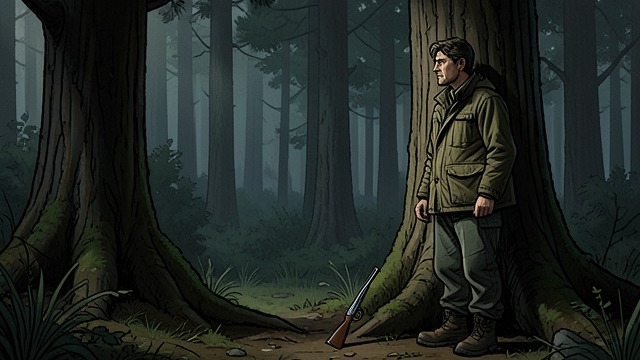
Thoreau suggests that a young hunter may grow into a poet or naturalist and leave the gun behind. The knowledge first gained through pursuit can mature into observation that no longer requires killing.
Wildness remains a source of education, but the relationship changes as sensitivity develops. To know nature more deeply may mean taking less from it.
Significance
The thread resolves in a form of companionship based on restraint. The naturalist’s task is not possession but attentive coexistence.
During Thoreau’s early wildlife observations
June, when the grouse leads her brood past the cabin
During Thoreau’s calm-water observations
During the reflections on hunting and diet
Near the end of the hunting discussion
