
Seeds, Rows, and Meaning
WaldenThis flow traces the bean field from an economic undertaking into a meditation on cultivation, nature, and the harvest of character.
increasing Bearing strength in each event
 decreasing
Bearing strength in each eventdecreasingPlanting for Income
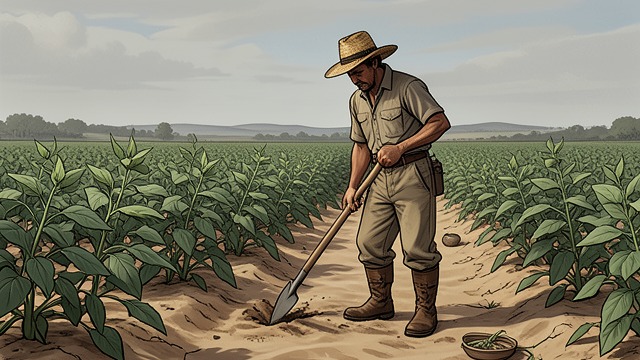
A Practical Crop
The Field Begins
Thoreau plants about two and a half acres, chiefly with beans, to earn money for his unusual expenses. The land is sandy and lightly worked, and he uses no manure.
At first the crop appears to be an economic answer to the cost of living. Yet the scale of planting soon raises a question about how much food and work are truly needed.
Significance
The field connects the cabin experiment to labor and accounting. It also provides a place where Thoreau can examine his relationship to cultivated land.
Seven Miles of Rows
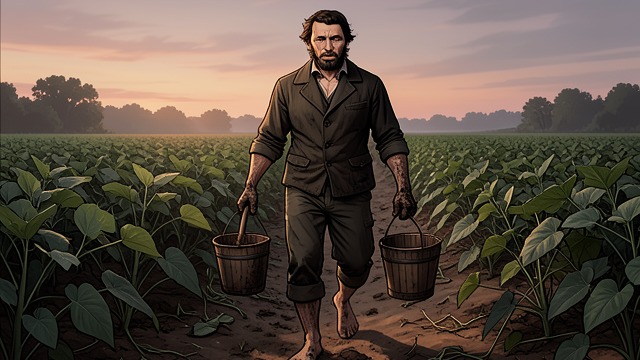
The Work of Hoeing
Daily Attention
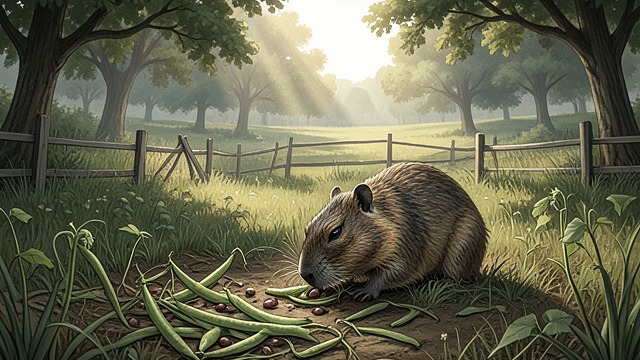
Thoreau describes the combined length of his bean rows as seven miles. He hoes barefoot in the dew, removes weeds, and watches woodchucks destroy part of the crop.
Slow labor makes him more intimate with the plants and soil than mechanized farming might. The field is both a task and a daily occasion for noticing weather, birds, and growth.
Significance
The repetitive work does not become meaningless merely because it is physical. Thoreau asks what kind of attention and purpose can grow alongside a crop.
The Harvest Account
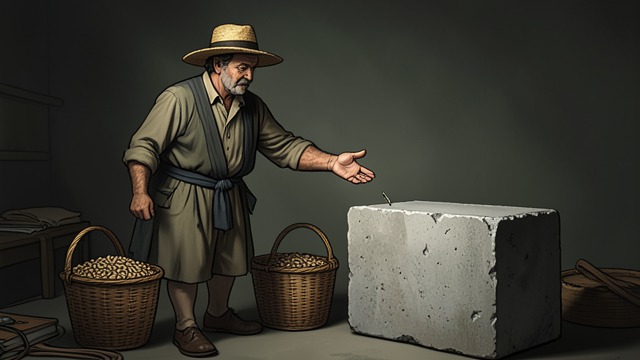
Profit and Produce
Measuring the Result
Thoreau totals the field’s costs and sales, reporting a small monetary profit alongside food kept for his own use. The figures challenge the idea that a farm must be judged by the size of its property or machinery.
His account also records what the numbers cannot contain: the labor’s rhythm and the value of living close to the land. The harvest is practical, but not simply commercial.
Significance
The ledger turns agriculture into a test of proportion. A modest return can be sufficient when the cultivator’s life is not subordinated to expansion.
From Beans to Virtues
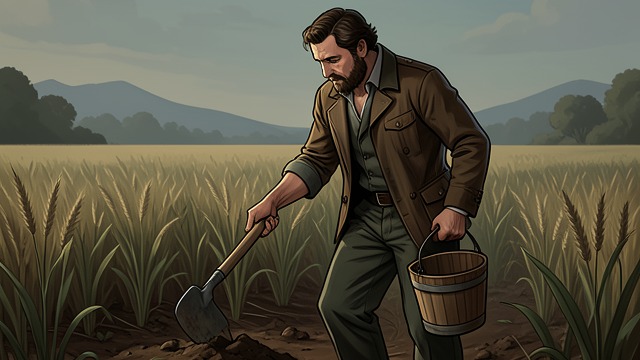
A Different Sowing
Moral Seeds
Thoreau imagines planting sincerity, truth, simplicity, faith, and innocence instead of beans and corn. He admits that these hoped-for seeds did not flourish as easily as he wished.
The image shifts cultivation from the soil to human character. Farming becomes a way to ask why people repeat inherited crops and habits rather than attempt new forms of growth.
Significance
The field’s apparent failure as a moral metaphor does not make it empty. It exposes how difficult it is to cultivate virtues with the persistence usually given to material crops.
The Wider Harvest
Beyond Ownership
Shared Abundance
Thoreau argues that the beans produce results he does not harvest, including food for Woodchucks and other life. The sun shines equally on cultivated fields and wild ground.
He therefore loosens the farmer’s claim to exclusive success. A field may be valuable even when its yield does not enter the owner’s barn.
Significance
The true harvest expands from produce to ecological participation and freedom from anxiety. The farmer can finish each day’s labor without imagining nature as a possession.
Before the cabin was finished in 1845
Early summer 1845
At the close of the first growing season
In the reflection after the bean harvest
Near the end of “The Bean-Field”
