
The Pursuit of a Free Home
WaldenThis flow traces Thoreau’s imaginative relationship to farms, ownership, and the possibility of enjoying land without being bound to it.
increasing Bearing strength in each event
 decreasing
Bearing strength in each eventdecreasingImagined Farms
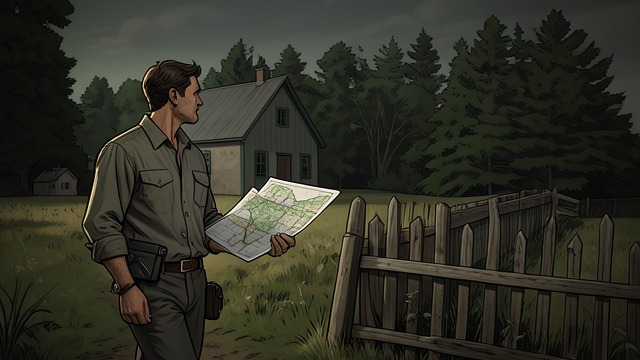
Possessing in Imagination
A Landscape Survey
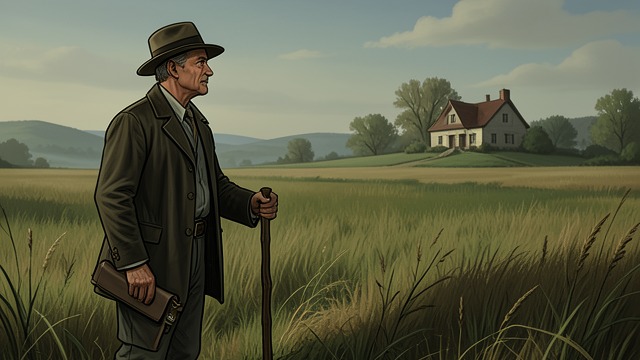
Thoreau walks farms around Concord and imagines buying, improving, and living on them. He enjoys the landscape without obtaining deeds or assuming the permanent obligations of ownership.
The exercise gives him a sense of abundance without requiring money. He can leave a place alone after imagining what it might become.
Significance
Imagination offers a form of possession that does not bind the owner to maintenance and debt. The episode introduces freedom as the capacity to refrain from owning.
The Hollowell Bargain
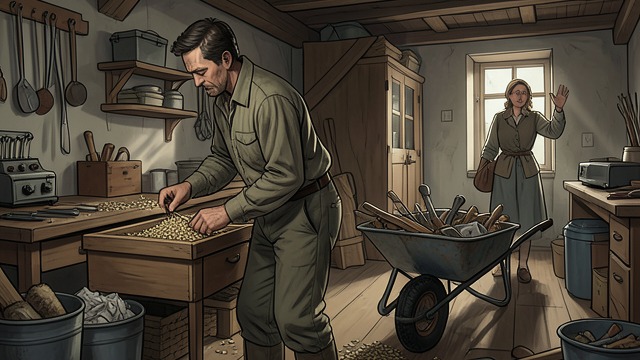
A Farm Nearly Bought
A Reversed Sale
Thoreau comes close to buying the Hollowell place, sorting seeds and gathering materials for a wheelbarrow. The owner’s wife changes her mind, and the seller offers ten dollars to release him.
Thoreau accepts the reversal and lets the farm go. With little money in hand, he recognizes that he can retain the landscape and its imaginative yields without taking legal possession.
Significance
The failed purchase becomes an unexpected proof of independence. The land remains available to perception precisely because it does not become an encumbrance.
A Farm Left Alone
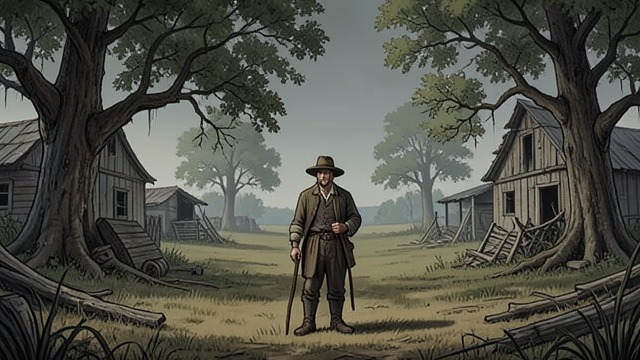
The Value of Restraint
Noninterference
Thoreau values the farm’s retirement, old trees, and ruinous buildings, including features an owner might improve away. He believes the land could yield the crop he wants if he can afford to leave it alone.
Ownership would likely require labor that changed the very qualities he cherishes. His attraction is therefore to a place’s existing life, not simply to its productive capacity.
Significance
The episode challenges the assumption that improvement is always beneficial. Restraint becomes a way to preserve both landscape and personal freedom.
Land Without a Deed
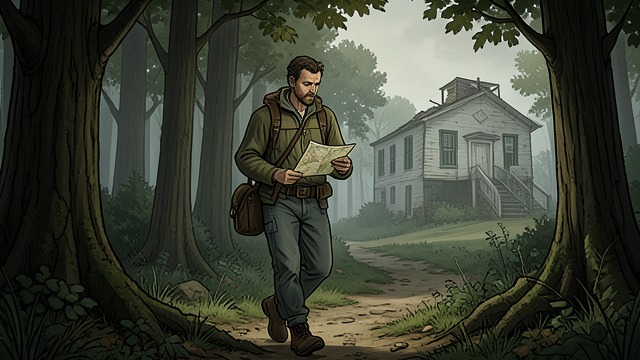
Enjoyment Without Title
A Different Claim
Thoreau advises readers to live free and uncommitted as long as possible. He distinguishes the enjoyment of land from the legal obligation to own it.
His own experience shows how attention, walking, and memory can make a landscape meaningful without a deed. A person can receive what a place offers without trying to turn it into property.
Significance
The argument links land use to the larger critique of possessions. Freedom depends not only on having resources but on limiting the claims made upon them.
The Question of Commitment
Choosing a Place
Staying Unbound
Thoreau treats the failed farm purchase and the Walden residence as related experiments. Neither establishes ownership as the condition of belonging to a place.
He prefers an arrangement that lets him follow changing interests rather than serve a permanent property. The choice makes movement and attention part of his definition of home.
Significance
The thread resolves not in a permanent estate but in a method: remain open to possibilities and refuse commitments that consume the life they promise to secure.
Before the Walden residence
Before Thoreau settles at Walden
As he reflects on the Hollowell place
During the advice to live free and uncommitted
Near the opening of “Where I Lived, and What I Lived For”
