
The Village and the Forest
WaldenThis flow traces Thoreau’s movement between the social life of Concord and the solitude of the woods, where each setting changes how he sees the other.
increasing Bearing strength in each event
 decreasing
Bearing strength in each eventdecreasingA Walk to Town
Entering the Village
Observation
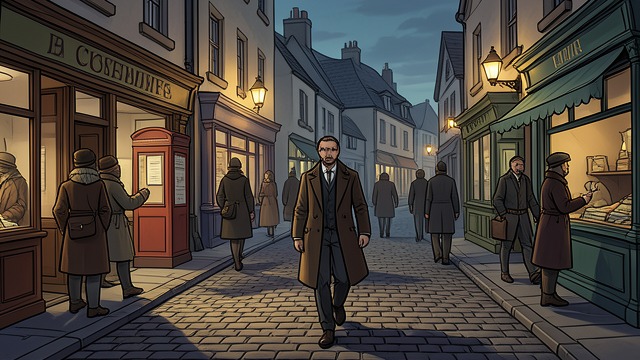
After work or bathing, Thoreau walks into Concord to hear gossip and observe people. The village appears to him as a busy social organism organized around stores, the post office, and routine encounters.
His visits are not a complete rejection of company. He treats the town as another landscape whose habits can be studied from the outside.
Significance
Distance makes ordinary social conduct newly visible. The forest gives him a point of comparison rather than cutting him off from human life.
Night Paths
Finding the Way Home
Bodily Knowledge
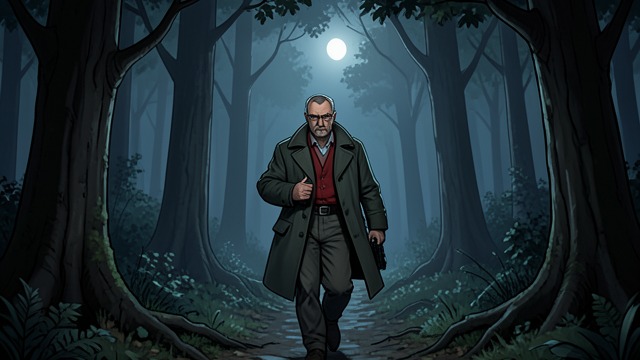
Thoreau walks home through the woods in darkness, locating his path by memory, touch, and the position of familiar trees. At times he cannot recall the steps that brought him back.
The journey makes ordinary navigation strange. He observes that people rely on familiar landmarks without realizing how much those references shape their world.
Significance
Being lost exposes the difference between routine orientation and genuine self-knowledge. The forest becomes a setting for discovering how perception can be renewed.
The Village in a Cell
An Unexpected View
Inside the Institution
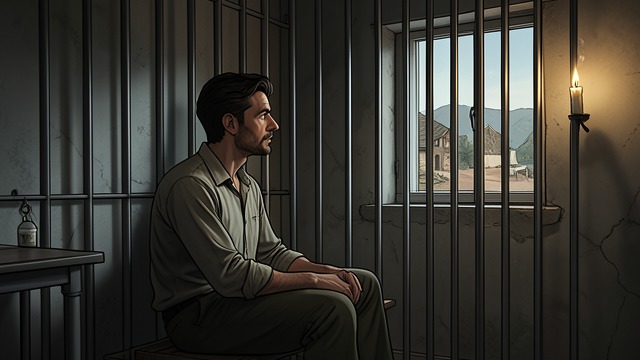
After being arrested over a tax, Thoreau spends a night in jail and hears the village from within its walls. The familiar town sounds and nearby inn seem newly vivid to him.
Confinement reverses his usual distance from society. He experiences one of its institutions directly and sees more clearly what its authority can and cannot command.
Significance
The jail becomes a vantage point from which to judge the town’s habits. The episode connects his private experiment with a public conflict over conscience.
A Return to the Woods
Back Beyond the State
Leaving Town
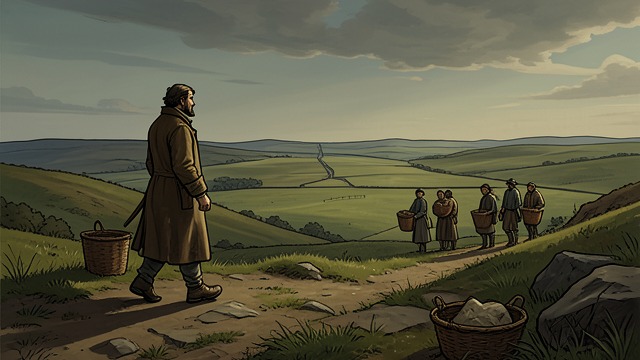
Thoreau finishes his errand at the shoemaker’s and joins a huckleberry party, reaching a hill where the State is no longer visible. The abrupt return restores the landscapes that frame his life.
The sequence makes the state’s physical reach seem limited beside the wide natural world. His departure is not a flight from responsibility but a return to chosen attention.
Significance
The village and woods remain linked, but neither defines the whole of life. Thoreau’s movement between them gives his social criticism a lived setting.
A Life Between Worlds
Neither Retreat nor Conformity
Two Landscapes
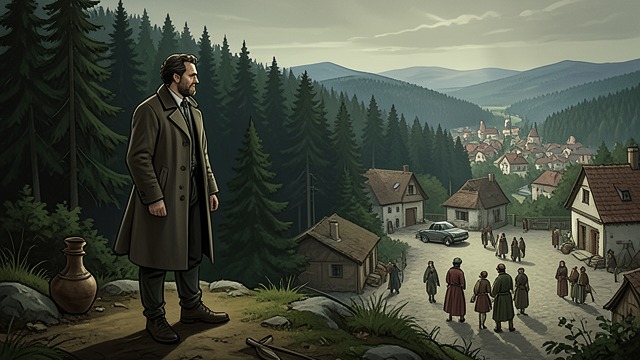
Thoreau can enter Concord and return to the woods without treating either as his only possible world. His experience keeps human society within reach while preserving room for independent thought.
The forest makes stillness possible, and the village supplies encounters that test his convictions. Their contrast helps him recognize both the pressures and the possibilities of communal life.
Significance
Solitude is presented as a condition for clearer relation, not as an absolute rejection of people. The movement between places is part of the experiment’s meaning.
During the Walden years
On dark evenings returning from Concord
During his one night in jail
The morning after his release
In the closing reflections on his Walden experiment
