
John Field and the Price of Necessity
WaldenThis flow follows Thoreau’s encounter with John Field as a personal test of whether a simpler economy can loosen inherited poverty.
increasing Bearing strength in each event
 decreasing
Bearing strength in each eventdecreasingA Shelter in the Rain
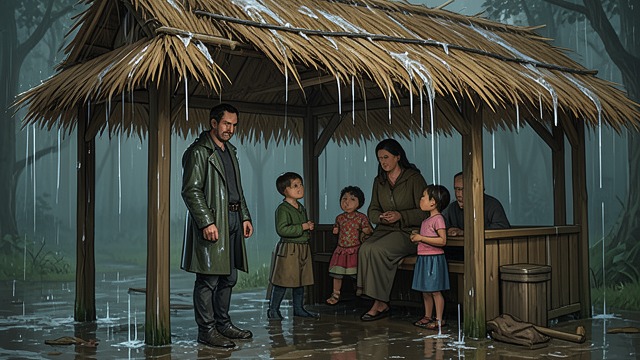
Finding the Hut
A Household Revealed
A storm drives Henry David Thoreau to the hut at Baker Farm, where John Field lives with his wife and children. The leaking shelter exposes a household struggling with work, weather, and limited means.
The family’s circumstances interrupt Thoreau’s solitary excursion. What begins as a search for shelter becomes an encounter with poverty close to his own chosen simplicity.
Significance
The scene tests the distance between voluntary austerity and hardship imposed by circumstance. Thoreau sees that similar material conditions can carry very different degrees of freedom.
A Laboring Neighbor
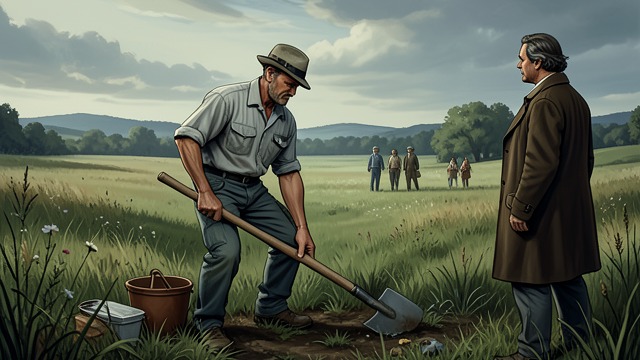
Work That Does Not Free
The Bog Contract
John Field tells Thoreau that he works bogging for a neighboring farmer, turning meadow with a spade for a small payment and temporary use of land. His family’s labor leaves little room for choice.
Thoreau describes Field as honest and hard-working, yet caught in a pattern of costly food and demanding work. Their different circumstances shape how each understands necessity.
Significance
The conversation gives the book’s economic critique a human face. Poverty is not only a shortage of goods but a cycle in which work sustains expensive needs.
The Simple-Life Proposal
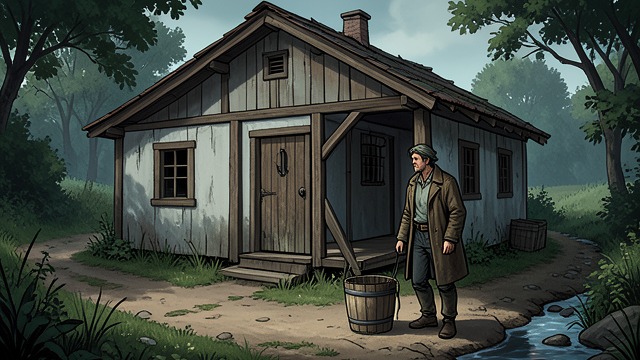
An Alternative Offered
A Different Budget
Thoreau explains that a smaller house, simpler food, and less labor could reduce Field’s expenses. He presents his own life as evidence that modest needs can leave time for enjoyment and independence.
Field and his wife listen but do not readily see how to begin. To them, the plan seems to require resources and calculations they do not possess.
Significance
The encounter reveals both the appeal and the limits of Thoreau’s advice. A chosen experiment cannot be transferred unchanged to someone living under constrained conditions.
A Hesitant Response
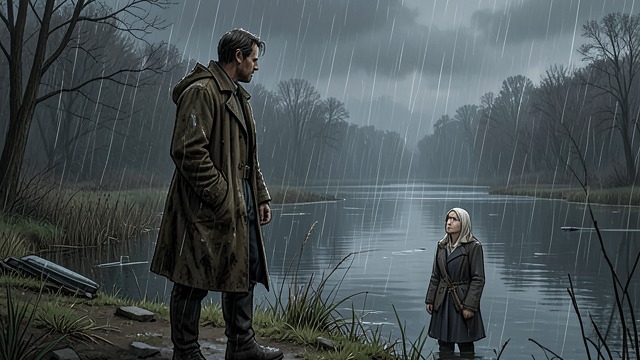
Returning to Work
The Unchanged Household
Thoreau leaves as the rain clears, but Field remains uncertain about the alternative described to him. His wife’s hopeful question about fishing briefly suggests another possibility, yet the family’s habits and limited means remain powerful.
Thoreau later sees Field at the pond and portrays him as still tied to familiar work. The encounter does not produce a clear conversion or a stable improvement.
Significance
The unresolved response prevents the episode from becoming a simple success story. It shows that insight alone may not supply the freedom required to change a life.
A Critique Turned Inward
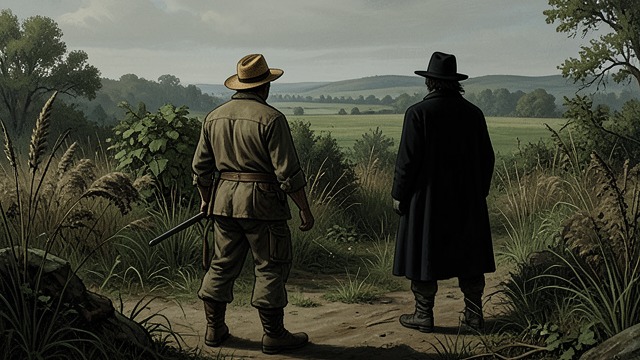
The Limits of Advice
Judging the Encounter
Thoreau describes Field’s poverty with sharpness, but the scene also exposes the asymmetry between the visitor who chooses hardship and the worker who endures it. His counsel assumes a freedom Field may not share.
The episode remains valuable because it complicates the book’s praise of voluntary poverty. Simplicity can release one person while sounding unrealistic to another trapped by inherited circumstances.
Significance
The story invites scrutiny of Thoreau’s own confidence as an adviser. It preserves both his economic challenge and the discomfort of applying it to another person.
During Thoreau’s fishing excursion to Baker Farm
During the conversation inside the hut
As Thoreau counsels Field in the hut
After the storm passes
In Thoreau’s retrospective account of the visit
