
The Patients’ Clarity
Wann wird es endlich wieder so, wie es nie warThis flow develops the memoir’s distinction between institutional labels and the patients’ direct, sometimes unsettling ways of being.
increasing Bearing strength in each event
 decreasing
Bearing strength in each eventdecreasingChildren Learn Labels
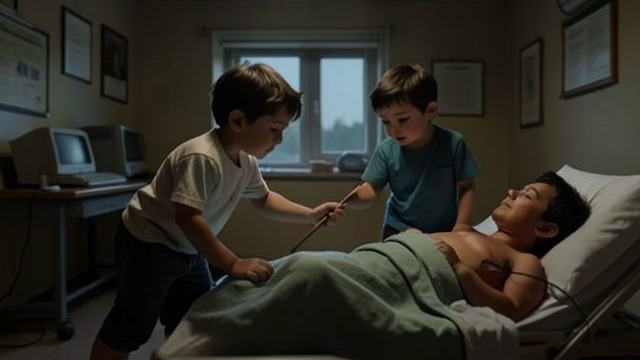
Children Learn Labels
Casual Naming
Joachim(Jocki) and his brothers use insulting shorthand for patients, often repeating language they hear at home. The names turn difference into an easy joke.
Complicity
The narrator later records this behavior without excusing it. Childhood familiarity and inherited contempt coexist in the world he describes.
A Hospital of Categories
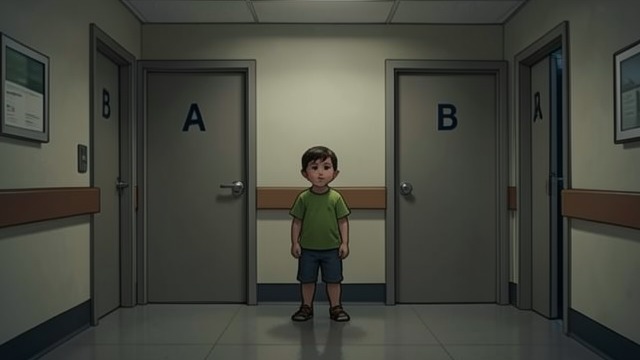
A Hospital of Categories
Letters with Locations
The hospital’s wards are named by letters and levels, with patients grouped by severity. Joachim(Jocki) assumes letters themselves possess different heights and characters.
Imagination and Order
The institution’s system shapes his private language. He uses ward associations to make words dangerous, fragile, or safe, translating a medical geography into a child’s mental world.
Ordinary Lives on Benches
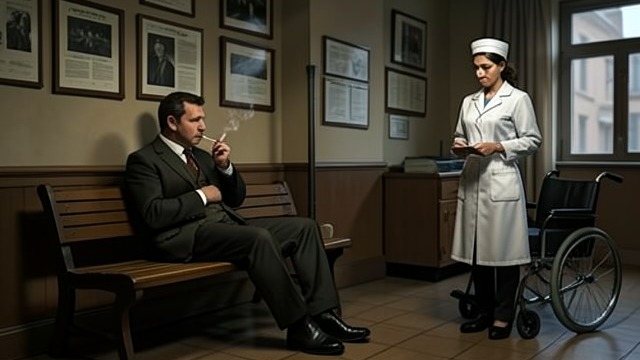
Ordinary Lives on Benches
Seen from the Path
Joachim(Jocki) observes patients smoking, sitting, moving restlessly, or receiving care in specialized wheelchairs. Their bodies and routines are visible, but their inner lives remain partly inaccessible.
The Observer’s Position
He belongs to the institution through family while also watching its patients from a child’s perspective. The memoir preserves both intimacy and the limits of that perspective.
The New Clinic’s Promise
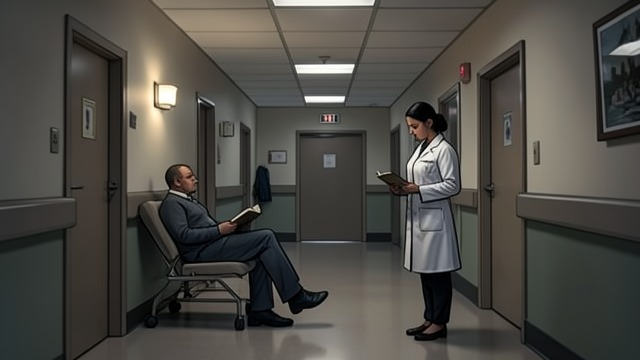
The New Clinic’s Promise
A Better Principle
Hermann describes a shift from mere custody toward therapy and patient welfare. The new building is presented as a practical and moral advance.
A Controlled Image
The visiting party sees unusually quiet wards and selected activities. The gap between promise and presentation complicates any simple claim that institutional modernization has solved patients’ needs.
Longing for Directness

Longing for Directness
Critical Recognition
Joachim(Jocki) knows that the old hospital’s overcrowding and restraints were unjust. He does not mistake suffering for a humane system.
Emotional Contradiction
Yet he longs for the patients’ directness and unfiltered emotion. The memoir asks how a person can mourn a world whose disappearance was also necessary.
In the narrator’s early childhood
When Joachim(Jocki) learns to write
During his school walks
At the opening ceremony
On the adult narrator’s return to Hesterberg
