
The Narrator and the Meaning of Home
Wann wird es endlich wieder so, wie es nie warThis flow traces how Joachim(Jocki)’s understanding of home shifts from a protected institution to a place defined by sounds, people, and remembered traces.
increasing Bearing strength in each event
 decreasing
Bearing strength in each eventdecreasingInside the Walls
Inside the Walls
A Protected Center
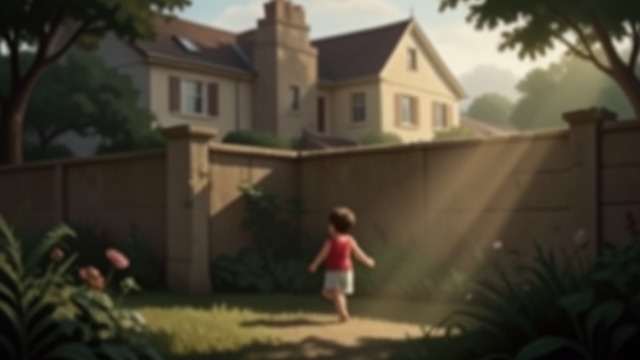
Joachim(Jocki) imagines the family home nested inside a garden, Hesterberg, and its surrounding wall. The structure makes the outside world feel remote.
A Child’s Security
He trusts that his father controls the institution and assumes its grounds belong to the family. Home is safety built from boundaries.
The Route to School

The Route to School
New Independence
At seven, Joachim(Jocki) gains permission to walk to school alone. The familiar hospital and surrounding streets become newly explorable when he is no longer holding his mother’s hand.
A Wider World
His route creates a first sense of individual choice. The garden discovery happens because he tests that freedom and leaves the agreed path.
A Childhood Soundscape
A Childhood Soundscape
The Open Window
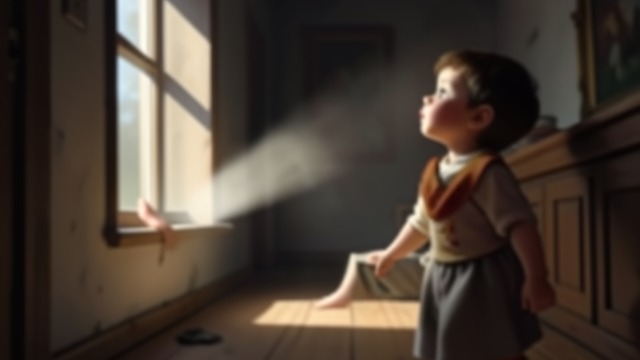
Joachim(Jocki) insists on keeping his window open to hear the patients’ cries. A strip of light from the hallway and his bare foot in it make the room feel protected.
Home in the Night
The sounds he would later miss are part of what makes home home. Familiarity grows from a mixture of comfort and disturbance.
A House Left Empty
A House Left Empty
Family Dispersed
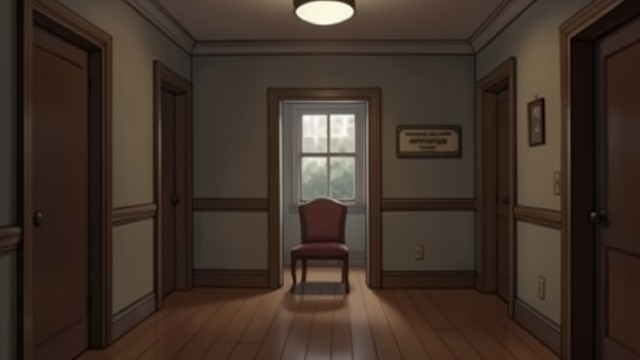
Hermann moves to Lübeck, and the narrator’s mother goes to Italy. The family home no longer contains the people whose habits gave it meaning.
An Institution Returns
Plans emerge to turn the house into a supported-living ward. The former family refuge is being absorbed back into the place that surrounded it.
A Child at the Window
A Child at the Window
A Familiar Posture
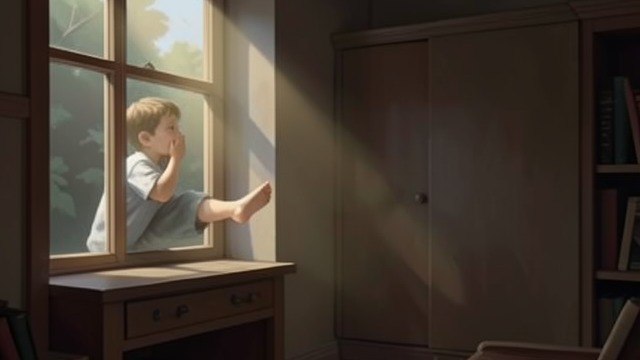
Joachim(Jocki) sees a young boy breathing against the glass of his former room. The boy’s stillness recalls the child he once was.
Home as Memory
The room is no longer his, yet the encounter reconnects him to it. Home survives not as possession but as an image that can appear again in another child.
In the narrator’s earliest years
After he is allowed to walk alone
At bedtime during warm evenings
After the parents separate
On the final visit to Hesterberg
