Dauerhafte Unterbringung in der Psychiatrie
Wann wird es endlich wieder so, wie es nie warLong-term residence in psychiatry at Hesterberg meant living for years, and sometimes for an entire lifetime, within an institution that organized patients’ surroundings, routines, work, and movement. The narrator’s account presents this arrangement neither as an abstract medical category nor as a simple story of confinement: Hesterberg was a vast, restrictive institution, but also the landscape of his childhood home. Its later emptying and physical dismantling expose the conflict between recognizing institutional harm and mourning the world that had formed him.
Definition and Continuity
When the narrator’s father became director of Hesterberg, the hospital had more than 1,500 patients. Although it was a children’s and adolescents’ psychiatric institution, many residents were older or very old. They were never transferred to adult psychiatry because leaving surroundings familiar to them, in some cases since early childhood, was considered unreasonable. Long-term residence thus extended beyond the institution’s stated age group: continuity of place could take precedence over a change in administrative category.
The scale and age of the buildings reinforced the sense of a settled, enclosed world. Most of the complex consisted of huge, dark brick structures dating from around the turn of the twentieth century. Rooms could hold as many as twenty patients, and four-storey bunk beds had long ladders; upper beds could be locked, making them resemble cages rather than ordinary sleeping places. These details show how accommodation combined the practical demands of crowded care with forms of control over patients’ bodies and movement.
Space, Work, and Classification
Hesterberg operated as a largely self-contained campus. Its grounds included a garden nursery, a large kitchen, carpentry and tailoring shops, a steam laundry, a coal-fired heating plant, and a metal workshop. At the latter, workers made bars and grilles for windows, beds, and the tall fences around ward gardens. Patients worked in some of these places under conditions the narrator describes as a mixture of occupational therapy and exploitation. Work was therefore part of institutional life, but its therapeutic purpose did not prevent it from also serving the institution’s needs.
The buildings and wards gave institutional classification a spatial form. Houses were arranged in two rings around the director’s residence: buildings A through G in the inner ring and H through P in the outer one. Each had three floors, conventionally called upper, middle, and lower; overcrowding produced exceptions such as basement and attic wards. The resulting names, such as A-Lower or J-Middle, were ordinary speech in the narrator’s family because his father routinely discussed ward assignments and conditions at work. Within a building, the lower floors held less seriously ill patients, the middle floors more serious cases, and the upper floors the most severely ill or those regarded as hopeless. The narrator absorbed this ordering so thoroughly that, as a child learning to write, he imagined letters themselves as having different heights. Institutional categories had entered his perception before he could separate them from the alphabet.
Boundaries and Everyday Life
The gates and entrances made admission and departure visible, often painful events. Newly admitted people might refuse to enter, cling to relatives, and kick at attendants; other patients fought to leave, clinging to staff and kicking at family members. For many, crossing either way was a source of acute distress. The institution’s boundaries were not only fences and buildings: they marked separations between patients and relatives, and between life inside and outside.
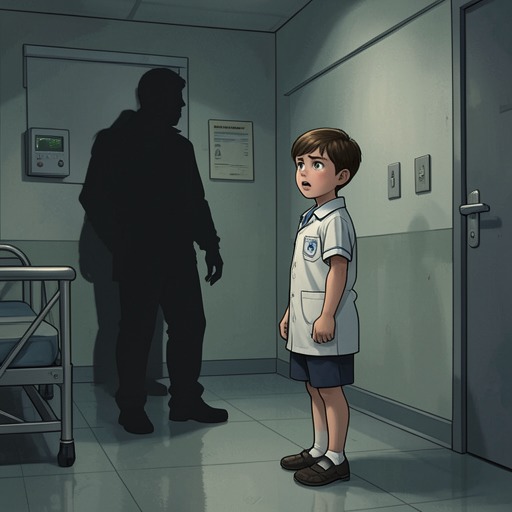
Yet the narrator did not experience Hesterberg solely as a place apart. The director’s villa stood at the center of the grounds, deliberately positioned there by the hospital’s founder. Its prominent architecture expressed authority, but also the director’s place within the institution rather than outside it. The narrator grew up in that house, among the hospital’s residents and routines, and states plainly that the institution was his home. He saw hundreds of patients repeatedly behind the same smeared windows. A playground equipped with swings, slides, and a helicopter-shaped climbing frame was usually empty; despite the crowded grounds, many residents remained absorbed in themselves, often alone even when accompanied by an attendant. Familiarity therefore coexisted with isolation: the place was intimate to the narrator, while many of its residents appeared socially separate even within its busy grounds.
Community, Return, and Loss
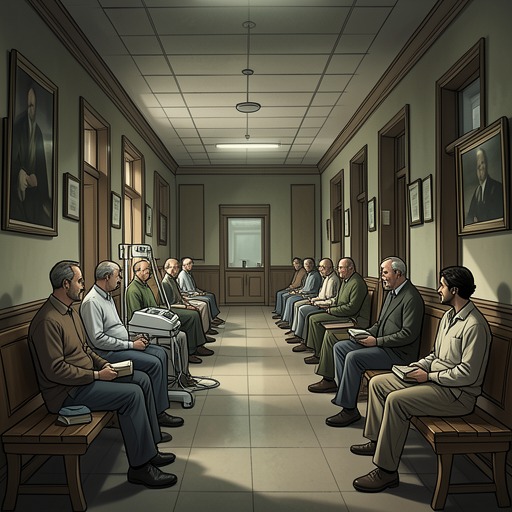
Hesterberg belonged to a wider network of institutions in Schleswig. Stadtfeld, the adult psychiatric hospital, housed another 2,000 people with intellectual or physical disabilities, and other specialized institutions and treatment centers were also concentrated in and around the town. Patients from the large hospitals could be seen on benches along the roads into Schleswig, waving to passing traffic. The narrator recalls townspeople responding to unusual public behavior with matter-of-fact calls rather than alarm. This local familiarity softened the boundary between institution and town without abolishing the institutions or the distinctions they imposed.
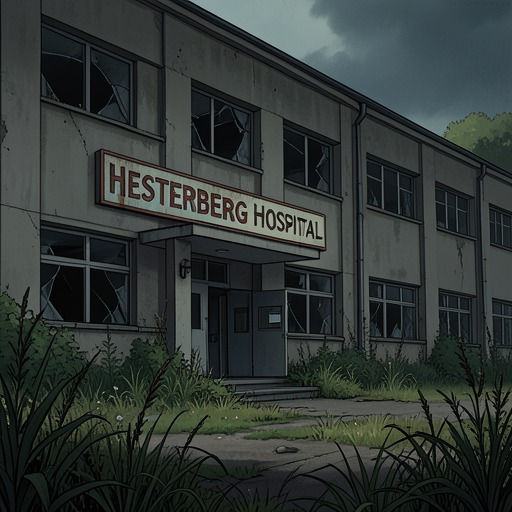
The later transformation of Hesterberg makes the scale of change concrete. On a return visit, the narrator found that the roughly three-kilometer perimeter wall and both gates had vanished, so a visitor might barely notice the transition from town to hospital grounds. Houses C, D, and M had been demolished; house K stood empty, its windows smashed up to the top floor. Later buildings remained in use, but opaque palisades blocked the view, and the benches outside the entrances were deserted. The workshops had been boarded over, while the new clinic showed extensive rust. Behind its thick replacement windows, a few patients moved indistinctly, like survivors of a disappearing world. The narrator learned later that only about 300 patients remained.
He does not mistake the old arrangement for humane care. He acknowledges the overcrowding, the packing of patients into inadequate quarters, deficient medical treatment, and the routine use of sedating psychiatric drugs. He also recognizes that the remaining patients had a more professional and humane environment. Still, the nearly empty grounds seemed to him more hopeless than the old, overcrowded institution. His grief is directed at the loss of a world to which he belonged, not at the disappearance of its abuses: he is grateful that the packed institution is gone, yet longs for its unfiltered joy, prolonged embraces, uncontrolled anger, excess, and spectacle. Long-term residence thus remains central to the memoir’s double vision of Hesterberg—as an oppressive system of enclosure and as the vanished home whose intensity the narrator cannot simply leave behind.