Michaela Meisner
Wann wird es endlich wieder so, wie es nie warMichaela Meisner is the narrator’s contemporary, a girl whose childhood story is shaped by severe diabetes, conflict with the narrator, and a later emergency during the North German snow disaster. Her account links a sharply remembered personal encounter to a public rescue operation, then follows the consequences into adulthood: she is placed in an institution, loses her sight because of diabetes, and remains alive while the family home falls into disrepair.
Identity and Childhood
Michaela is identified as the daughter of the Meisner family and as being the narrator’s age. She had severe diabetes and poor eyesight from the time the narrator first knew her. During the day she attended a special school. These details establish the practical circumstances of her childhood: her illness required insulin, affected her vision, and was part of her everyday life well before the later crisis made her condition urgent to people beyond her household.
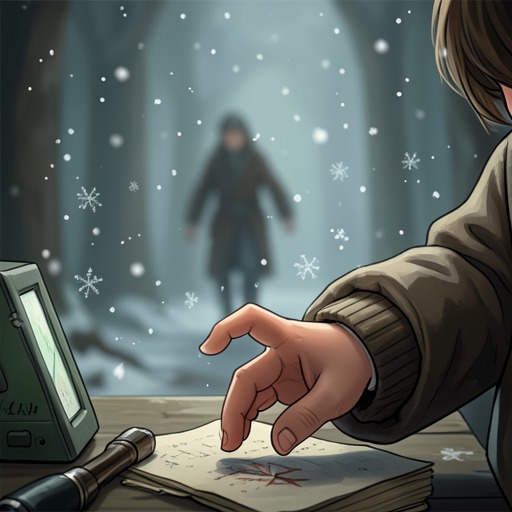
The narrator’s recollection of their acquaintance is not a story of friendship. Michaela pushed him into nettles, threatened him with her insulin syringe, and sprayed him with plant poison. The account gives these actions plainly but does not explain their motives or attribute them to her illness. Their relationship is therefore defined by a concrete childhood antagonism rather than by affection, even as the narrative later places Michaela’s medical vulnerability at its center.
The Snow-Disaster Emergency
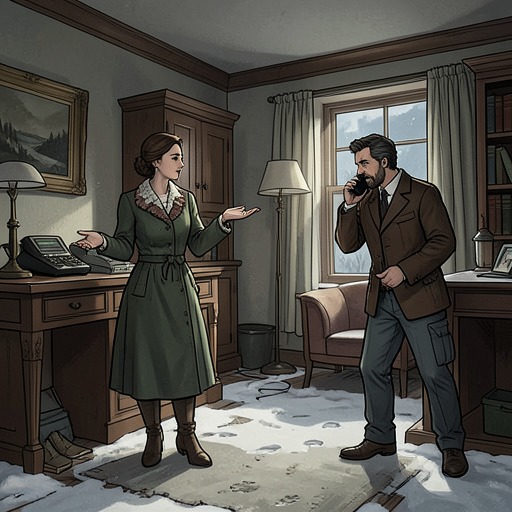
During the snow disaster, the narrator’s father receives a telephone call from Michaela’s brother, who asks to speak with him. The father’s expression grows increasingly serious as they talk. The narrator learns that the siblings have been cut off from the outside world: Michaela has run out of insulin, appears confused, and can no longer get up. Her brother’s call turns the isolation caused by the disaster into an immediate threat to her life.
The narrator’s father initially struggles to reach the hospital and police because telephone lines are busy or hold callers in waiting queues. He then sees a possible route to help through a Bundeswehr helicopter already scheduled to land near House G. It is carrying blankets and is due to fly a patient from D-Oben to an intensive-care unit in Kiel. The father organizes an attempt to use its return journey to reach Michaela and her brother, arranging insulin through the psychiatric hospital and giving the pilot information. The emergency shows how a routine medical transport could be redirected, at least in part, to reach people stranded by impassable roads.
The narrator later watches a television report of the rescue. Its camera follows the rescue party from the helicopter into the Meisners’ house, where the power has failed and candles are being used. Michaela is on the sofa, exhausted and unable to get up. The report shows the narrator’s father administering insulin. It then reports that she has been rescued at the last moment and flown, together with her brother, to an emergency shelter. The immediate outcome is survival, but the broadcast also places her private medical emergency within the wider disaster response, when roads remain blocked and no general all-clear has been given.
Family Circumstances and Later Life
In retrospect, the narrator believes his father was responsible for ensuring that the Meisner siblings’ shared household was dissolved after the rescue. The brother received an apartment in town, while Michaela was placed in an institution. The account does not describe the decision-making in detail, but it marks a lasting change: the siblings no longer live together in the house from which they had needed to be rescued.
Michaela’s later life is reported through a few stark outcomes. Her brother dies of a heart attack while riding a moped, at an age corresponding to the appearance the narrator says he had always had. Michaela, meanwhile, is still alive at the point of the retrospective account, but has become blind because of diabetes. The Meisner house has fallen into ruin. Her survival is thus not presented as a return to the life she had before the emergency; the narrative records continued life alongside serious disability, institutional placement, and the decay of the family home.
Narrative Role and Significance
Michaela’s characterization is brief but not limited to a single medical fact. The narrative first shows her as a child who can act aggressively toward the narrator, then reveals the dependence on insulin that makes isolation during the snow disaster life-threatening. These aspects are held together without claiming that one explains the other. The same account that recalls conflict also shows the specific conditions of the rescue: the lost access to insulin, her confusion and inability to rise, the helicopter’s planned flight to Kiel, and the transfer to shelter with her brother.
Her perspective is not directly narrated. The reader encounters her through the narrator’s childhood memories, his father’s response to the emergency, and the television report of the rescue. This limits what can be said about her thoughts or wishes, but makes the contrast in her representation significant: as a child she is remembered through her actions toward the narrator; during the snow disaster she is seen chiefly through illness, rescue, and the arrangements made afterward. The final information about blindness and institutional placement extends her story beyond the dramatic rescue, showing that survival was decisive but did not undo the longer consequences of diabetes or the disruption of her household.