Dekubitusmatratze
Wann wird es endlich wieder so, wie es nie warThe Dekubitusmatratze, a pressure-relieving hospital mattress, becomes the physical center of the narrator’s first night beside his dead father. Its cycling air chambers keep the body warm and moving beneath him, briefly sustaining a familiar closeness; switching it off ends that illusion, and the room’s sudden quiet makes death feel at once real and estranging.
Design and Operation
The mattress is designed to prevent a patient from developing pressure sores by continually changing the body’s position. Air flows steadily into its chambers and then escapes, a mechanical process that continues even when the patient can no longer respond. In the hospital room, the narrator initially experiences this operation not as a medical device at work but as part of the warmth and movement surrounding his father’s body.
Beside His Father
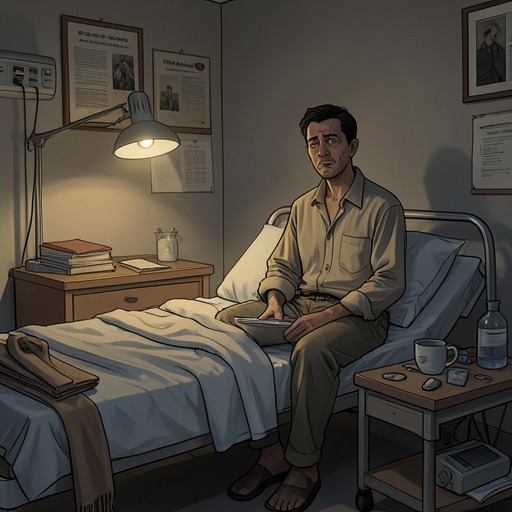
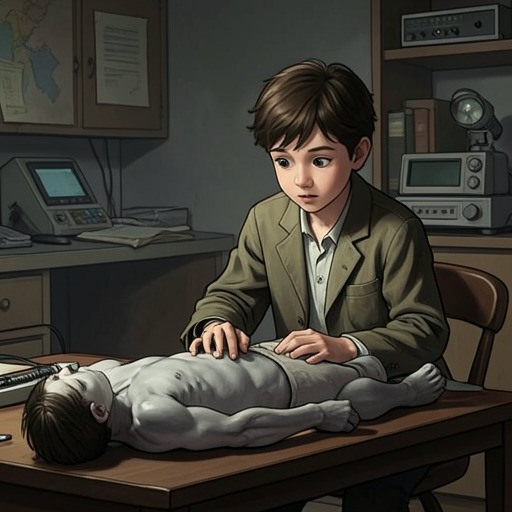
After his mother says that she wants to go home to her own bed, the narrator stays with his father. He undresses and lies down beside him, repeating a form of closeness that reaches back to childhood: even at twenty, he had crawled under his father’s covers so they could talk. His father is still warm, and the narrator touches and kisses him, lifts his closed eyelids, looks into his dull eyes, and strokes his arms and hairy belly.
The narrator lies pressed close to the body while the Dekubitusmatratze continues its work underneath them. He becomes dazed and falls asleep beside his father. When he wakes, his father’s back is still warm; only then does the narrator recognize that the warmth comes from the electric mattress, not from the dead man.
The Switch and Its Consequence
The narrator stands up and switches the mattress off. Its reassuring hum, which he had not consciously noticed, disappears, leaving the room suddenly still. The body cools quickly. What had felt like intimate continuity becomes an encounter with a stranger: only after the machine stops does death acquire, for the narrator, an unyielding and rejecting character.
The mattress does not restore life or soften the loss. Instead, its ordinary therapeutic function temporarily confuses the boundary between the living body and the dead one. The switch makes that confusion legible: warmth had persisted, but it belonged to the device. The narrator’s recognition turns a practical object into the means by which his father’s absence becomes bodily and immediate.